Steller’s Eagles

Still dark at 5:00 as I was picked up from Minshuku Marumi Shokuu taken 10 minutes to a small wood shack out of the brittle cold and asked for money; I paid.  I was in Rausu, a small fishing village five bus hours further north and east from Kushiro. Drift ice flowed in overnight much closer to the harbour, that was good, not so far to go.  I was struggling with a body wracking cough that made my ability to handle the small rocking boat even worse than my normal abysmal balance allowed for.  The railing around the boat deck was covered in ice, but that was not my main issue; it was only mid-thigh high on me.  I like my railings around chest high.  We were given life-vests but as I was told on another water trip years ago ‘Don’t worry, if you fall in you aren’t coming out alive.’  I dove down into the small cabin and held on.

In all things your mind can really play games with you, but you try to persevere.  Once the boat stopped and I saw the eagles rising in the morning sun my apprehension dissipated.  I was here to see and photograph Steller’s Eagles and there they were.  I headed out onto the deck to get to work.

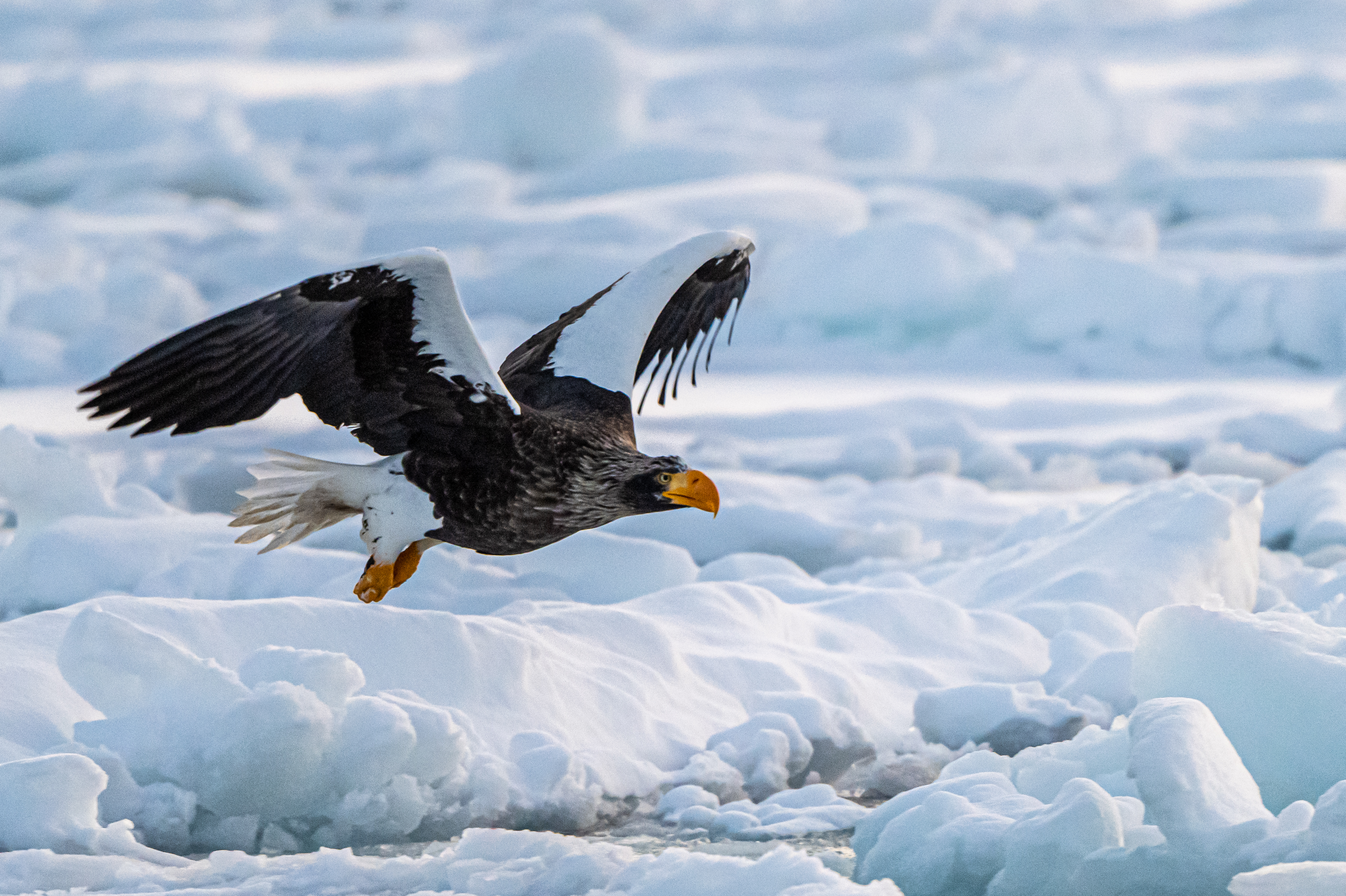
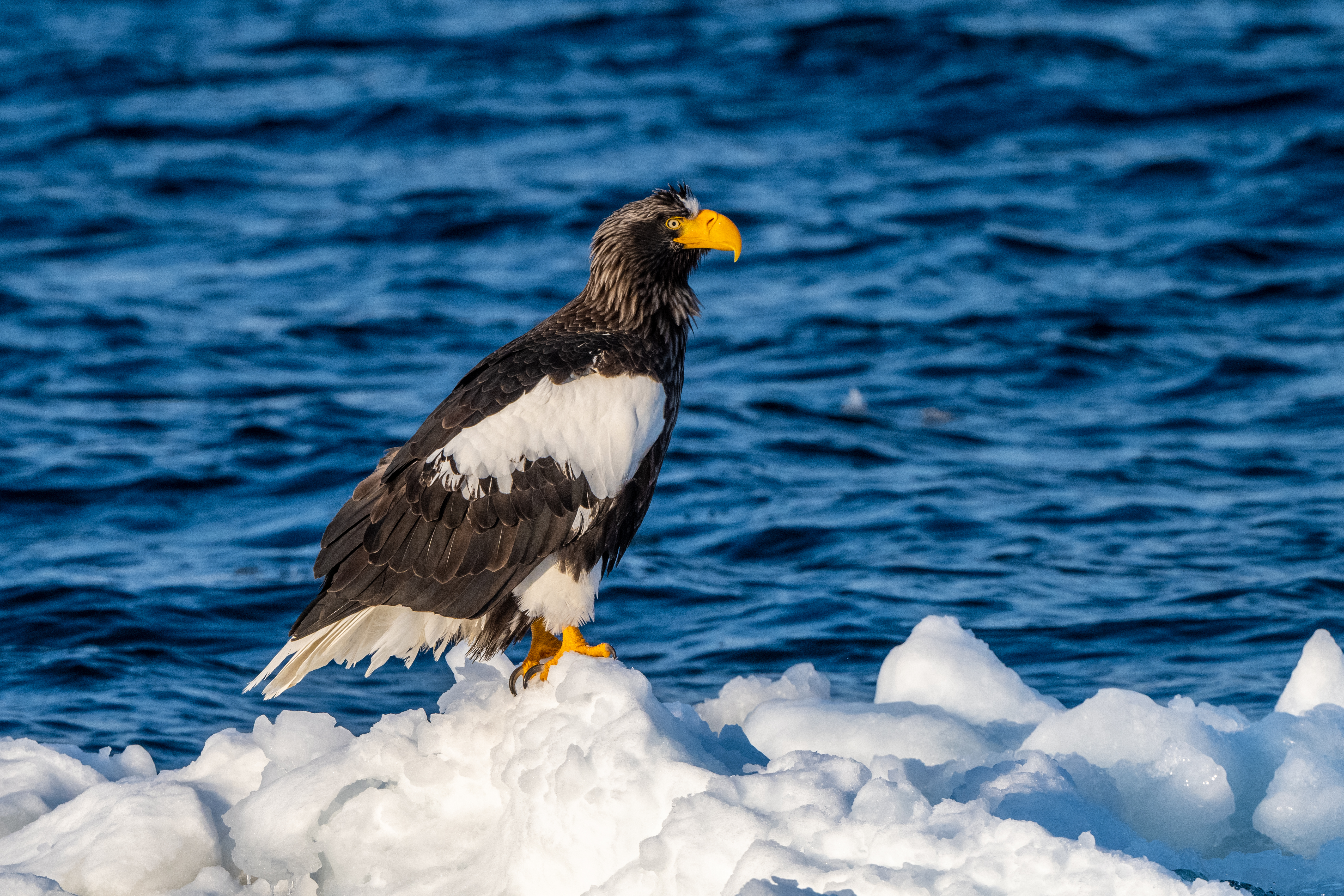
Steller’s Eagles are by some measures the world’s largest eagles.  They weigh up to 20 pounds and have wingspans up to 8.2 ft.  I have read about them for years and they were a contributing factor in this trip.  They are a fish and seabird eating raptor whose range is now down to the north east coast of Asia.  Their primary breeding territory is the Kamchatka Peninsula.  Some migrate in winter as far south as Hokkaido.  Most do not migrate.  There are about 4000 left, possibly 300 get to Hokkaido.   My little group were privileged to watch about 20 of them, enticed by the fish thrown out a few at a time by one of our guides over the next two hours.

At first the rising sun was the spectacle and trying to get photos into the sun took a bit more skill than I have. A Japanese couple: he with a basic SLR and small zoom, she with a cell phone were snapping away into the sun.  The other paying customer, an experienced Indian was alternating between three cameras, two with enormous lenses.  We would all hope for the best.  Possibly the most pronounced feature of the Steller’s is the prominent yellow beak.

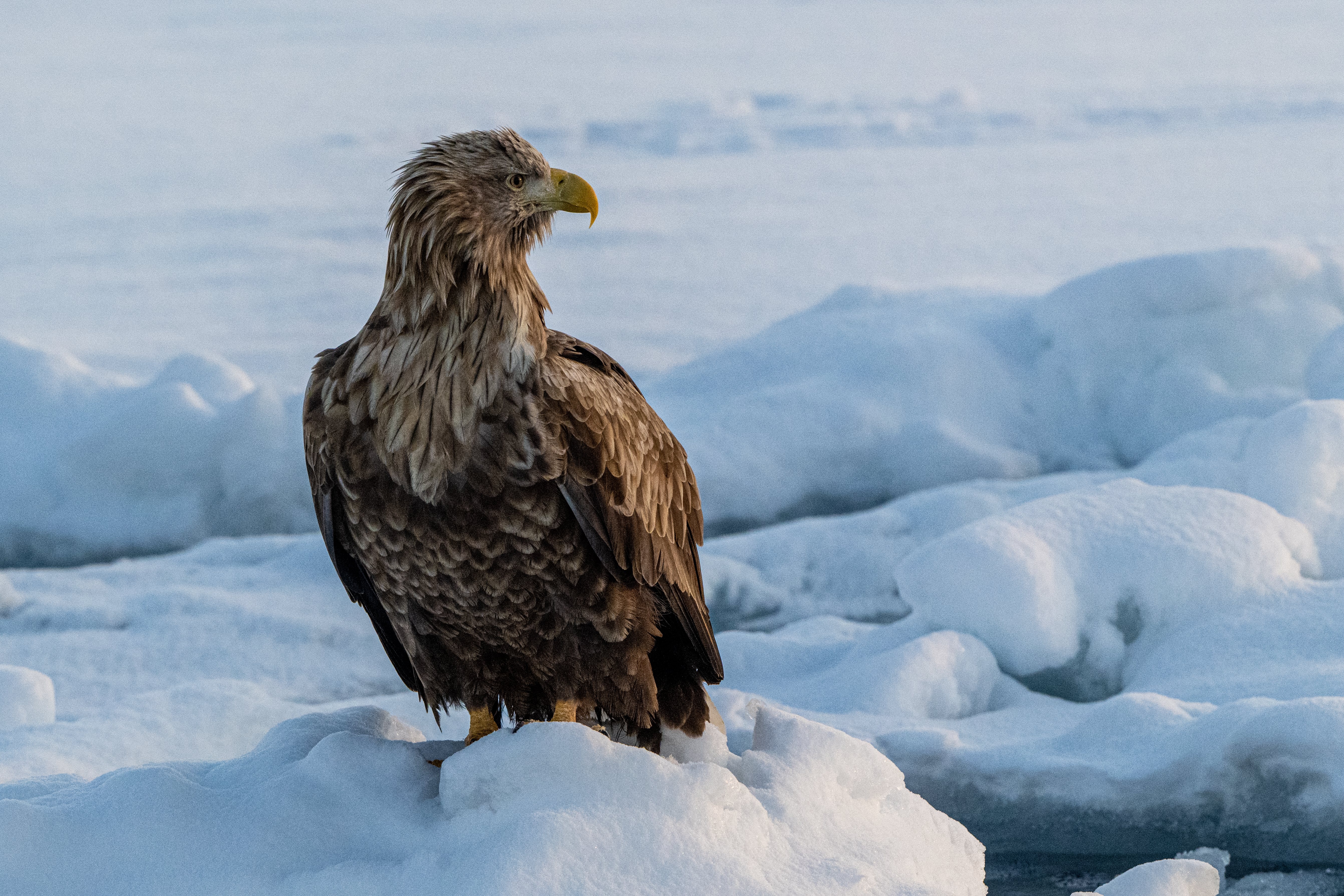
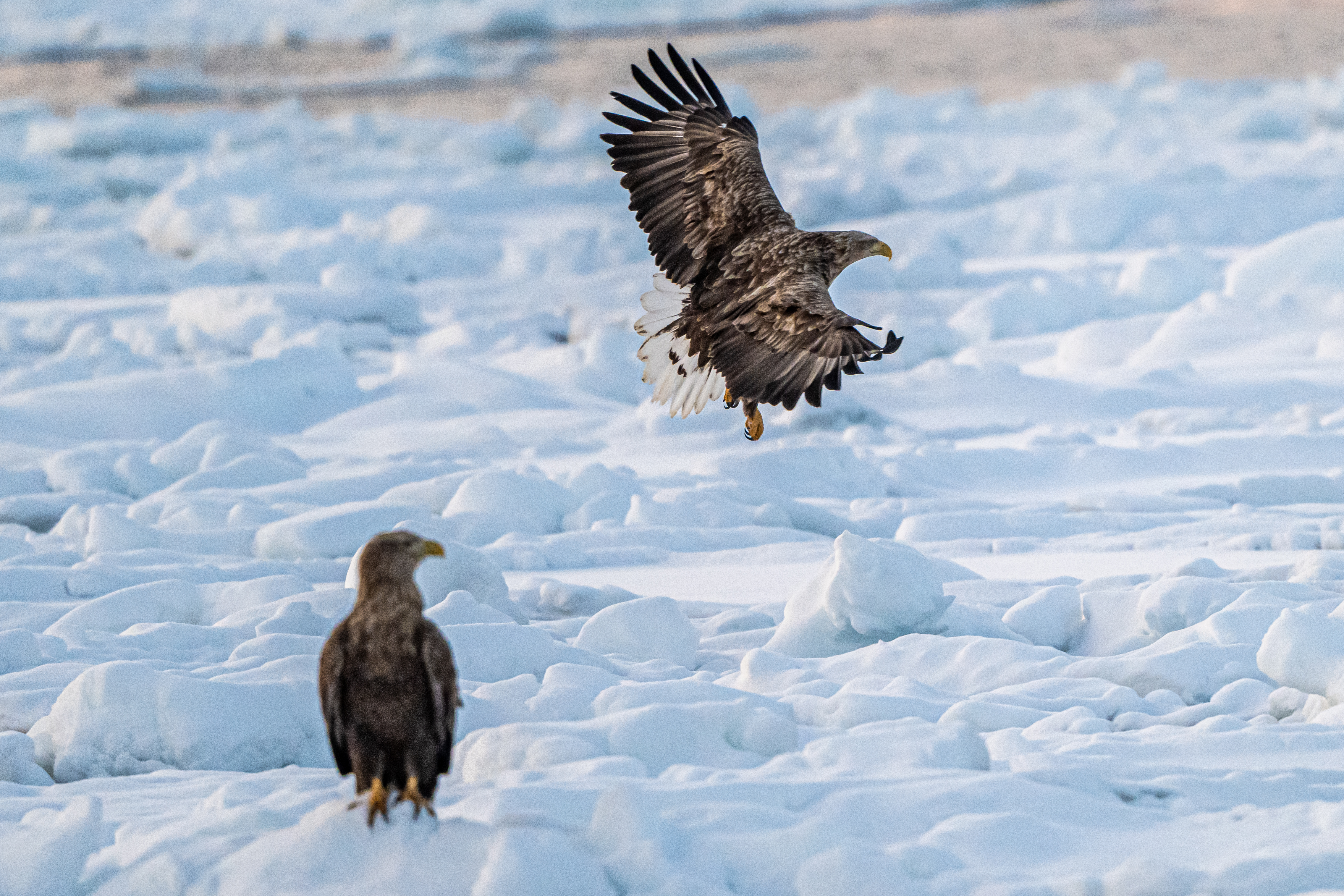
The Steller’s were joined by a few White-Tailed Eagles, only slightly smaller, about the same size as our Bald Eagle. Note difference in bill size. Unlike the Steller’s they are fairly numerous across the top of Eurasia.  There were also some Slaty-backed Gulls and some Large-billed Crows.

As the sun slowly rose, the harbour behind us began to show.  The snowy mountains in the background and the drift-ice we were sitting in occasionally took my attention away from the birds.  I was also now able to focus on a few flying shots as birds seemed to be coming and going all the time

Drift-Ice at Rausu

It was all pretty frantic as this is a one-time shot, and any shots that I missed I would not be getting.  It was too cold on the deck to do much checking the quality of my photos.  I could only hope that my technique was solid enough that there would be some good pictures.

It was over all too soon.  We headed into the harbour, I was bundled into a little car and taken back to my minshuku where breakfast was on the table waiting for me.  I started eating and was told, sign language of course, that the bus would be stopping outside in 30 minutes.  OK, and then that changed to 15 minutes and I would be driven to the bus station for the ride back to Kushiro.  By 9:00 I was on my way back to Kushiro.  The whole Rausu adventure lasted 16 hours.  I had hoped also to find a little place where the Blakiston Fish-Owl turned up from time to time.  I guess that turned out to be a no-go.  I’m not sure if they were begin super supportive of what they assumed I wanted or if they just needed me out of there.

Oh well. This was my last Japan birding effort.  Now I will, in the next two weeks, change gears a bit.

Next Post

Posted in Birds and Animals, Japan | 4 Comments

Red-Crowned Cranes – Tancho

(Don’t forget to touch images you wish to look closer at)

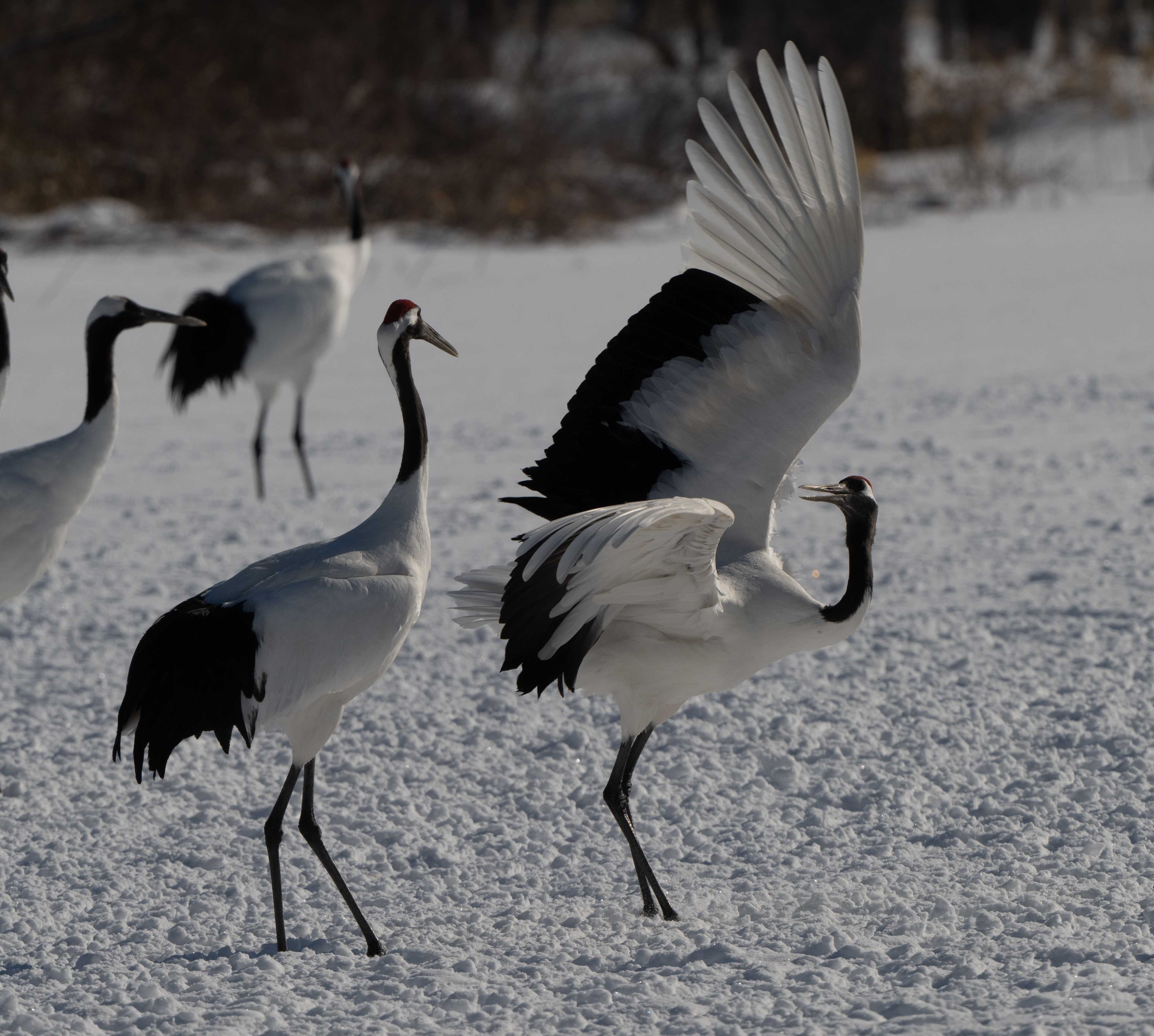
As I approached my first Red-Crowned Crane viewing area I was initially disappointed.  There were no other cars in the parking lot and I couldn’t see where the birds might be.  I expected that the feeding time might have passed but I hoped to see some left over activity, like at Izumi. But then I walked around the corner and there they were.  Only about twenty but resplendent.  Tall, black neck, head and long skinny legs and most prominently the black bustle, almost unique in birds that I have seen.  But most importantly they are snow white.  The visage so in keeping with this wonderland of stark black leafless trees and deep snow that covers Hokkaido in winter.  The red crown on top of the head is not at all prominent but is the eponymous feature that I worked hard to capture.  While not as impressive as the mammoth number of birds in Izumi, the incredible beauty of the Red-Crowned Crane more than makes up for it.  It is no wonder that it has so captured the imagination of the Japanese people.  The black bustle comes from the black secondary wing feathers.  Most white birds, when they have black accents, choose to have them at the end of the wing on the primaries.  Look at the shots where the wings are extended, flying, dancing and squabbling and pay attention to the black secondaries.

I had arrived in Kushiro, on the Northeast coast of Hokkaido after two days of riding high speed trains, Shinkansen, from bottom to top of Japan.  I spoke with the Information Centre staff about using public transportation or tour buses to get to the viewing areas, but I decided that having a car would be best for my purposes.  My pickup time to get my car was 8:00 and it took 45 minutes to find my way to my first stop.   Hence the reason I thought I would be late for feeding. In Izumi it would be all be said and done by this time.  My first stop is called Tsurumidai Plain.

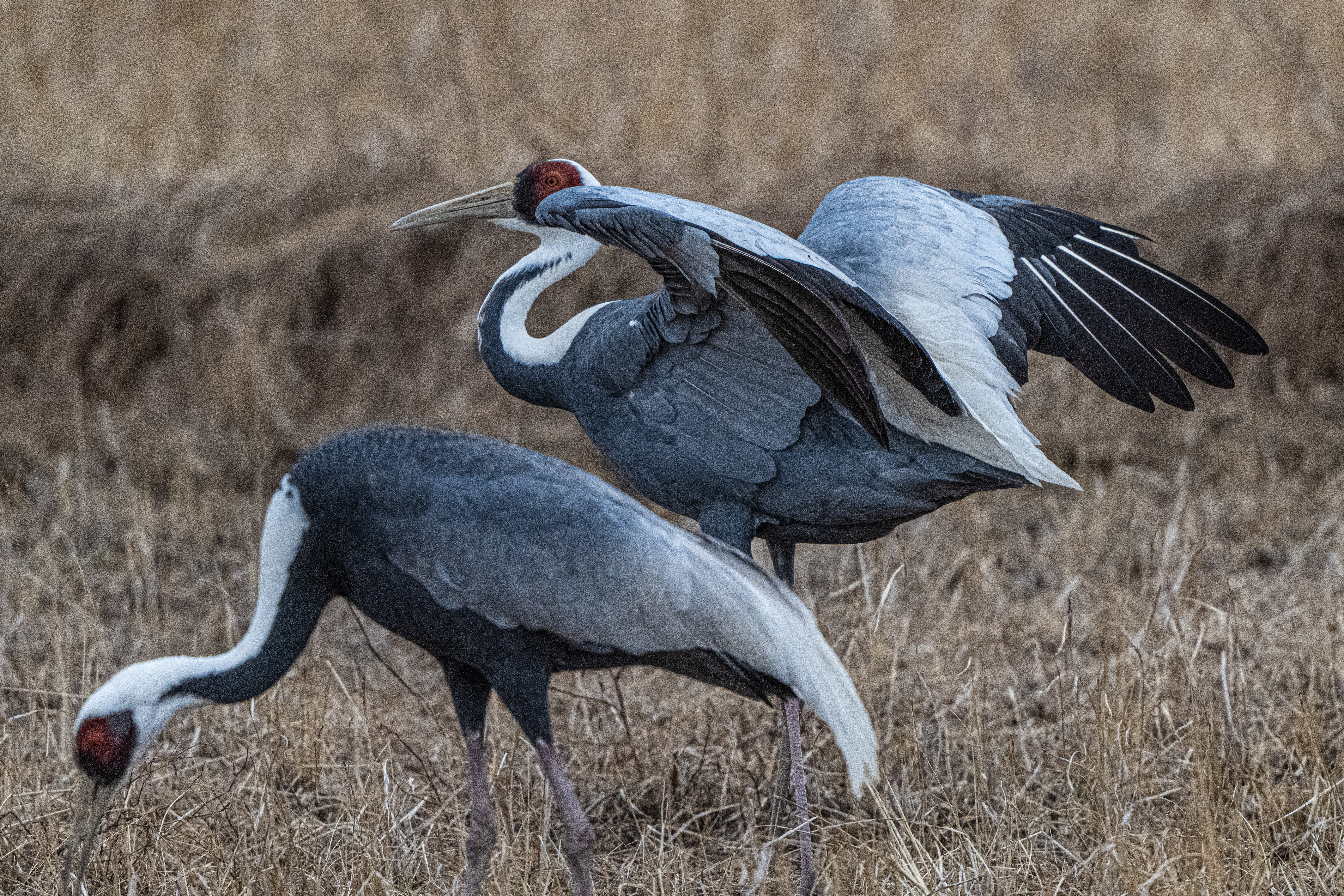
The situation with the Red-Crowned is quite different than on Kyushu with the Hooded and White-Naped.  One hundred years ago Red-Crowned, like our Whooping Cranes, were down to between 20 and 30 individuals.  They would migrate in winter down into Japan from the steppes of Russia and China to the fast disappearing wetlands.  A few people started feeding them to stave off extinction.  The wetlands around Kushiro are the largest remaining wetlands in Japan and they are now protected as part of Kushiro Shitsugen National Park.  Over time the feeding program spread around the park to a number of locations and the Tanchou, as they are called here, quit migrating.   About half of the world’s 3000 Red-Crowned still migrate from Siberia into China and North Korea and back for breeding.  So the numbers here, around 1500, are far less than in Izumi, and they are not concentrated in one area. 

As I was taking my first few shots at this first stop more Tanchou began arriving a few at a time.  This gives the opportunity to get flying shots (BIF –Birds in Flight).  BIF is not great at Tsurumidai because of trees and power lines, but it was fun trying.  After about half an hour; more cars and a bus had brought many more people; now as many as the cranes we were all here to wonder at.  And then a farmer came out from his barn and began throwing seed around by hand and the birds chased him around the field.  Again very different than Izumi where feeding of 15,000 birds necessitated a different approach, but similar in that the birds knew when the food was coming.

There is some safety in having different migration paths or living environments.  The other large white crane, the Siberian, also has about 3000 members left but because about 95% breed in Siberia and winter on Lake Poyang in China they are considered more at risk than the Red Crowned or even the Whooping Crane with less than 1000. Any environmental or climactic disaster could wipe them out.

I stayed at Tsurumidai until after most of the other birders had departed and I was able to get photos and video of the Tanchou squabbling and performing their courtship dance.  This courtship dance shows wonderfully their athleticism in a graceful ballet involving leaping, chasing and leg and neck contortion. 

I have inserted a video with some apprehension. Firstly I do a poor job of taking them and can’t edit them. They are also laborious to upload. The reason I have done so this time is that my efforts to describe the dance is pale with the video. I hope it works

Courting Dance

I drove down to the next site called Otawa Bridge, famous for getting atmospheric shots on a river.  My shots here were of a few birds swimming in the river and a Whooper Swan.  The next morning I was back earlier to get distant shots of birds on the river as the morning steam was still rising from the river.  It got to about -12C at night while I was here, never getting above 0C during the day. As the whole time I was here the days were bright sunlight the dreamy fog filled shots were not to be.

Early morning on the River

The next stop was another feeding site, Tsurui-Ito Sanctuary, in the village of Tsurui.  I also had lunch and stopped in at two potential places to stay.  Everything is booked. Kushiro is a city and I would much rather stay where the birds are, but it is less than an hour’s drive.  Keeping my itinerary open means that I am not always going to get ideal place to stay. The birds at Tsurui were less active so mostly I just enjoyed their beauty.

As afternoon progressed I went exploring in the always well-plowed back roads.  I did see one Red-Crowned family of three birds in a field, but never did stumble on where they went when they left the feeding areas.  My drive back to Kushiro took me on the gravel roads through the park.  I was hoping to see some of the little deer which I did and some foxes which did not surface for me.

The next day, earlier, I repeated much of my first day, but then I headed west to the Akan International Crane Centre.  This has more of a Nature Centre vibe to it with displays, videos and educational material.  There were also about fifty birds in a field centered by a small pond.  I enjoyed having my own vehicle to get me to these sites and just driving around the quiet country roads..

Next Post

Posted in Uncategorized | 2 Comments

Crane Spectacle at Izumi

(To get a larger image of the photos click on them)

My days at the Shin Tsurumi Tei were each the same.  I was up and out at 6:30, still dark, and climbed the outside staircase of the Crane Observation Centre.  When I first arrived I donated 3000 Yen, about Cdn 30, to Crane Conservation.  This allowed access to the Centre, including roof access before the Centre opened at 9:00. 

The sun was giving hints as to the day’s weather over the mountains in the east but we could not see out onto the field where the cacophony had been underway for some time.  Our cranes were hungry, but then I think they always are, as they seem to eat all day.  Soon, in the lightening sky swarms of Rooks began. Thousands have moved in to take advantage of the efforts to save the cranes.

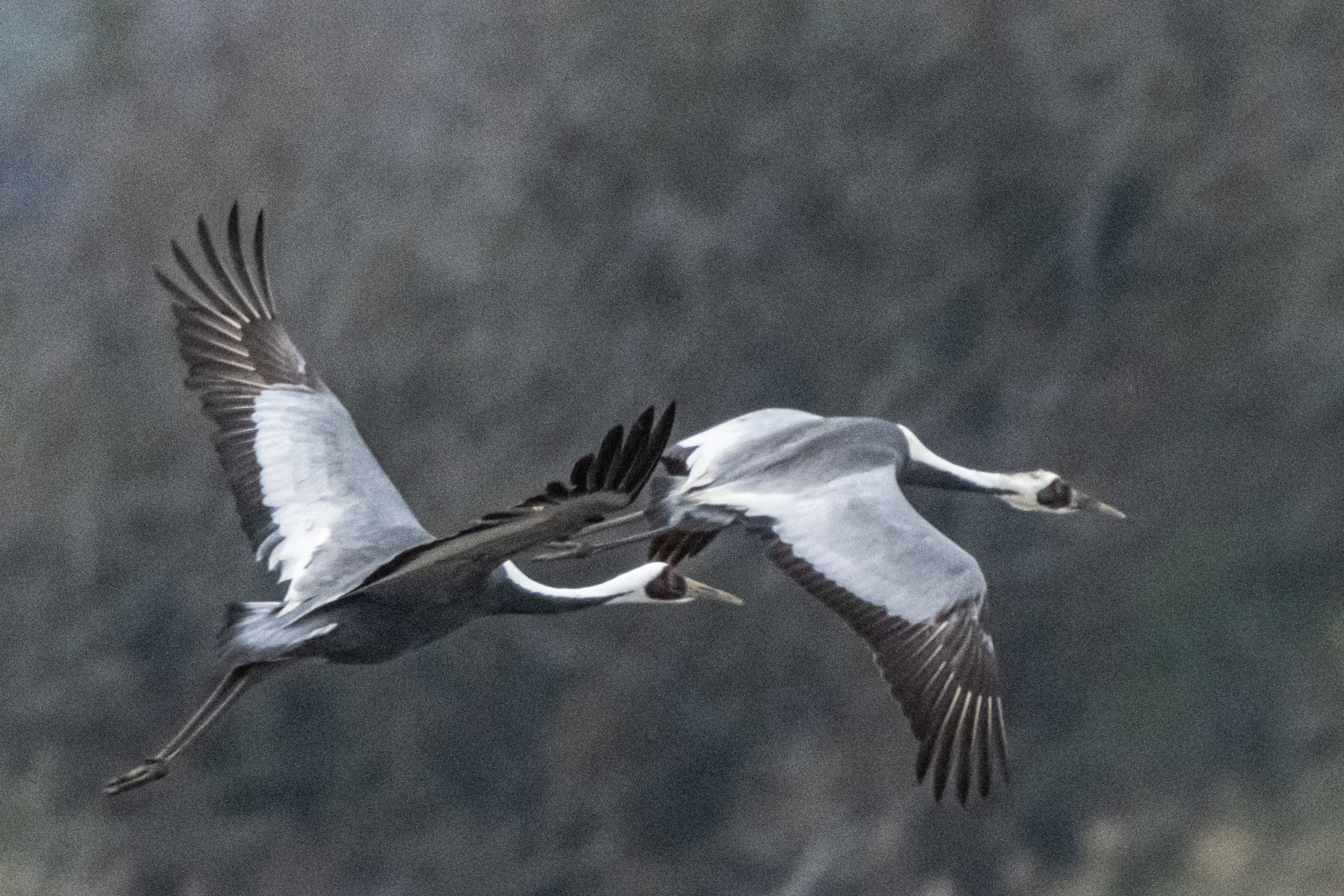
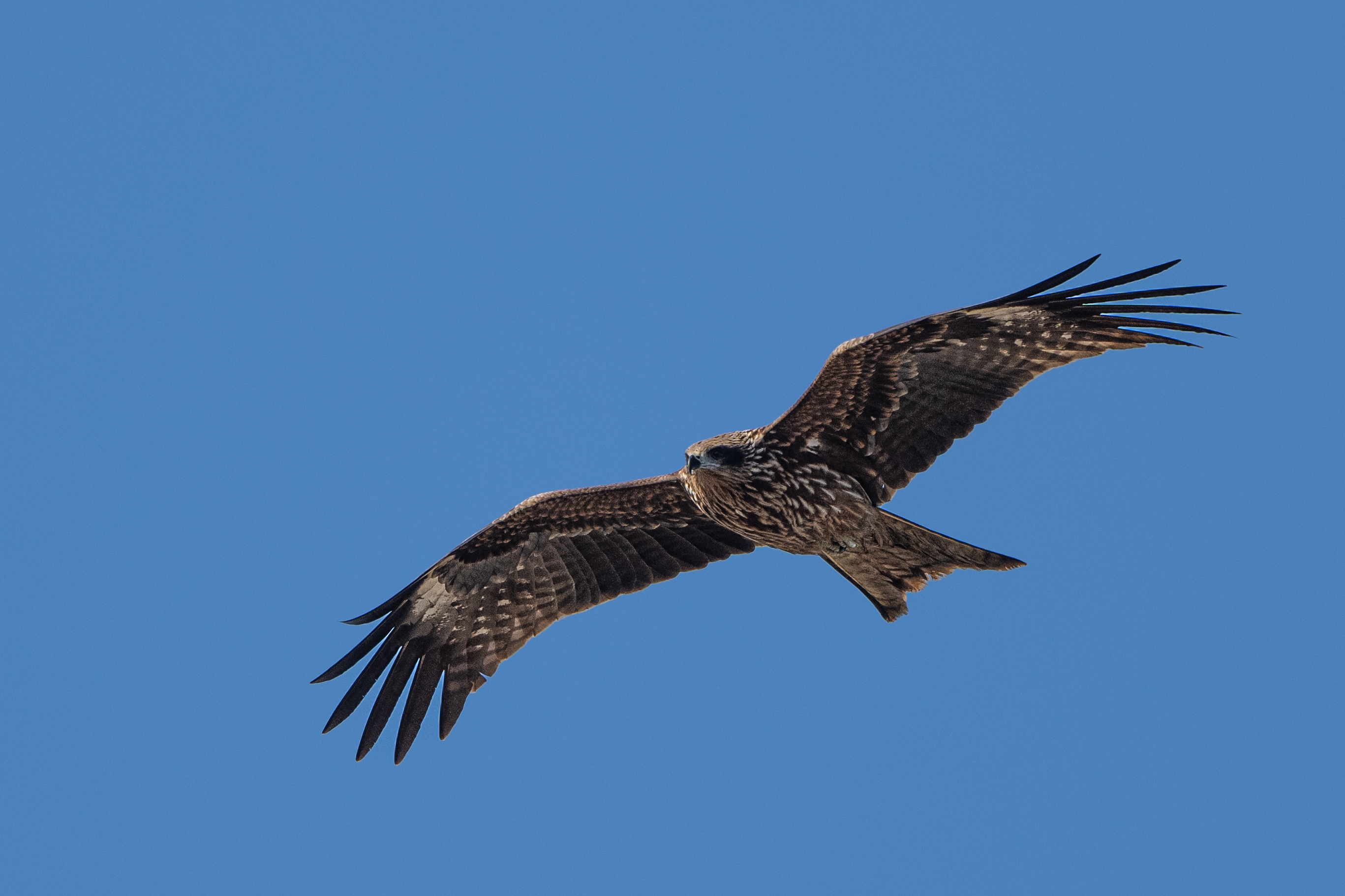
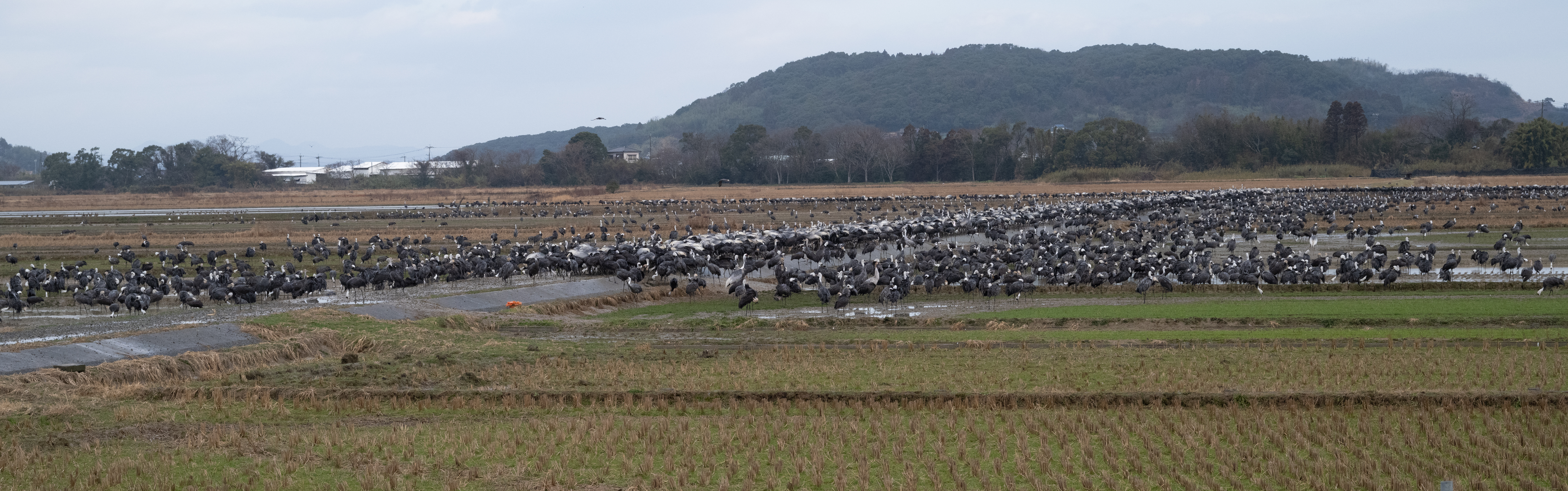
And then streams of cranes began to arrive in groups of a few to maybe 100.  By now it was possible to see the feeding grounds where there were already a few thousand.  As they came in they would circle a bit, looking a place to land.  There about 13,000 Hooded Cranes in the world and about 3000 White-naped Cranes.  90% of each spend the winter at Izumi.  In addition there are herons, egrets, ducks, black kites and of course the rooks that are down in the fields at this time.  It takes close to an hour for all of them to find their way in for breakfast.  There always are a few coming in late.  I guess periodically cranes sleep in as well.

It is the keenest birders that are here for this show.  A few old hands leave at this point.  They have their scopes out scanning the masses for rarities.  This year there are between 2 and 4 of each of Sandhill, Common, Demoiselle, and Siberian.   One guy pointed out a Siberian to me through his scope, but as I was getting my longer lens mounted the stamped began and the Siberian was lost.  The spotters might leave the show because finding rarities in the stampede is fruitless.  I was hoping to pick my guy’s brains but, like the Siberian, he was gone.  I never did get a better look at any of the rarities.

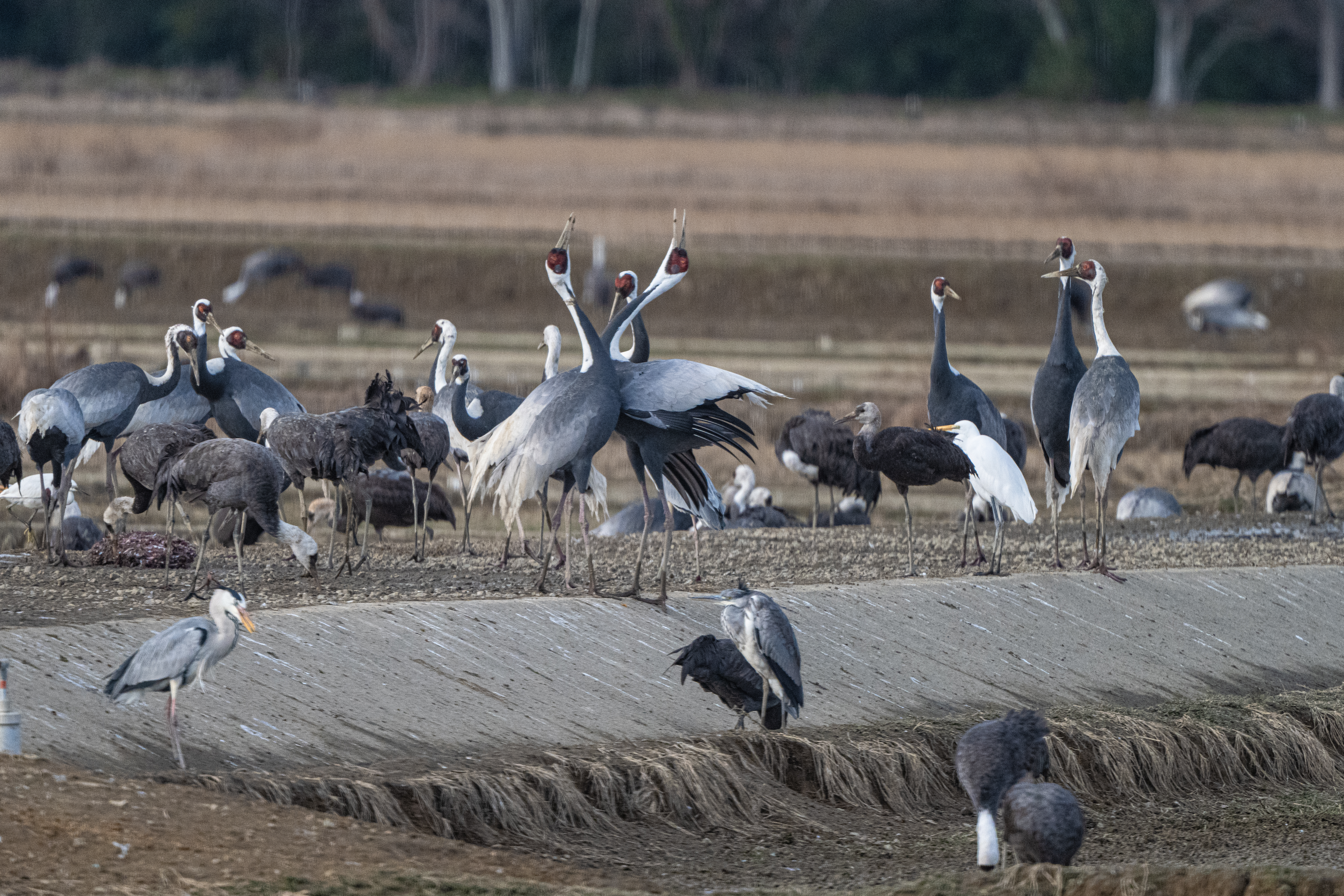
For the rest of us the show continues.  The feed trucks have arrived.  Some people are out spreading feed along the roads from small trucks and others are stirring up the standing water with tractors, which I think might bring up little water being, but I am not sure of that.  The eruption is incredible.  Cranes run, albeit kind of slowly, or fly low to the ground to where they begin their gorging.  Now they are packed tightly together in clusters of more than 1000.  The dark almost black of the smaller but more numerous Hooded predominates, but the bigger slight grey of the White-Naped obvious in their contrast.   You do not see their heads, white in each case, busy on the ground vacuuming the feed.  Somehow they keep honking.

At about 8:00 I would walk next door to have my Japanese breakfast.  Each morning with different birders who were lucky or smart enough to find my little minshuku. 

Minshuku Breakfast

I would head back out at about 8:30 to watch as the birds began to spread out a bit across these fenced off fields.  Before long they would start to fly off to their day time feeding fields, usually in family groups or possibly with a couple of families.  Never more than six or seven.  I would have got my flying pictures at first light on the roof, but I also tried at this time down while walking on the road.

By 10:00 most birds, about 75%, had left for further fields and I would go walking for a couple of hours.  I probably missed out on finding the rarities by not having a car or hiring a guide.  I think those in the know knew where all of these hung out each day.  I could have done that, but I also enjoy just the process of ambling around by myself seeing what I could find.  I am ambivalent on this.  I would like to find more birds, but I did pretty well on my own as well. I walked (birding walking is nothing like hiking walking) about 10 kms each day.  It was so reminiscent of my 2018 Shikoku walk that I really was not tempted to get a car.

By mid-afternoon it was time to relax with a snack and tea or coffee.  One day I got a ride into Izumi to make train reservation.

While in my room or in the minshuku dining area I could look out on the fields, much depleted but still mesmerizing.  There seemed to be a small cluster of birds of all types that hung out in the same  spot each day.  They jumped and squabbled with the larger ones dominant and the small daring in and out.  Strange, because all around the vast majority were head down feed non-stop.

 I had dinner with the other guests at 6:00, and then it is time for a bath.  Ideally the minshuku or ryokan has a public bath (sento).  The process is to have a shower, washing thoroughly; who wants to bathe in dirty water.  Then you get into the tub.  Most, in small minshukus like Tsurumi Tei, are about big enough for two people, but in practice you just take turns.  The water was held through continual heating at 41C.  In this cold birding weather and having walked quite a bit I still get very stiff from my operation and lack of conditioning.  I again already addicted.

I spent five nights in Izumi and was consumed by the spectacle, humbled by the hospitality and completely immersed in the Zen-like experience.  On to Hokkaido and the Red-Crowned Cranes.

Next Post

Posted in Birds and Animals, Japan | 2 Comments

Crane Hunting – Kyushu

Back to Japan

Travel in Asia is wonderful.  Or at least it is for me.  It is not filled with wildlife like Africa or as comfortably familiar as Europe, but the complexity and the diversity of cultures make it so intriguing.  Travel in Asia is tough, but I guess that is why I am so attracted. It is probably inevitable that my first foray into travel after three frustrating years of Covid and hip replacement would lead to Asia.  I needed to wake up, Asia will do that.

I have been to many, not all Asian countries, but three have drawn me back a number of times.   First I was drawn to China.  I had been twice while working and those trips kindled a need to delve deeper.  Two long bike trips and two more trips as part of multi country adventures.  Business trips also stimulated interest in Thailand, which lead to two bike trips and a tourist visit.  My first time to Japan was in 2010 a south to north bike trip following Japan’s Cherry blossoms (hanami) was meant to be my one big trip to Japan.  I have since learned that, for me any way, a little leads to a desire for more.  2018 found me back in Japan following in the footsteps of Kobo Daishi, set 2000 years ago, on his Shikokoku 1200 km 88 temple pilgrimage. 

During these adventures I have learned to love travelling in rural Japan.  I like the small towns with their neat houses and infrequent tourist facilities.  I like finding the small guesthouses, usually not mentioned on any internet site.  These ryokans or minshukus as they are called can provide wonderful breakfasts and dinners if you make the proper arrangements.  So I am back for more, this time focused on Southern Kyushu and Eastern Hokkaido, winter birding meccas.  

I’m staying for a few days in a small minshuku, Shin Tsurumi Tei, in a field close to the East China Sea on the south coast of Kyushu, Japan’s southern most of its four major islands.  Tsuru is one of the Japanese words for Crane.

 In three hectic days I came directly from Calgary, not the usual tourist itinerary.  Getting here was an adventure in itself.  Buying a Japanese rail (JR) pass while in Canada took three weeks.  I had to be approved before I could apply and pay for a voucher, which arrived by FedEx from London, England.  When I got to Tokyo I had to find my way to a specified JR station where I waited in line for two Hours to trade in the voucher for a ticket that is the pass, which will not kick in until I make an actual reservation. If I lose the ticket my pass ($900 for three weeks) there is no recourse. My train travel is done.  So much of the Japanese way of doing things is perplexing, and traipsing around Tokyo worrying about missing my plane to Kyushu wasn’t a good start.

Getting through Tokyo, finding my transition hotel, getting my cell sim card working, flying on to Kagoshima on Kyushu, getting a bus to this small town of Izumi, and then a taxi to my little Minshuku, Shin Tsurumi Tei, are all part of the challenge that I maintain I like to do.  Those three days made me question my penchant for independent travel.  But I am here and now I can get to work.

I am looking for cranes.  The ones that fly, not the ones used on high buildings.   There are fifteen species of cranes in the world.  All but four are endangered.  The most endangered are the Whooping Crane that breed in Northern Alberta and winter on the Gulf in Texas.  The other North American crane is the Sandhill Crane, one of the not endangered species and of which I have hundreds of photos culled down from thousands.  I have photos of the Saurus Crane from India and the Blue Crane from South Africa.  I want more cranes.  Japan has recorded seven species of crane, two of which spend the winter in Izumi and are too many to count as I look out my window.  Four more crane species apparently turn up here in onesies or twosies.  What the birding world calls rarities, but I am unlikely to find those needles in this haystack of 15,00 cranes, plus egrets, herons, ducks to name a few.  The seventh will take me to Hokkaido.

Cranes are water birds.  Most breed in the far north in remote wet lands, and migrate south to warmer winters where they can get access to shallow wetlands where they can spend the night somewhat protected from predators.  Water can warn them of approaching predators. By day they fly out to fields looking for grains, snails and small water creatures.  Wetlands and prairies are the two habitats that man has been most diligent in destroying.  Hence the endangered status of most crane species, along with many other species that depend on those environments.

In part because of the high esteem that cranes hold in many civilizations man has made efforts to protect them.  In North America we have brought the Whooping Cranes back from sure extinction by protecting their breeding grounds and creating a winter haven for them.  Sandhill Cranes, even though still hunted in places, have reserves created to protect them and to provide winter feed.  At least one place in India provides tons of grain each day to feed Demoiselle Cranes that migrate over the Himalayas each year.  The largest concentration of cranes might aggregate each year at Poyang Lake in China and they are protected there as well.

In Japan, as the wetlands were being converted to farmer’s fields and shopping centres the cranes that figured highly in literature, poetry and art were disappearing.  In Hokkaido they did such a good job looking after the Red-Crowned Cranes that about a half of them stopped migrating.  The ones I hope to see and photograph are now non-migratory, like a small flock of Whooping Cranes in Louisiana.  In Izumi significant sacrifice has been made within the region to protect the Hooded Crane and the White-naped Crane.  These birds all spend the spring/summer in Siberia where they breed.  The whole community grain behind this effort.  They chop up feed of various sorts, add grains, stir up the wet fields to raise little water creatures that add protein and more to sustain the roughly 15,000 birds that aggregate here every year. By negotiating with farmers to let the birds fly out each day to forage in the wet fields and feed on the second growth grains the cranes that formally spent winter in dozens of  wetlands around Japan have learned to make their way to Izumi.  And to be a bit repetitive that is why I am here.

From here I will train all the way across Japan to Hokkaido, the Red-Crowned Crane and a few other birds that find cold snowy Hokkaido to the liking.  While it is cool here right now it is generally quite temperate, but Hokkaido is in the throes of winter.

I’m going to sign off now. No pictures to include because I am just in the process of taking them, and the even bigger job of sorting through them.  I hopefully will have a few days after Hokkaido to try something else, before fly on to Taiwan to go for a bit of a bike ride. 

Next Post

Posted in Uncategorized | 3 Comments

In Between Dances

I am doing a post at this time primarily to brush up my posting skills after such a long hiatus. This in preparation for future travels.

It is almost three years since my last posting; Bangkok to Singapore.  Since then the world fell into the grip of covid and the panic that accompanied it.  I also began to suffer the ravishes of time.  An old rugby hip injury that had plagued me for 25 years finally would not let go, as it always had.  So I joined the queue for a hip replacement.  In 2021, thanks to my two wonderful nieces I was able to celebrate my 80th at the Stanley Mitchel Hut in the Yoho. I hobbled in lightly loaded, while those friends and family who could join me carried food, equipment and sometimes me along the gnarled trail into my favourite part of the Rockies. 

As winter approached, progressed and finally passed and my new hip failed to materialize I imagined my final years of mobility slipping away.  Finally in April of 2022 I got a nice new titanium hip, and my recovery began.  My mobility slowly returned.  It took six weeks before I could drive my car, and then I was able to cycle a bit.  Walking has been much slower, but I worked at it and it is coming.  In June, pushing the recovery a bit, Rich King and I drove across Saskatchewan to Thompson and took the train into Churchill on the Hudson’s Bay.  We both had been wanting to see the town and the Bay, but it was birds that dictated the time.  June is a good time to see migrating birds that we don’t see in our neck of the woods.  Next I drove up to Grand Prairie in August to see my son, and to look for more birds.  In September I spent two weeks driving to and visiting Victoria on Vancouver Island.  I biked up to 100 kms each day on my new electric bike (sorry you purists), and saw a few more birds.  My final driving trip was in November, leaving Calgary in our first big snow storm, to the Rio Grande Valley in Texas to attend their annual birding conference and to visit the winter refuge for Whooping Cranes.  So, 2022 has been “all about birds” to steal a tag from Cornell Labs. 

In 2022 I managed to capture photos of just over 100 species of birds.  About half of them were new birds to my collection.  I hope it is of interest to some of you, as I would like to share some of these birds with you.

Sea and Water Birds.

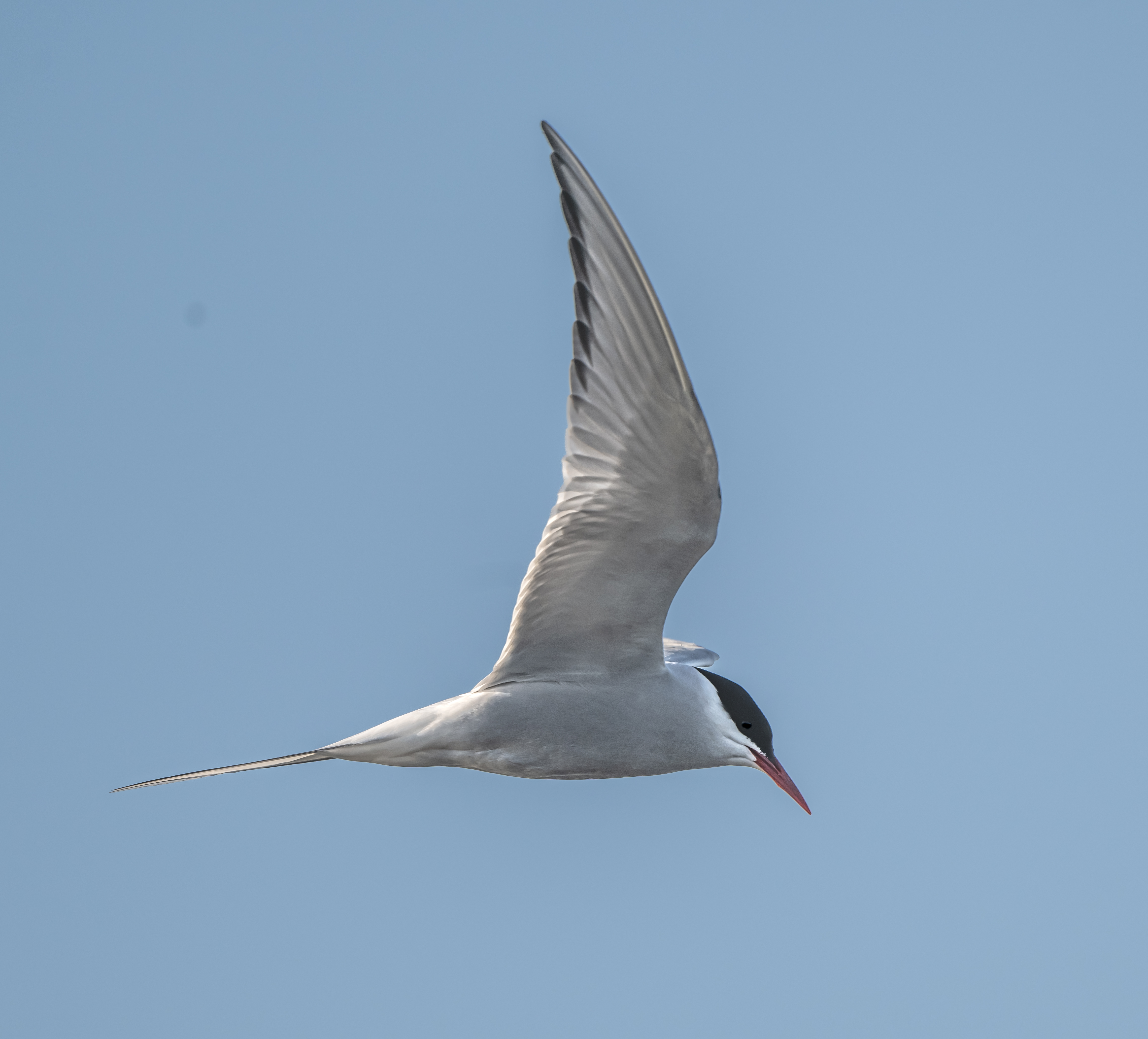
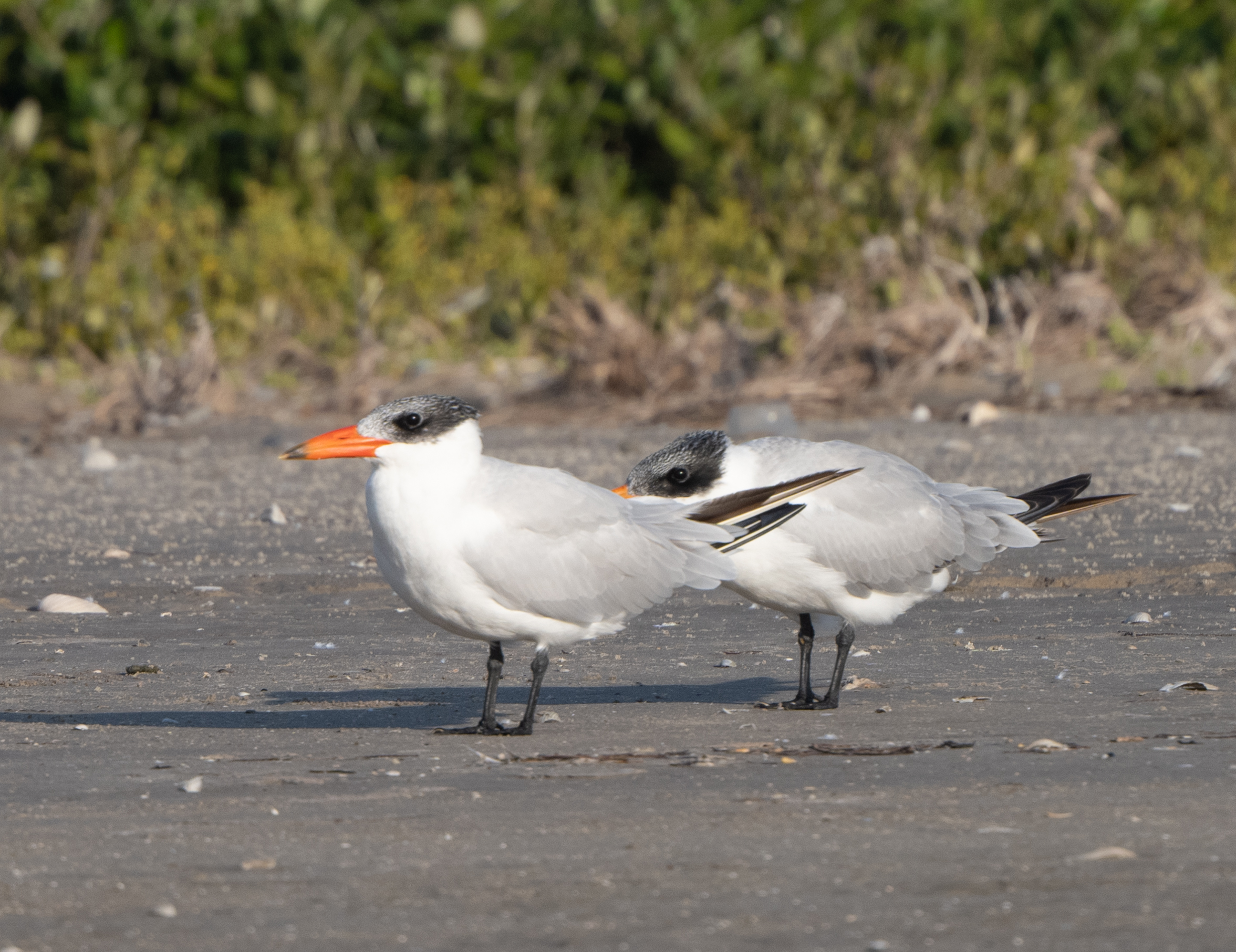
I captured five kinds of Terns this year: Common, Forster’s, Arctic, Caspian and Sandwich.  The most sought after was the Arctic Tern, one of the target birds for my trip to Churchill.  The Arctic Tern makes arguably the longest migration of any bird, travelling continually from the Arctic to the Antarctic each year.  We were able to fully appreciate the Arctic’s mastery of the air from a boat in the Churchill River.  I have also included a shot of the Caspian, The largest of the Terns.  This shot is taken on my trip to Texas and shows the fading black crown that happens to many black headed Terns and Gulls out of breeding season. 

Another Churchill target was the Common Eider, which I guess has always been of interest because I have spent a lot of money on high quality down from these ducks.  The Long-Tailed Duck was another nice addition from Churchill.  The other duck that I have included is the Black-Bellied Whistling Duck from Texas.  Great name and wonderful cackling on the pond by 100s made on my visit.

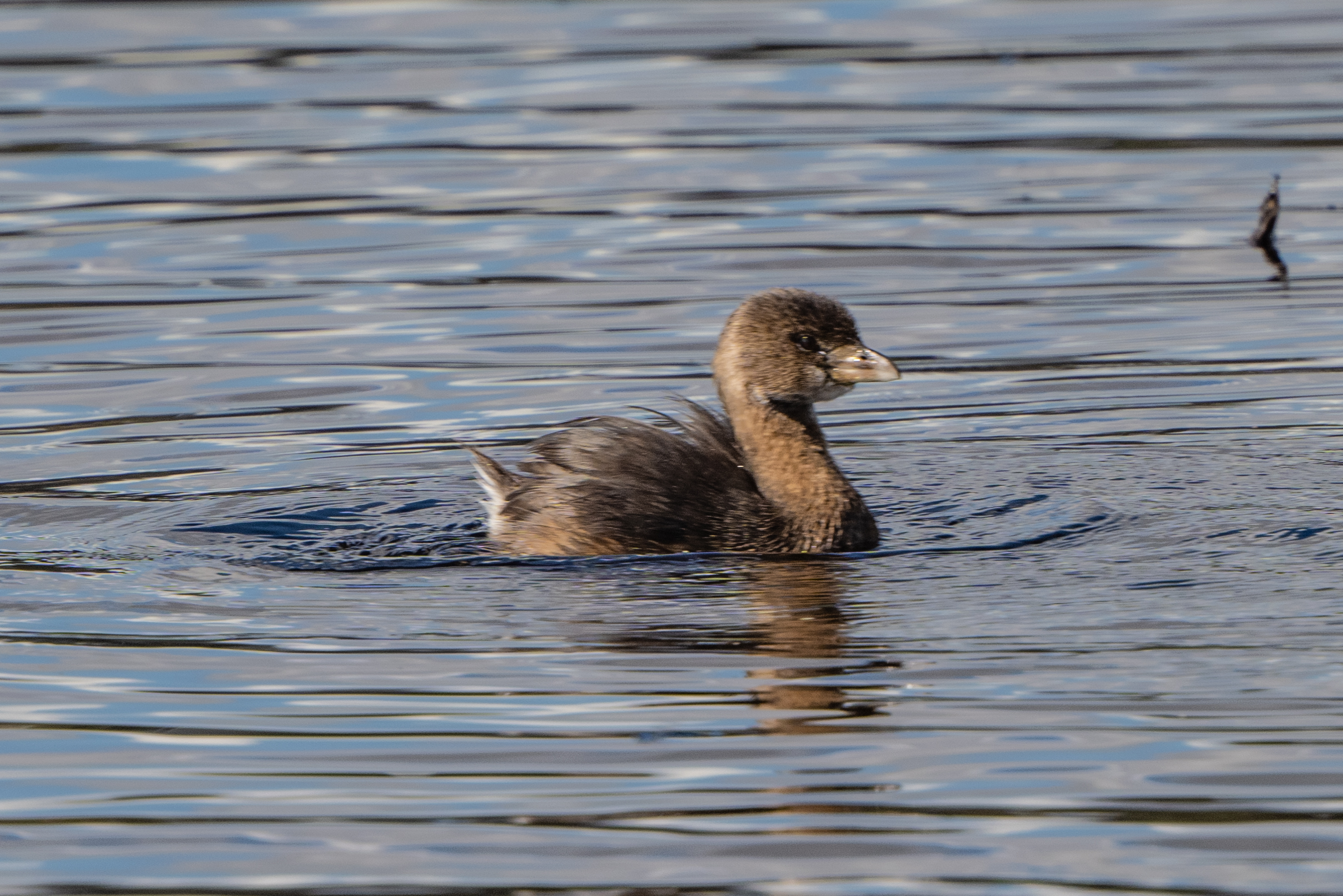
I love Grebes.  I have included a pair of Western Grebe from Saskatchewan and the smallest ones, a Pied Grebe and a Little Grebe from Texas, both new for me.

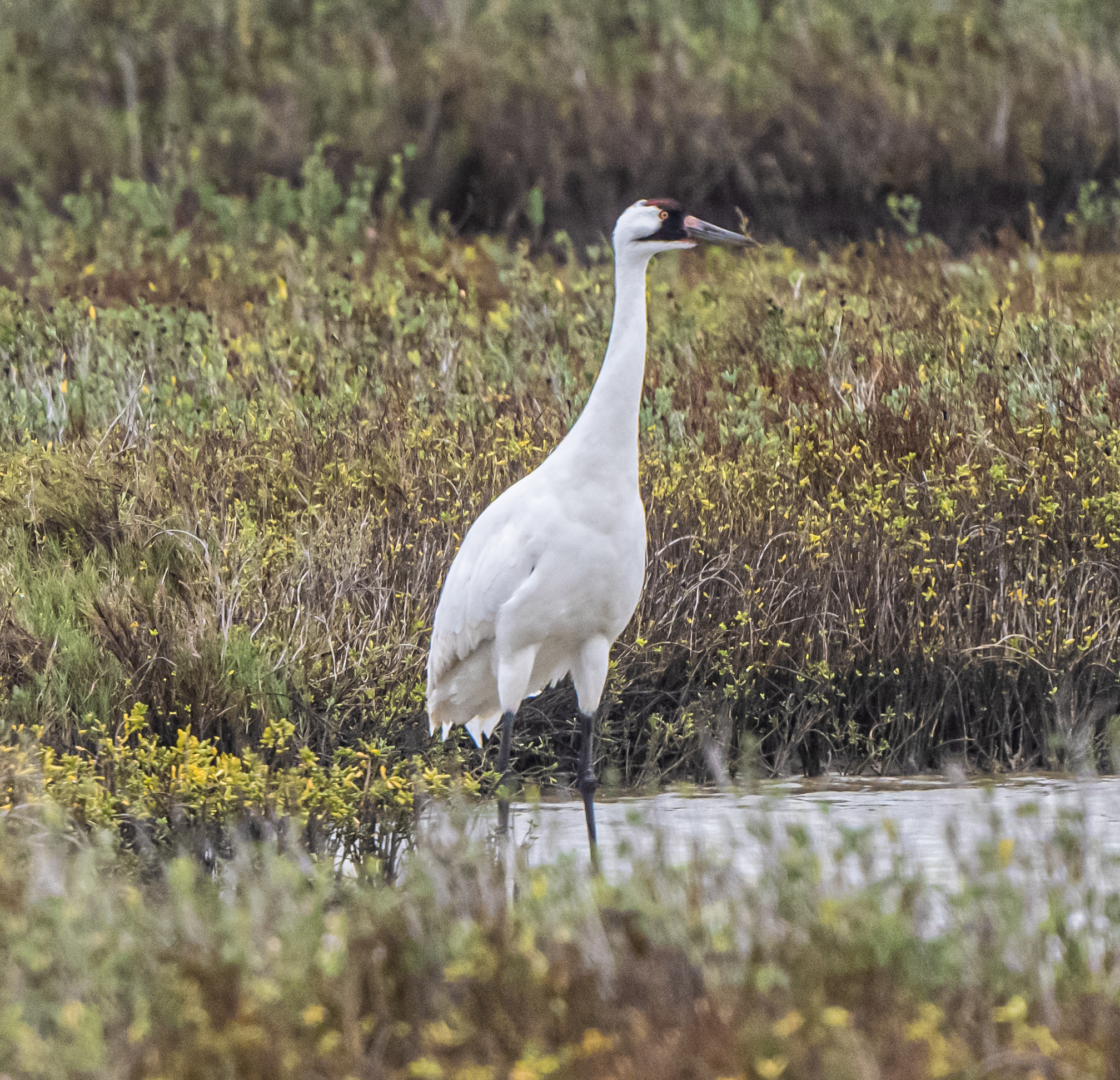
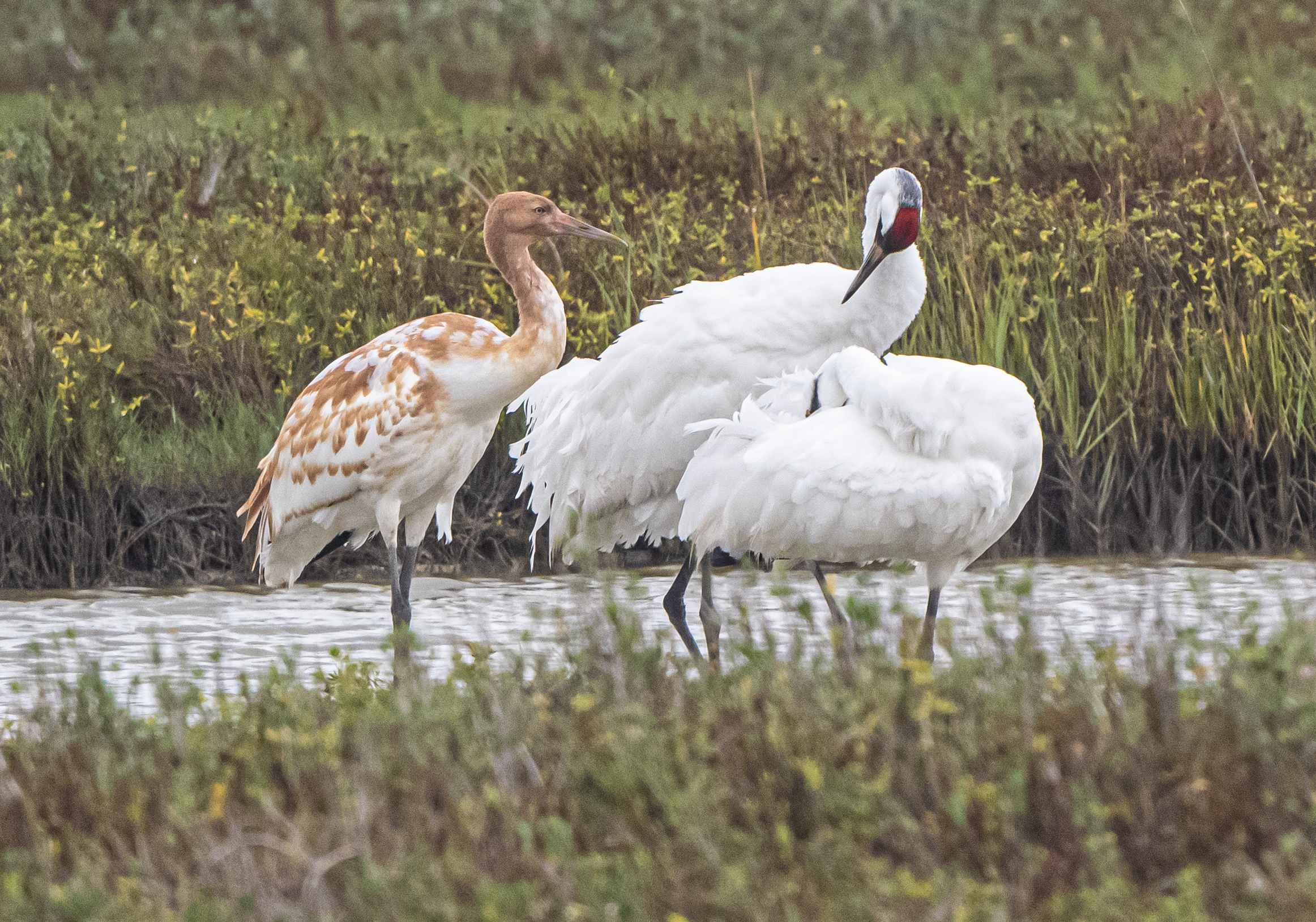
Cranes have become a new interest for me lately.  My trip to Texas was in part to visit Whooping Cranes who migrate from Wood  Buffalo Park to a reserve on the gulf.  As you likely know we have brought them back from the edge of extinction, around 30 birds, to a healthy 7-800.  This is still very threatened but much better than 30.  I made an early morning 200 km drive from “the canyon” (ie. Rio Grande) and only just caught the boat charter at 9:00 that took about 20 of us out to look for cranes.  Not many have made it down from Alberta yet, but we did see about six.  My photos were of a family of three, often what you see in all crane species apparently.  Not great pictures but still an important check-mark.

2022 was great for shore birds.  I saw Lesser Yellowlegs everywhere I went.  This photo is from Grande Prairie.  The Short-billed Dowitcher and the Hudsonian Godwit are from Churchill.  I have good photos of six other shore bird species.

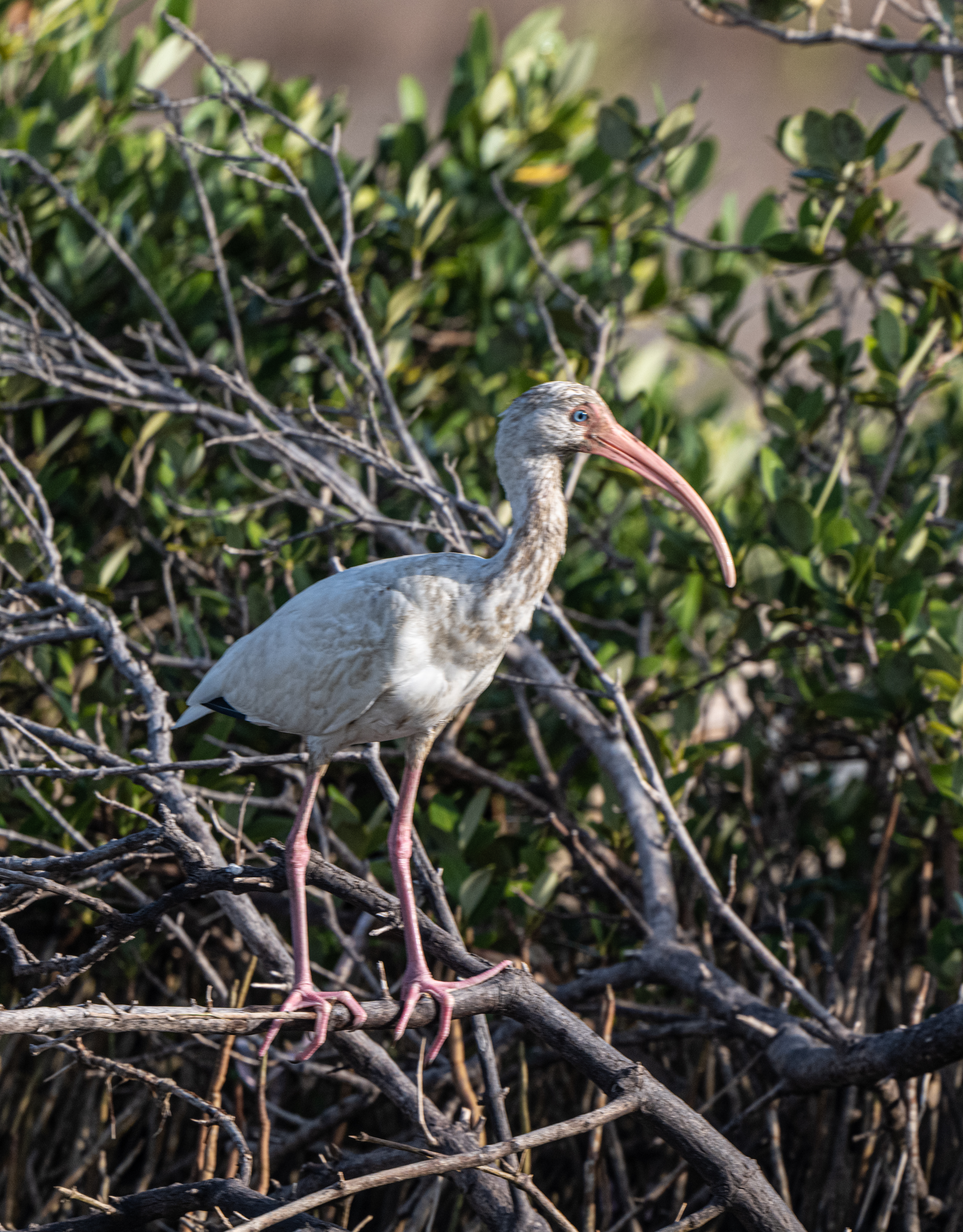
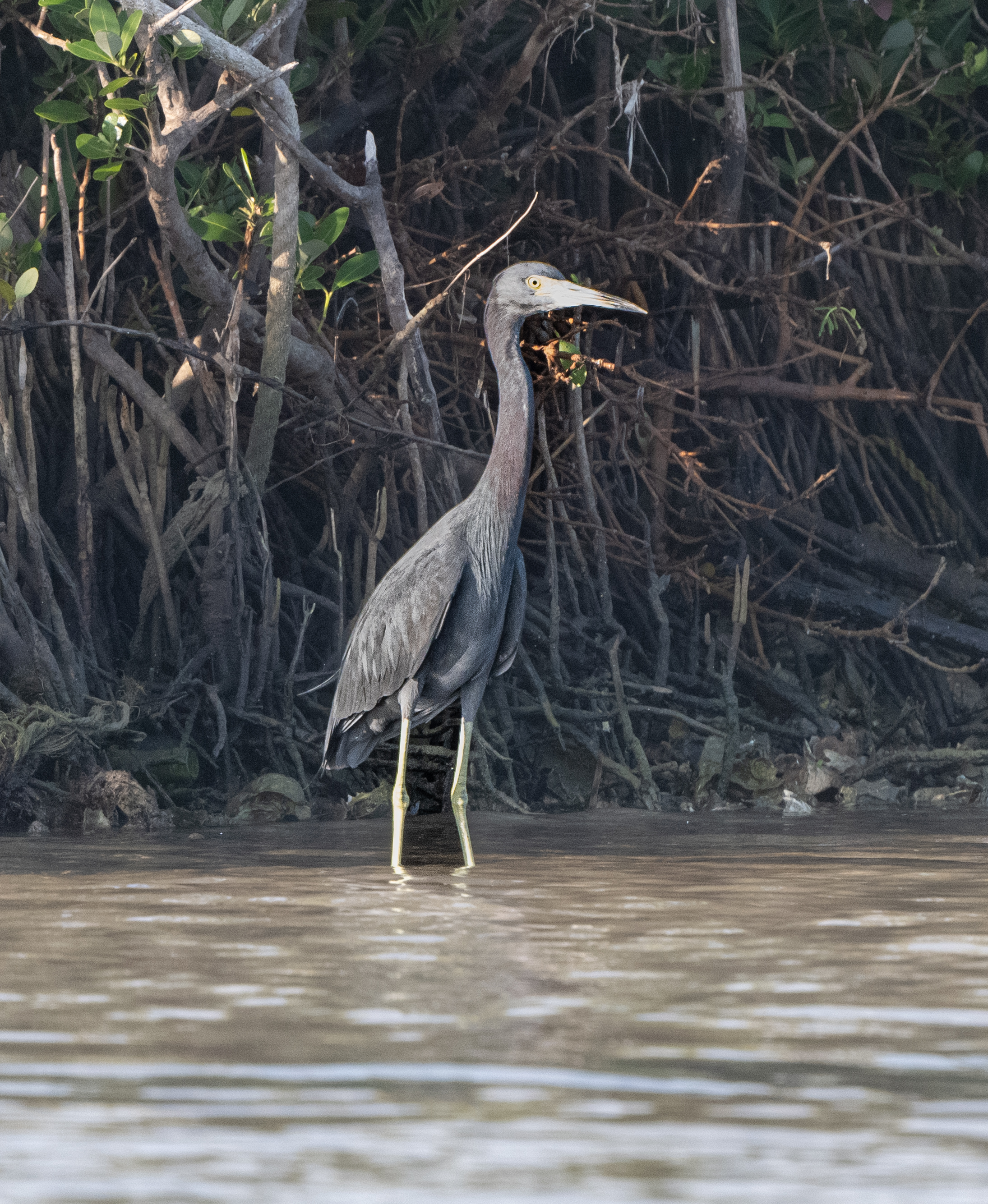
My Texas visit was great for the big Waders.  All these photos come from the coast areas.  The Brown Pelicans are not really waders but I added them in here. I love the yellow feet and black legs. The Tri-colored is all shook up one minute and the next silky-sleek.

Roseate Spoonbill

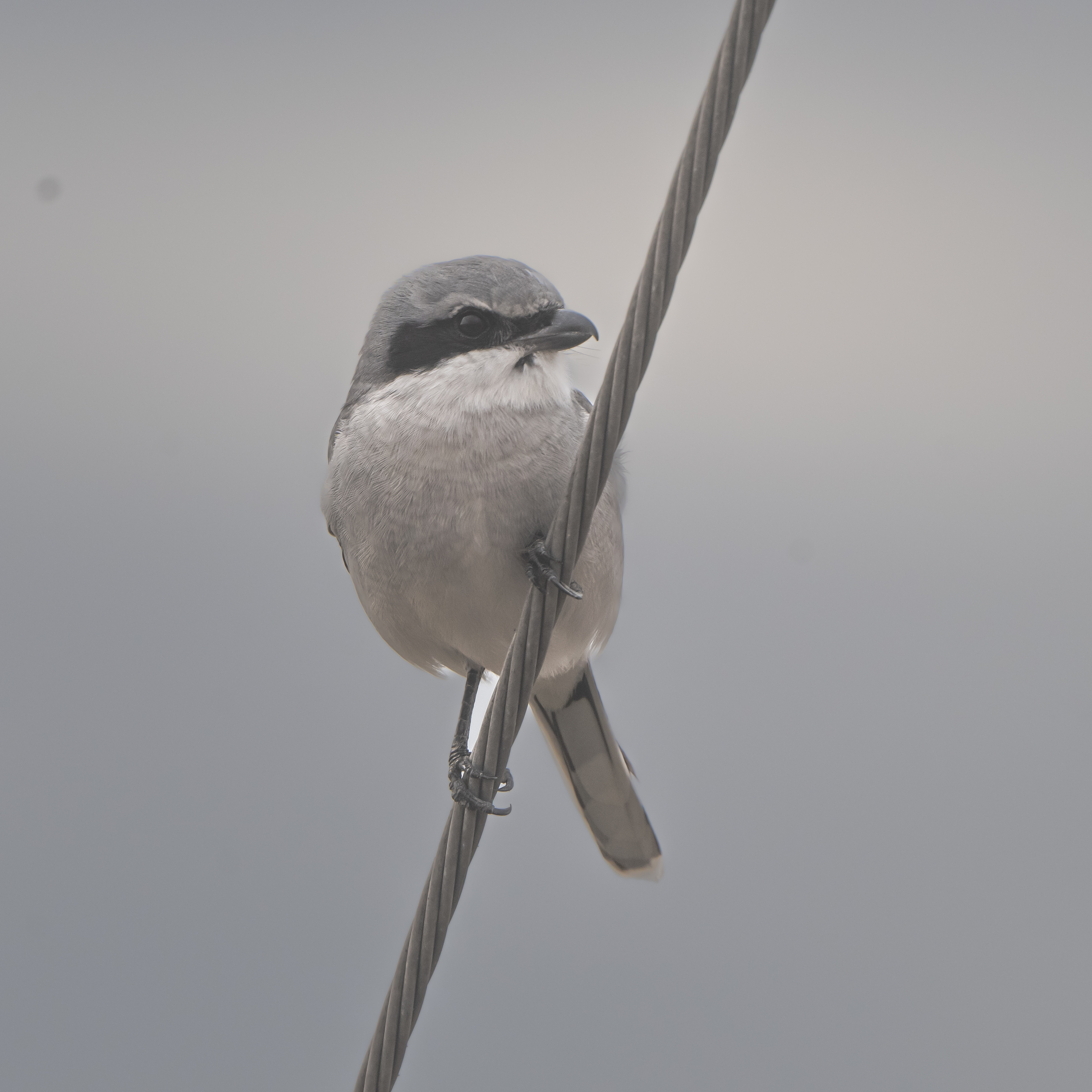
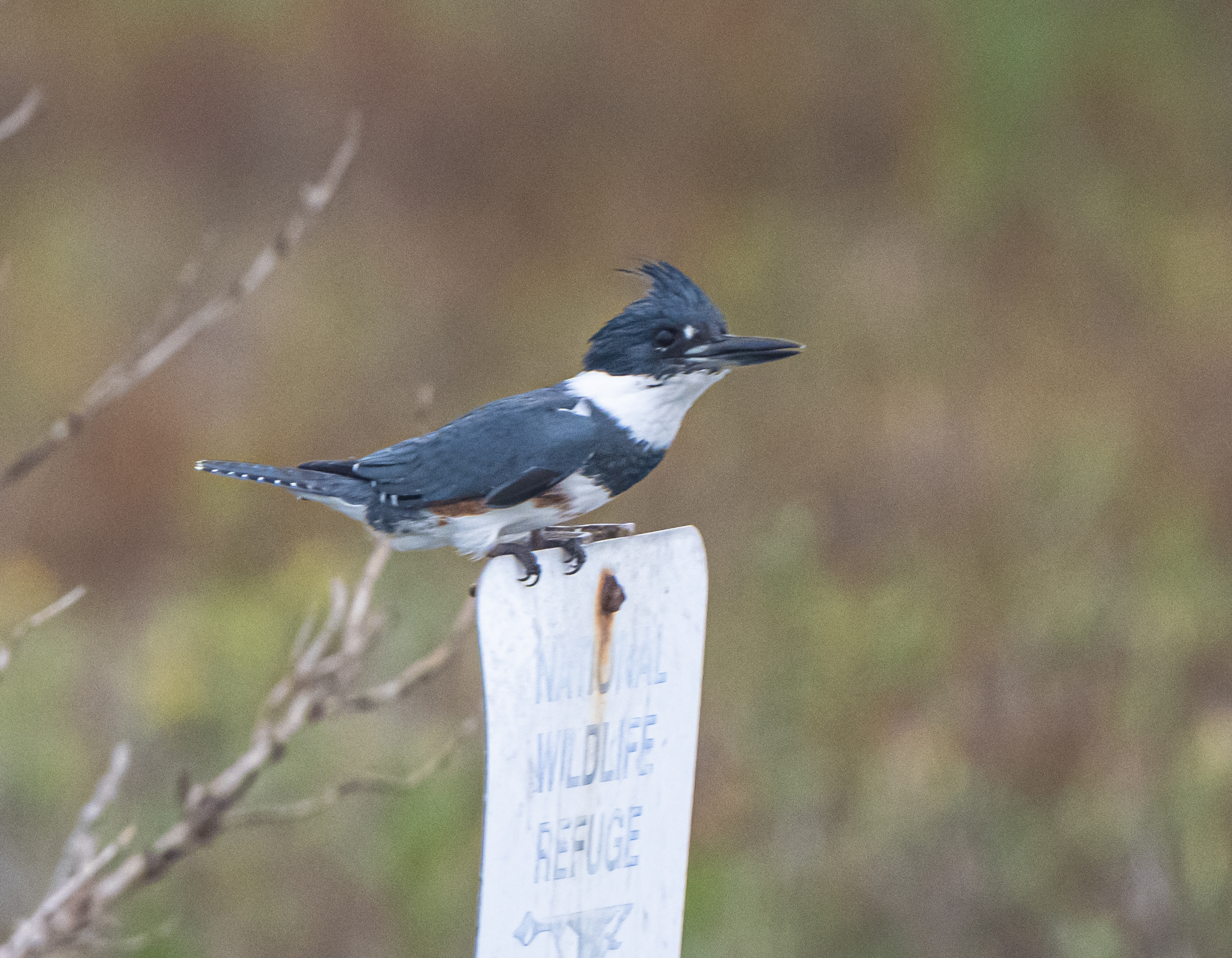
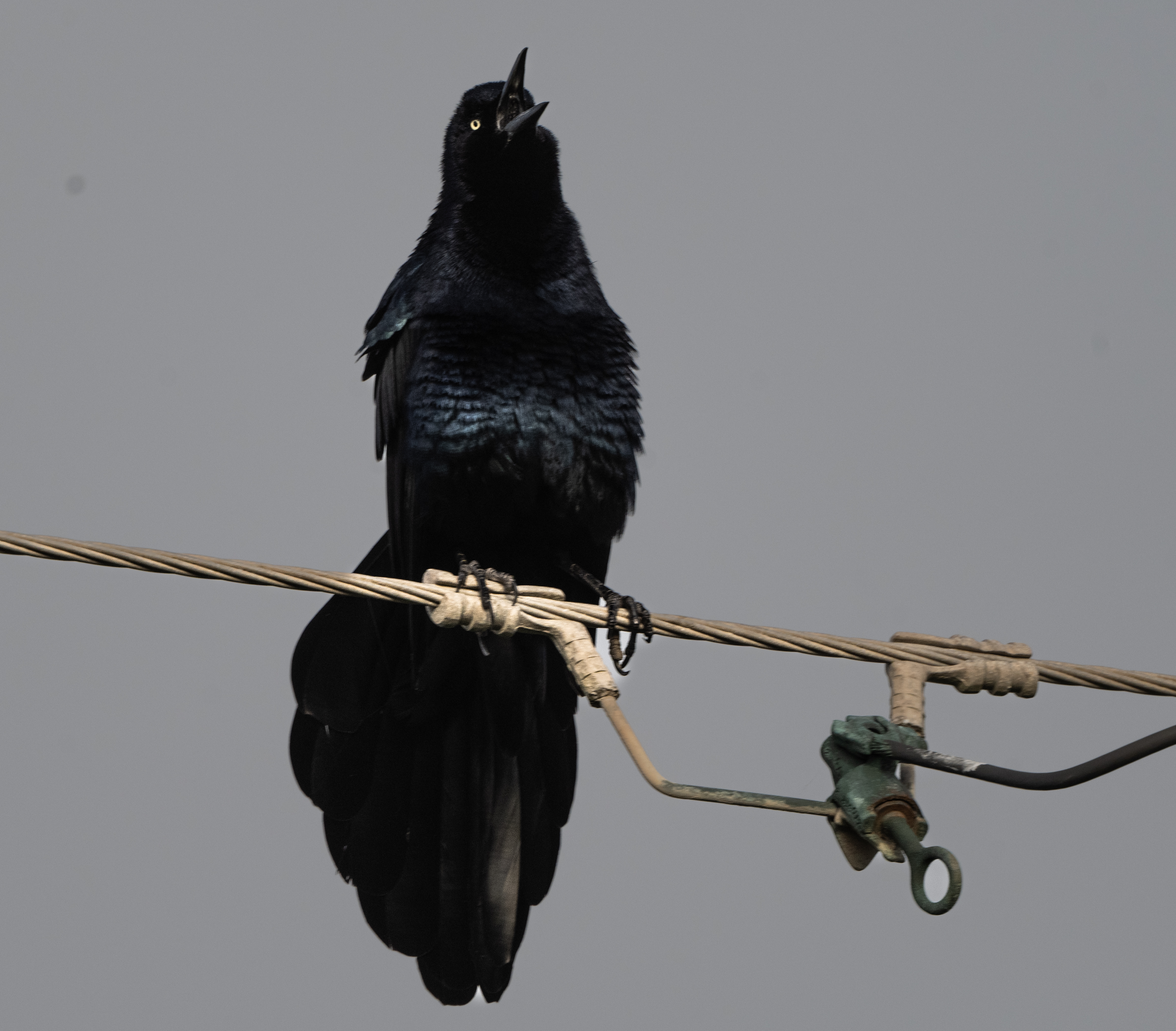
The rest are land birds taken on my Texas trip.  I have included shots of the Loggerhead Shrike, the Belted Kingfisher and the Merlin, just because I love these birds.  The Gambel’s Quail I found on my way down in New Mexico.  The big black spot of the chest differentiates it from the California Quail I shot in BC

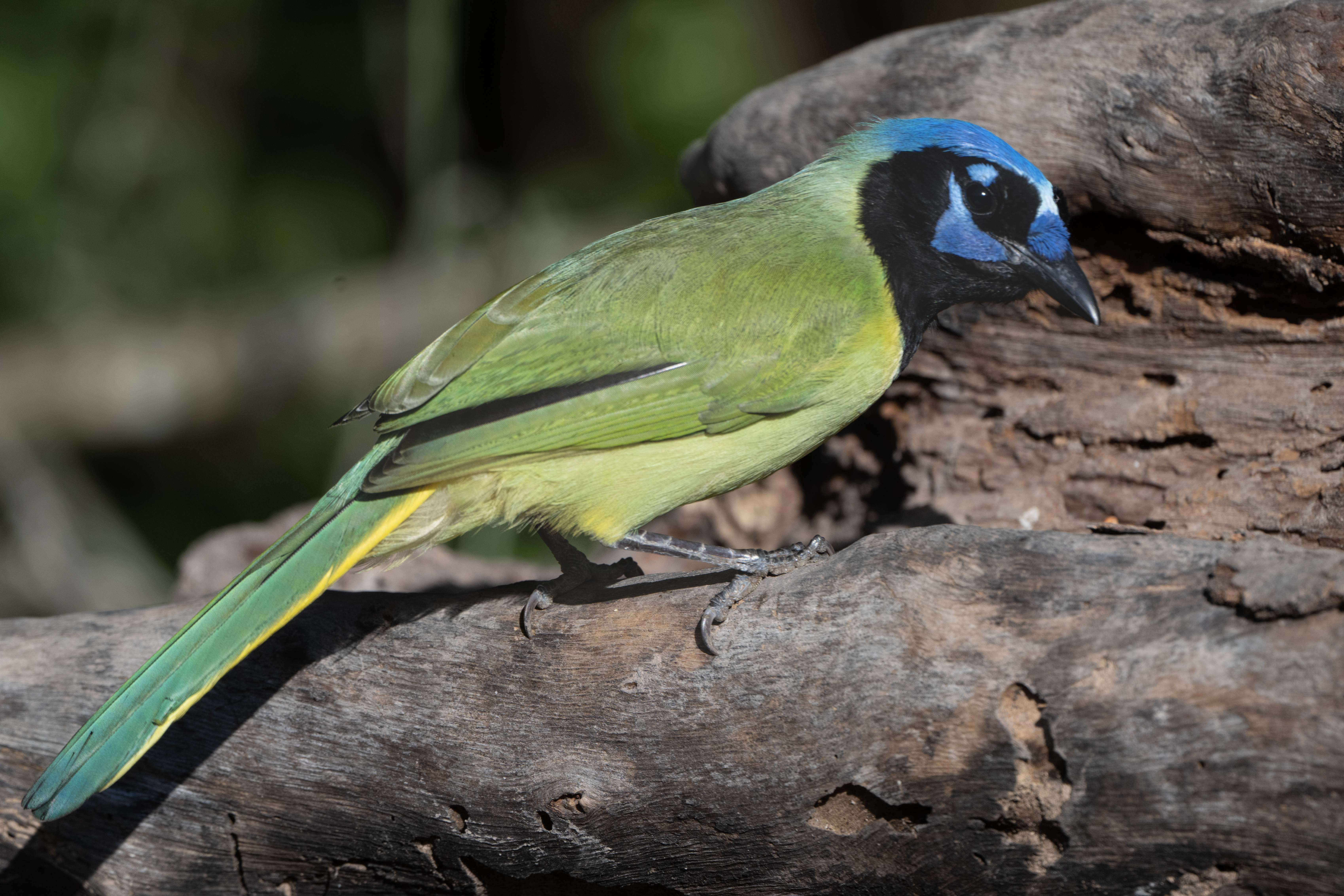
Most of these birds are Central American birds that are only found in “the valley” in the US. The gorgeous Green Jay was my most sought after and is very common. I am familiar with the Great Kiskadee from Colombia.

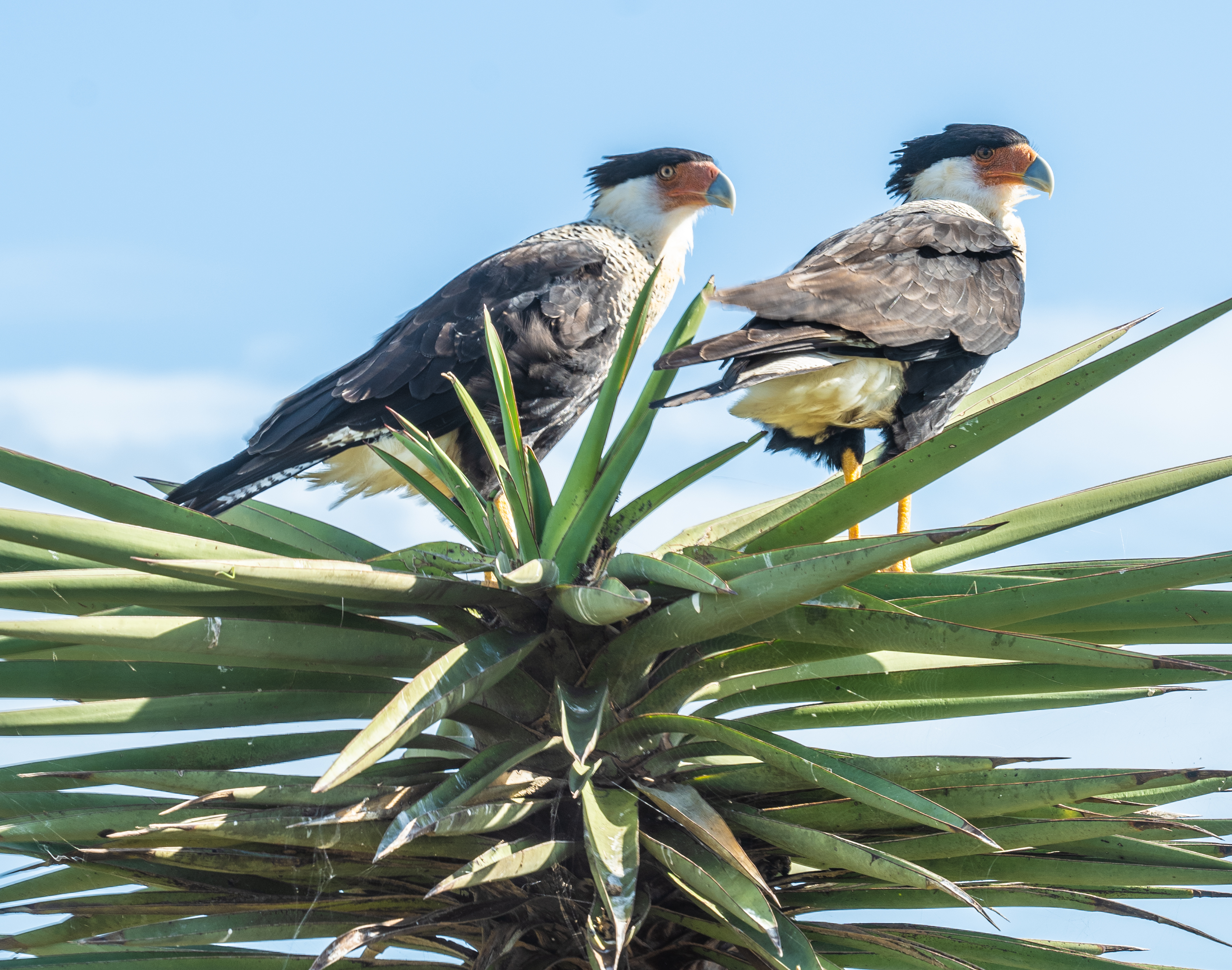
The Pauraque, very strange to us Northerners, sleeps most of the day, as he is doing in my shot. I have seen Caracaras before and they are always striking.

I close with a sunset on the gulf with many bird species putting on a final show.

Sunset on the Gulf

Off to Japan/Taiwan 2023

Posted in Birds and Animals, Uncategorized | Tagged , , | 2 Comments

Bangkok to Singapore – The Birds

My bike trip from Bangkok to Singapore was the last of a number of East Asia bike adventures that have been on my agenda for the twenty years that I have been travelling extensively. My other trips have taken me around Northern Thailand, Laos, Cambodia, Vietnam, Japan and three trips into China. One difference between this trip and the others was my attempt to do a better job of finding and photographing birds. Finding birds requires heading off into habitat that supports birds and this is often tough to do on a bike. The main roads connect population centres, birds are best found in remote area. Photographing birds usually requires carrying much heavier lenses than I would normally carry while on a long bike ride. So those factors were added to the normal challenges I have faced on my bike travels in Asia.

In general I can say I was able to manage the two different aspects of this trip; biking and bird photography fairly well. I would say that bird photography on a bike is certainly not as easy or effective as birding from your own motor transportation. The transport of the heavier equipment, which was possibly my main worry, was not bad. I travelled very light otherwise. No tent, sleeping bag and only very little extra clothing balanced out so my load was almost normal. The real failure of bringing my two objectives together was in the conflict between needing to bird in the morning but also needing to be biking on down the road in the morning. The afternoons were too hot and I was too tired for much of either activity. So basically most days I cycled in the morning and rehydrated/recuperated in the afternoons. The birding was left to about six days on which I did not travel. I did get some good birds while on my bike, enough to know that it works, but only on a few days. 21 of the 31 birds I am showing with this post were on those 6 birding only days.

I could do a birding/biking trip if I was not trying to cover a lot of ground and/or I was able to use more of the day which is possible in different more temperate climates. Or I could possibly bike out from a central location. I would definitely carry my extra photographic load if this type of opportunity arises, or if my imagination takes me there.

That said, I did get some good birds this trip. I have photos of a little over 60 species, of which probably 50 are new to me. Not many of my birds are the real specialty birds for the areas I was in, but I did get some. An advantage of birding in new areas is that all the birds are new so there were very few birds that did not grab my notice.

The first bird I have included is the Common Mynah, which I have seen in other places and was with me the whole trip. It is a very cocky little thing, it roves around in groups, and so was very apparent as it hopped around. New to me were three other mynahs, one being the Crested Mynah.

Common Mynah


Crested Mynah

Crows and Ravens were also quite common but I only saw the Large-billed Crow once. In the same vein I didn’t notice any magpies but the Oriental Magpie-Robin was pretty common. One of the first birds I noticed by its call was the Asian Koel (no photo). A loud “koel…koel…” repeated at increasing frequency. I heard this bird probably everyday all the way. I found out the name of the bird and that it is a large raven sized black bird but I could never pick it out of the dark foliage high up in the canopy no matter how long I tried to pin down its piercing call. Finally on my last day in Singapore by being in a park at dawn I saw one rustling around in the leaves and I got pictures good enough to identify but not to show.

Large-billed Crow

Oriental Magpie-robin

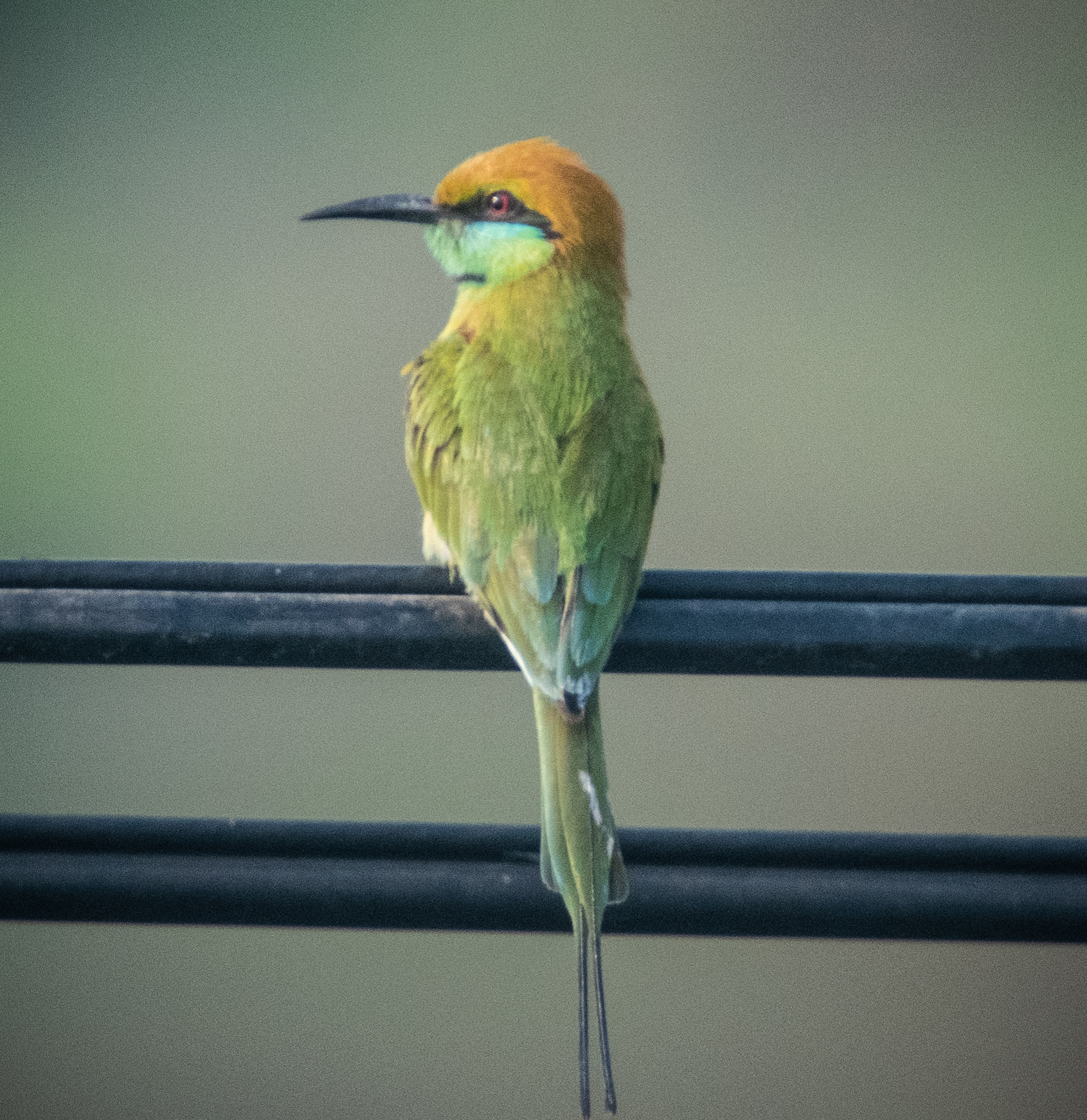
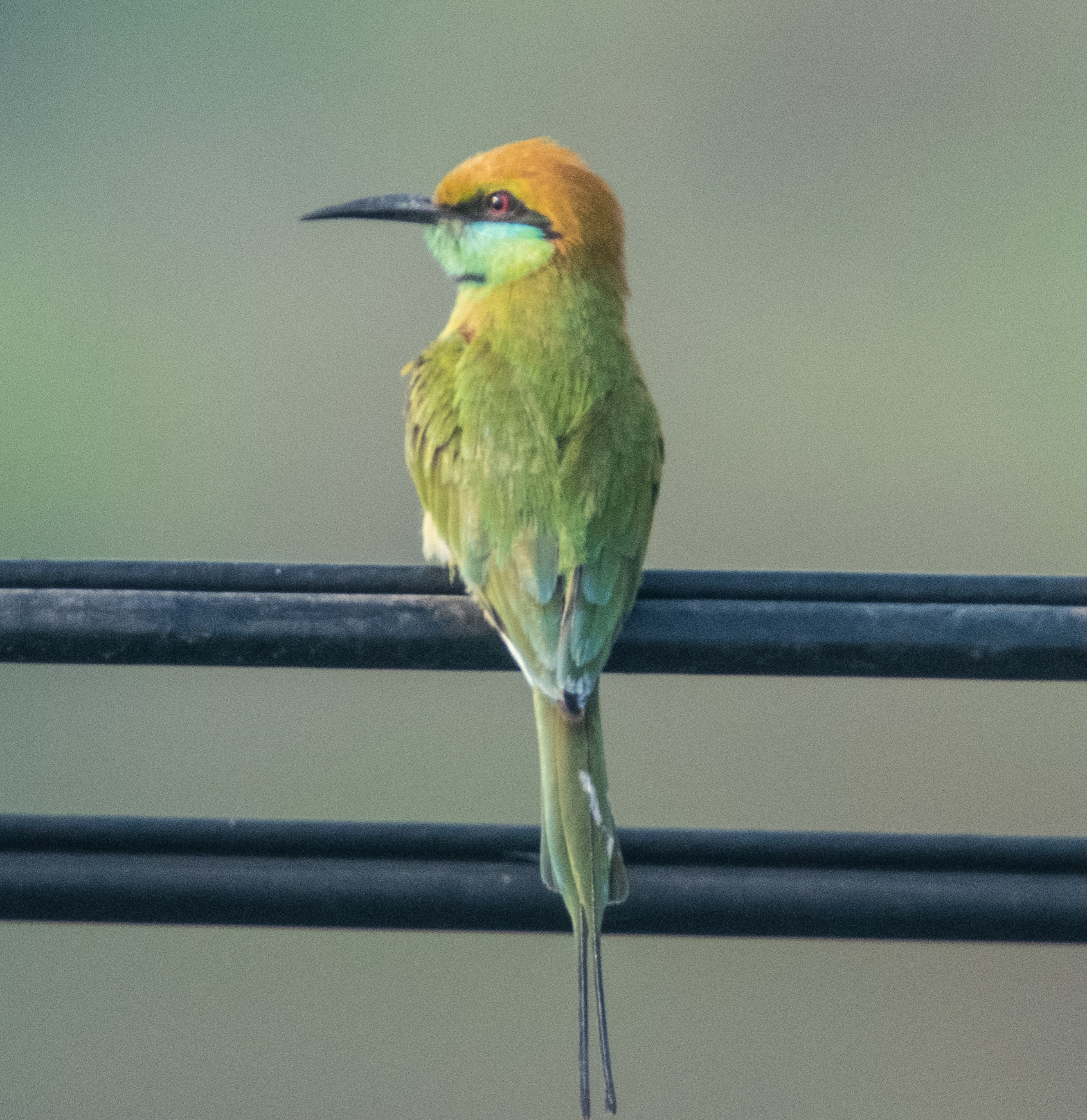
Most tropical regions have tiny long beaked birds that I think of as bee-eaters but that have many different family names. The ones I have included here are the Chestnut-headed Bee-eater and the Streaked Spider-hunter.

Chestnut-headed Bee-eater

Streaked Spiderhunter

Flycatchers are everywhere; they are the world’s largest bird family.  These are the Blue-throated Flycatcher and the Tickell’s Blue Flycatcher.

Blue-throated Flycatcher

Tickell’s Flycatcher

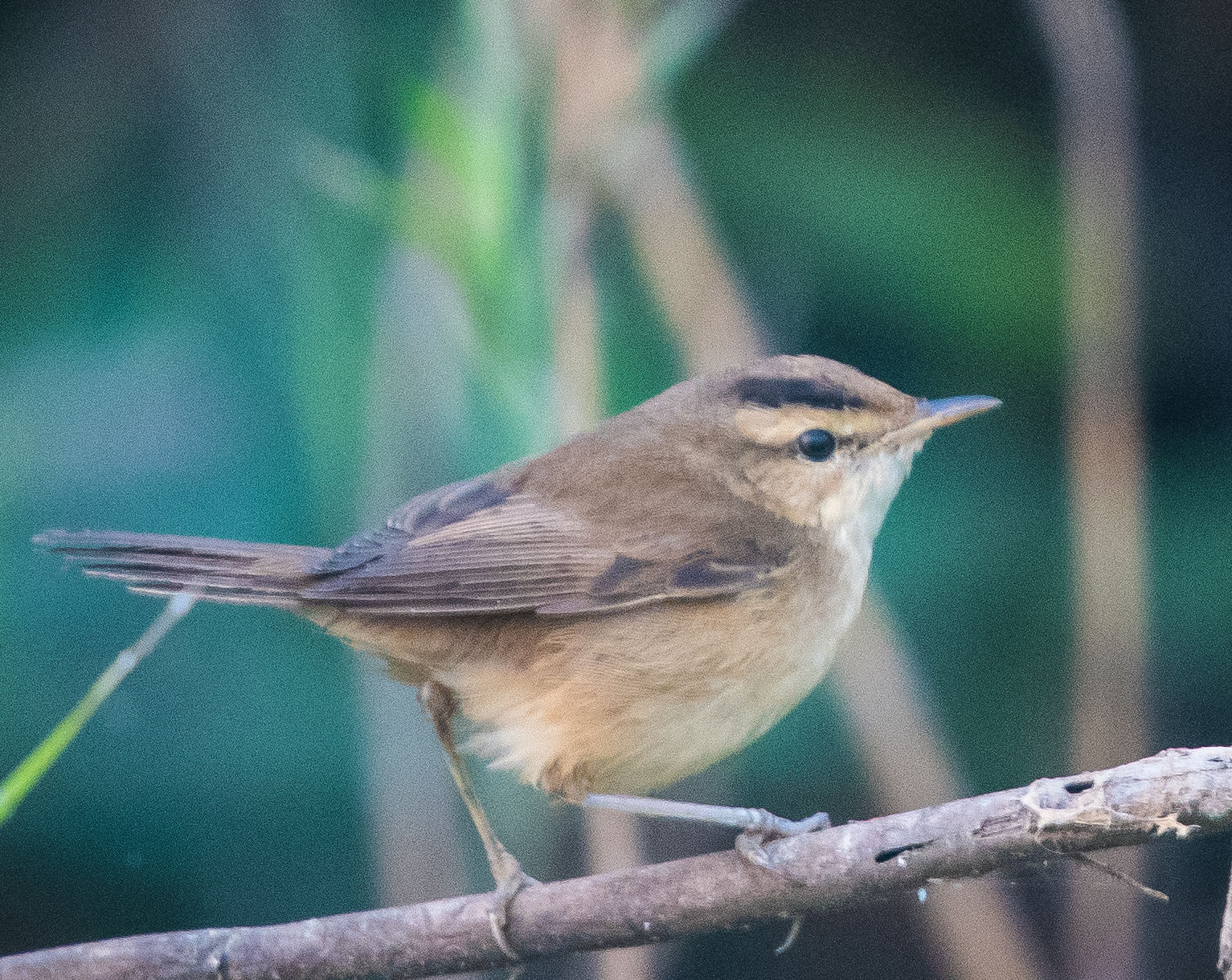
Similar to our warblers but not occurring in our hemisphere is the Black-browed Reed-warbler, which I found in reeds while in a kayak.

Black-browed Reed-warbler

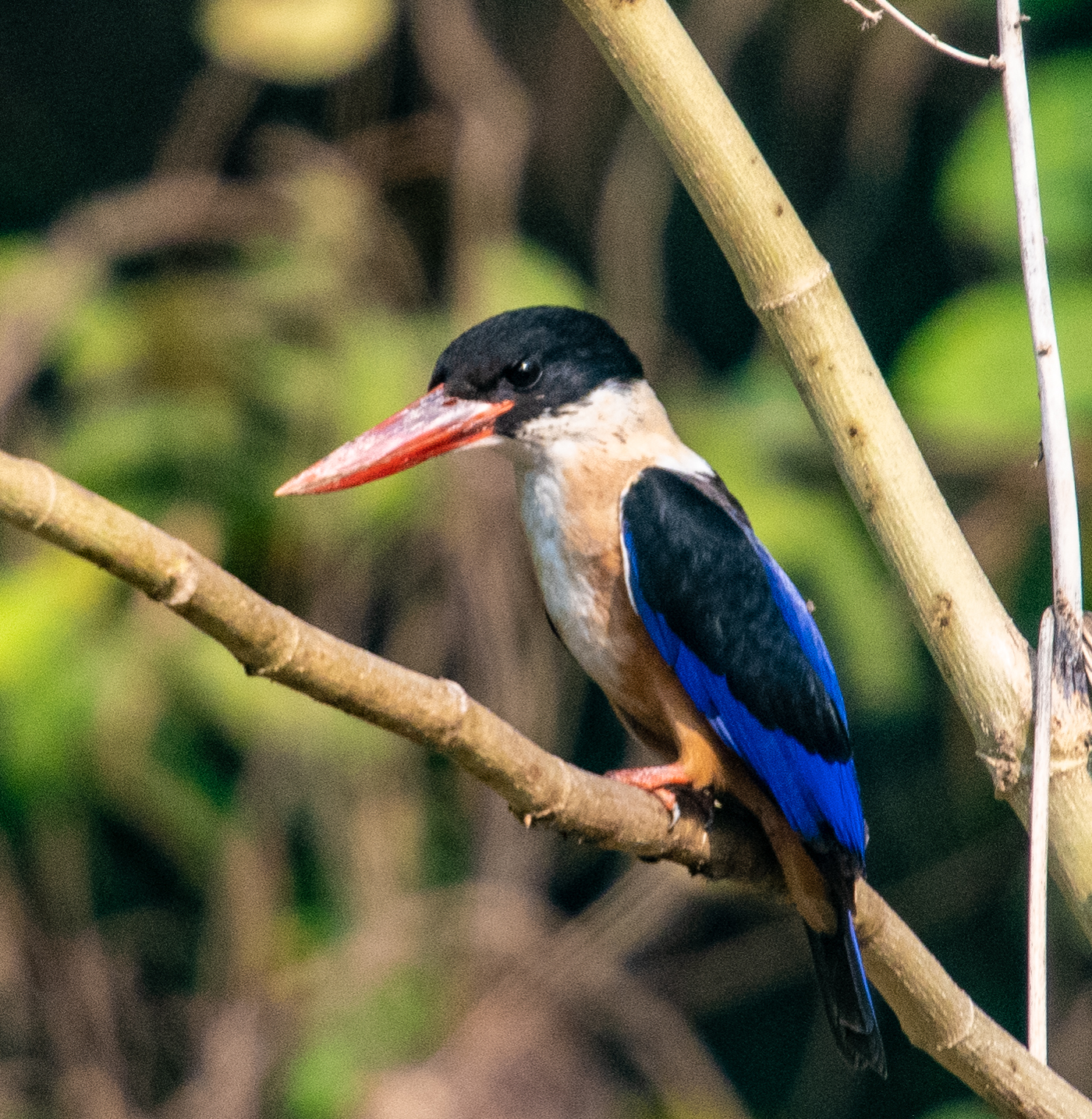
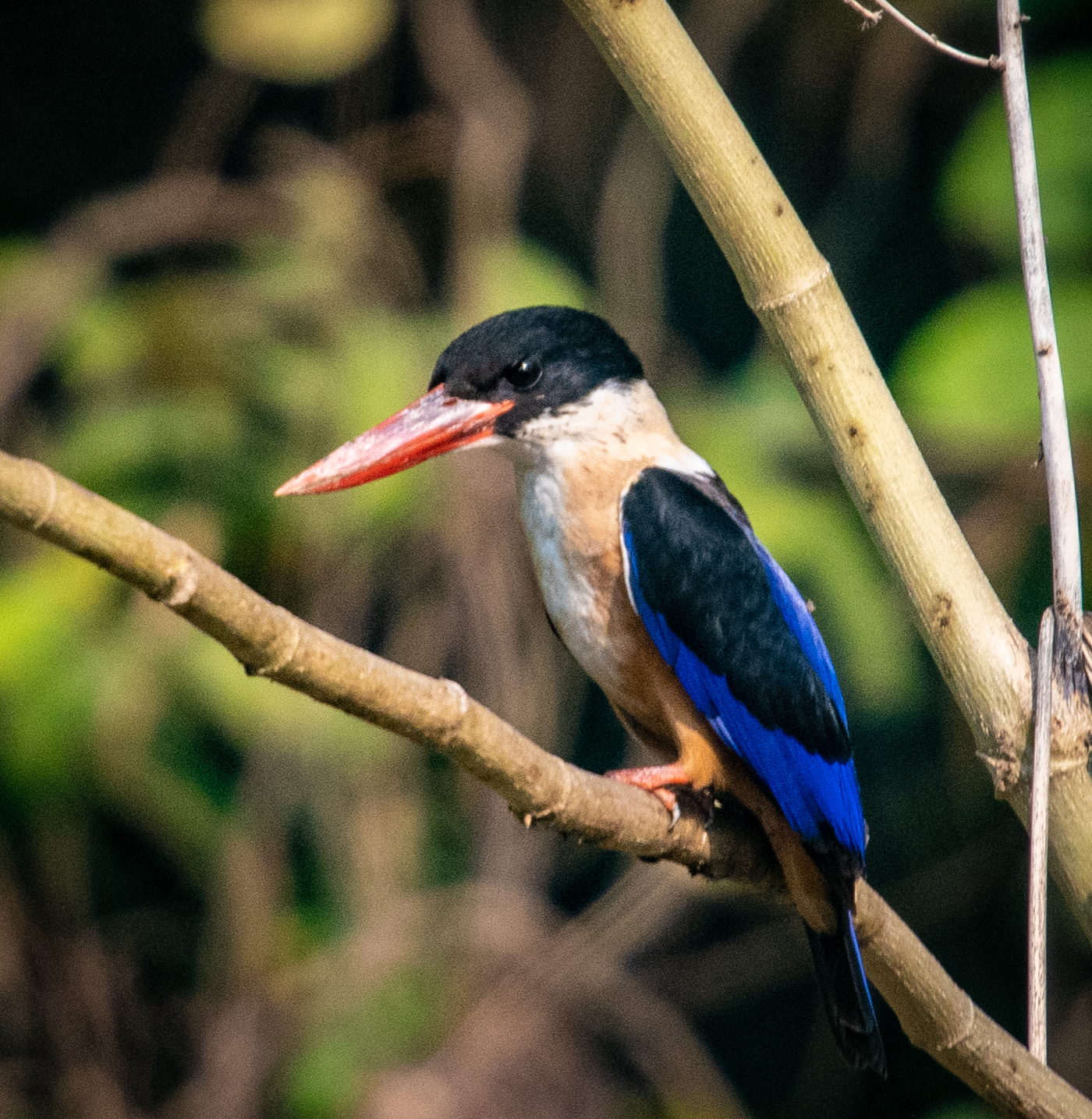
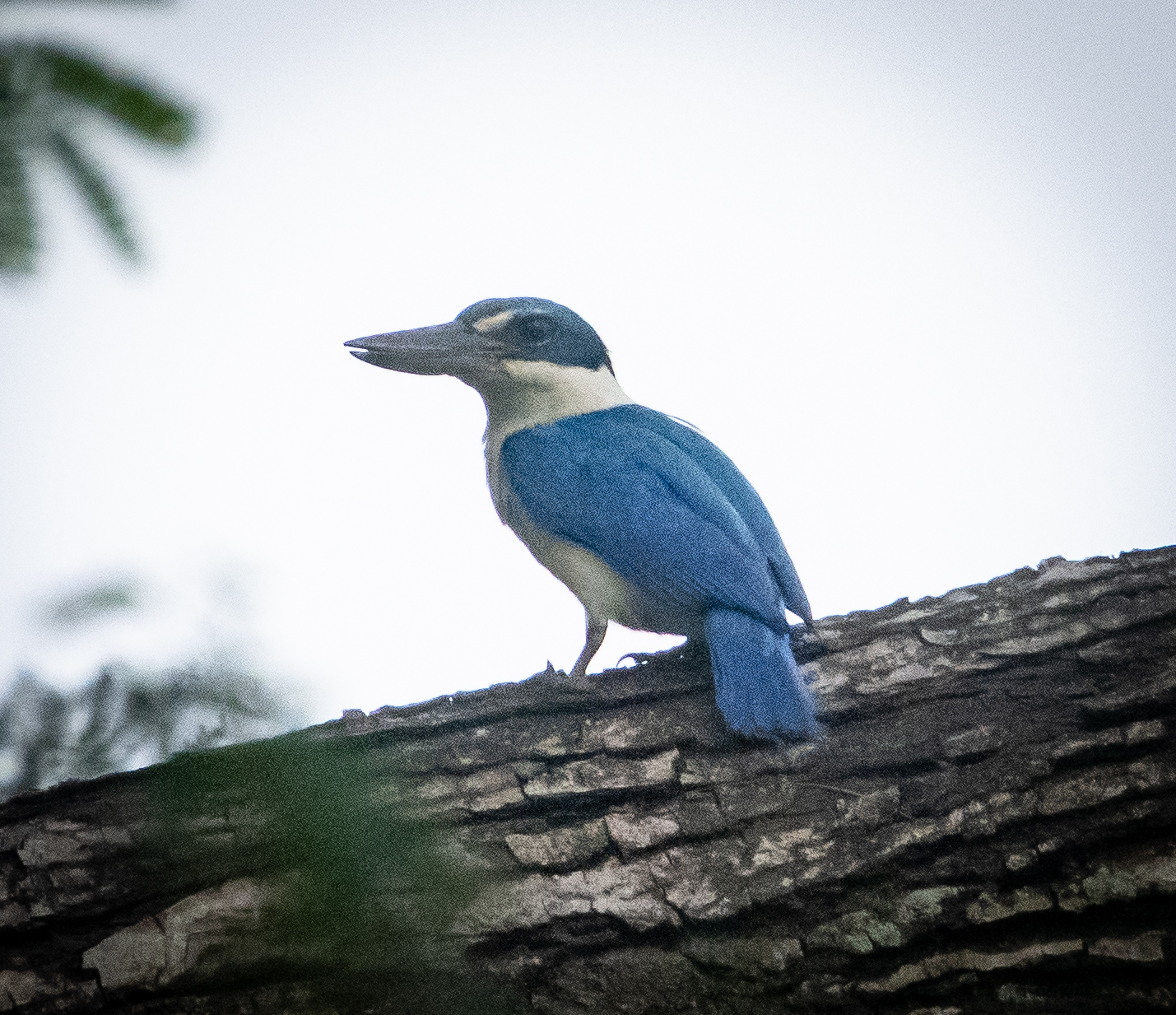
Kingfishers are possibly my favourite type of bird to try to find and photograph but sadly we only have one around here, the Belted Kingfisher. East Asia has by far the most types of Kingfisher, Indonesia has about 50 of the almost 100 different types in the world. Thailand and Peninsular Malaysia have possibly 15, and so if I had been really diligent I might have found more than the three that I did.  Still, I am very happy about the three that I did get, all seemed to just happen to me and was a treat when it did.

The Black-capped Kingfisher I got right at the beginning while having a road-side drink  as I was approaching Baan Maka. I have a few good shots of the White-throated Kingfisher from different places. It is probably the most common in this region but was an infrequent sighting in Turkey and I was unable to find it there.   My best views and photos are from about half way along my trip at Panang. I lucked onto the Collared Kingfisher in the same park on my last day of the trip when I found the Koel. The photo is not as good as the other kingfishers but will have to do until I get a better opportunity. I think I have 15 kinds of kingfishers now in my photo directory out of the 100 or so.

Black-capped Kingfisher

White-throated Kingfisher

Collared Kingfisher

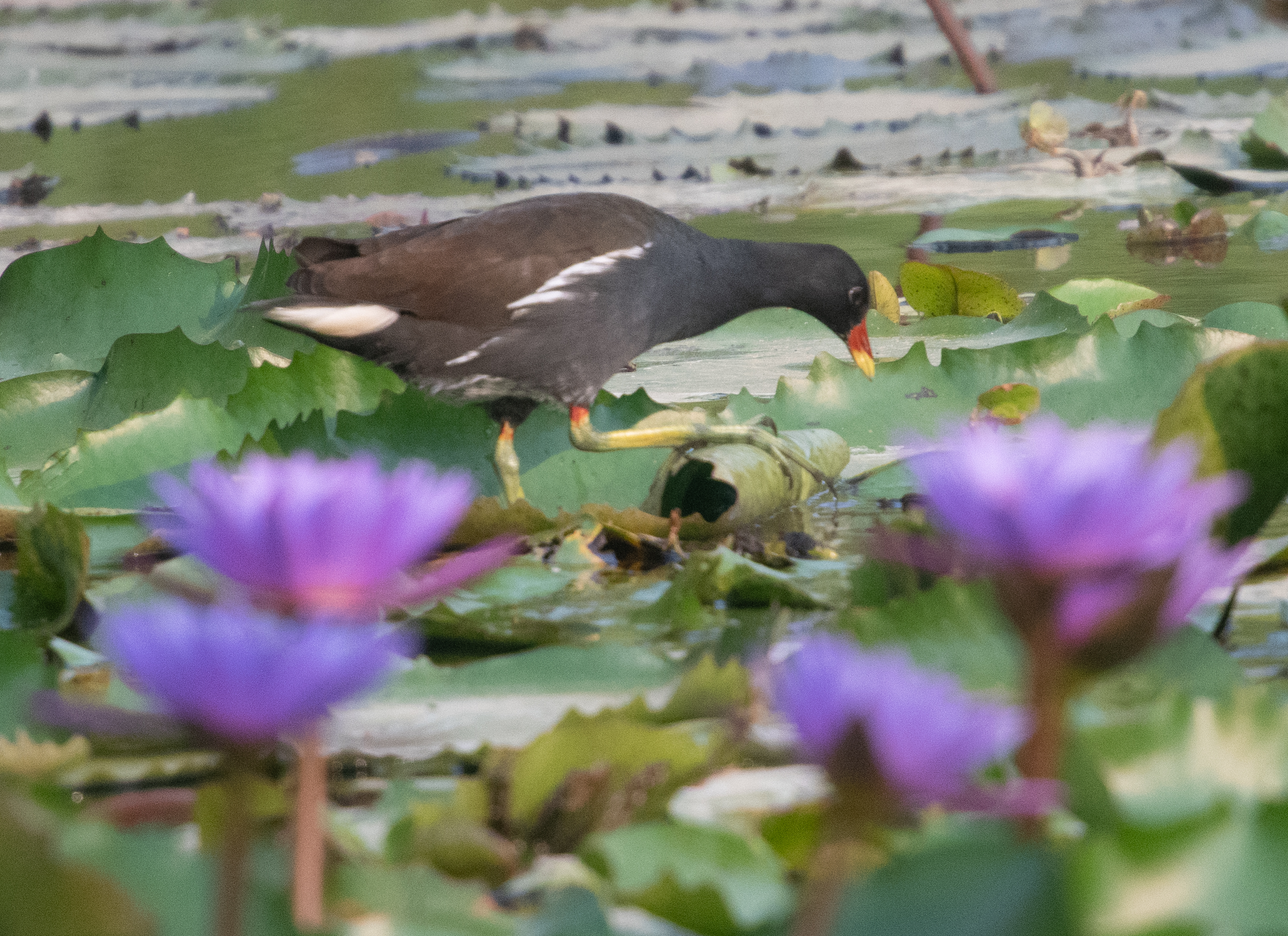
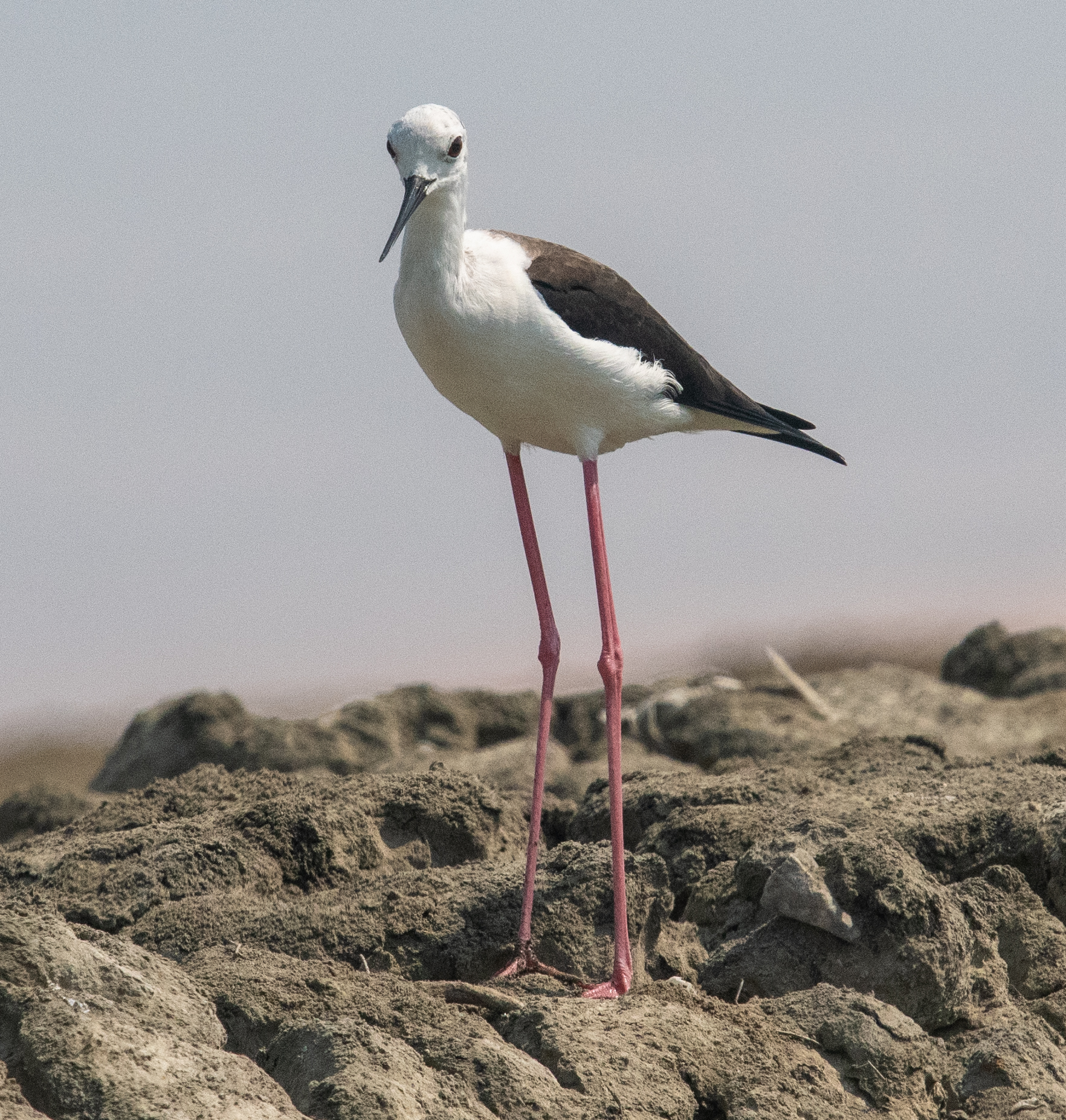
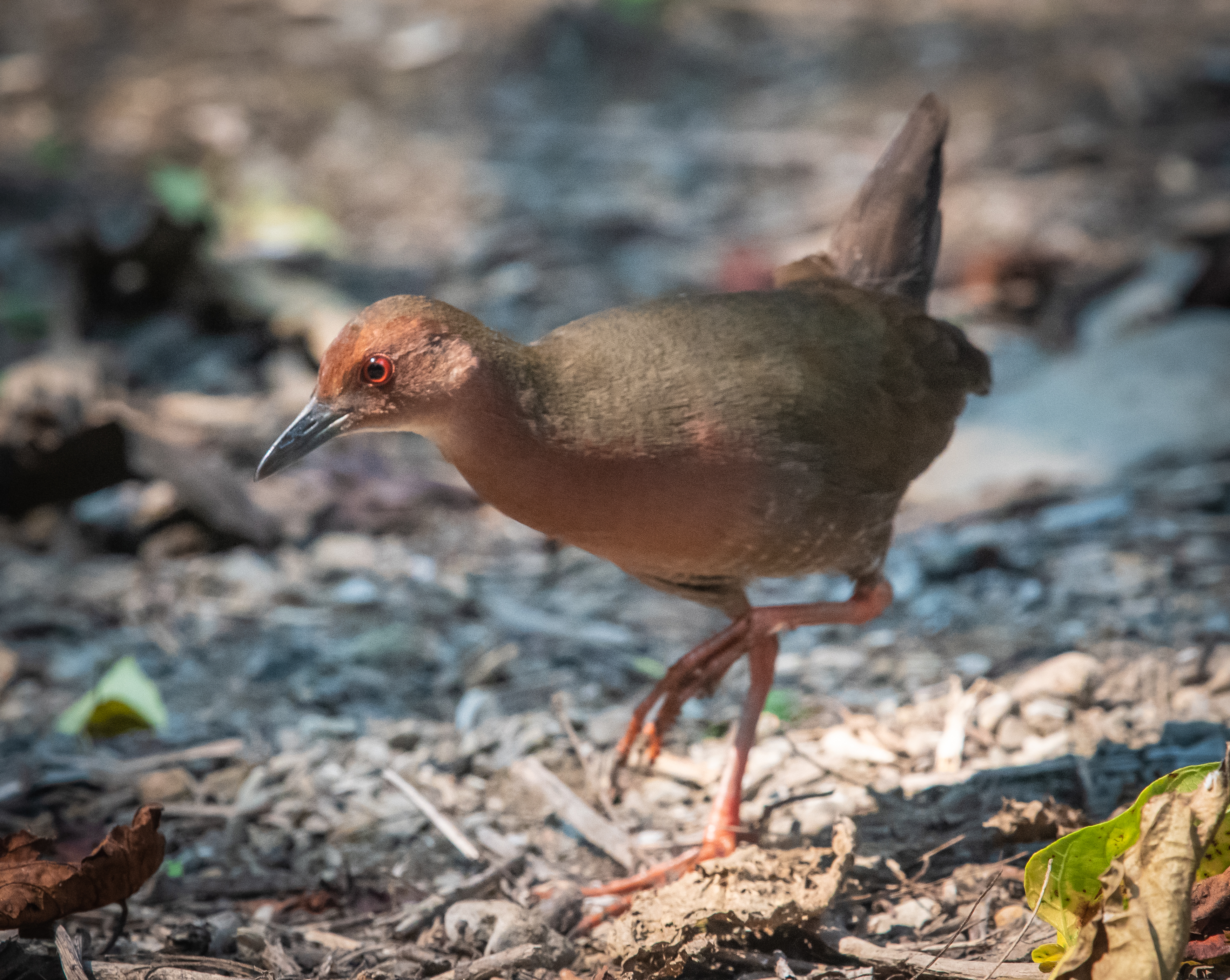
Moving onto the shore type birds, the first I will include is the Black-winged Stilt, that initially I confused with the Black-necked Stilt that we have. Look at the length of the legs. The Bronze-winged Jacana is the third type of Jacana that I have seen, the other two in Africa and Colombia. All have big feet so they can walk on lilly-pads. I don’t think I have seen anything like a Crake before.

Black-winged Stilt

Bronze-winged Jacana

Crake

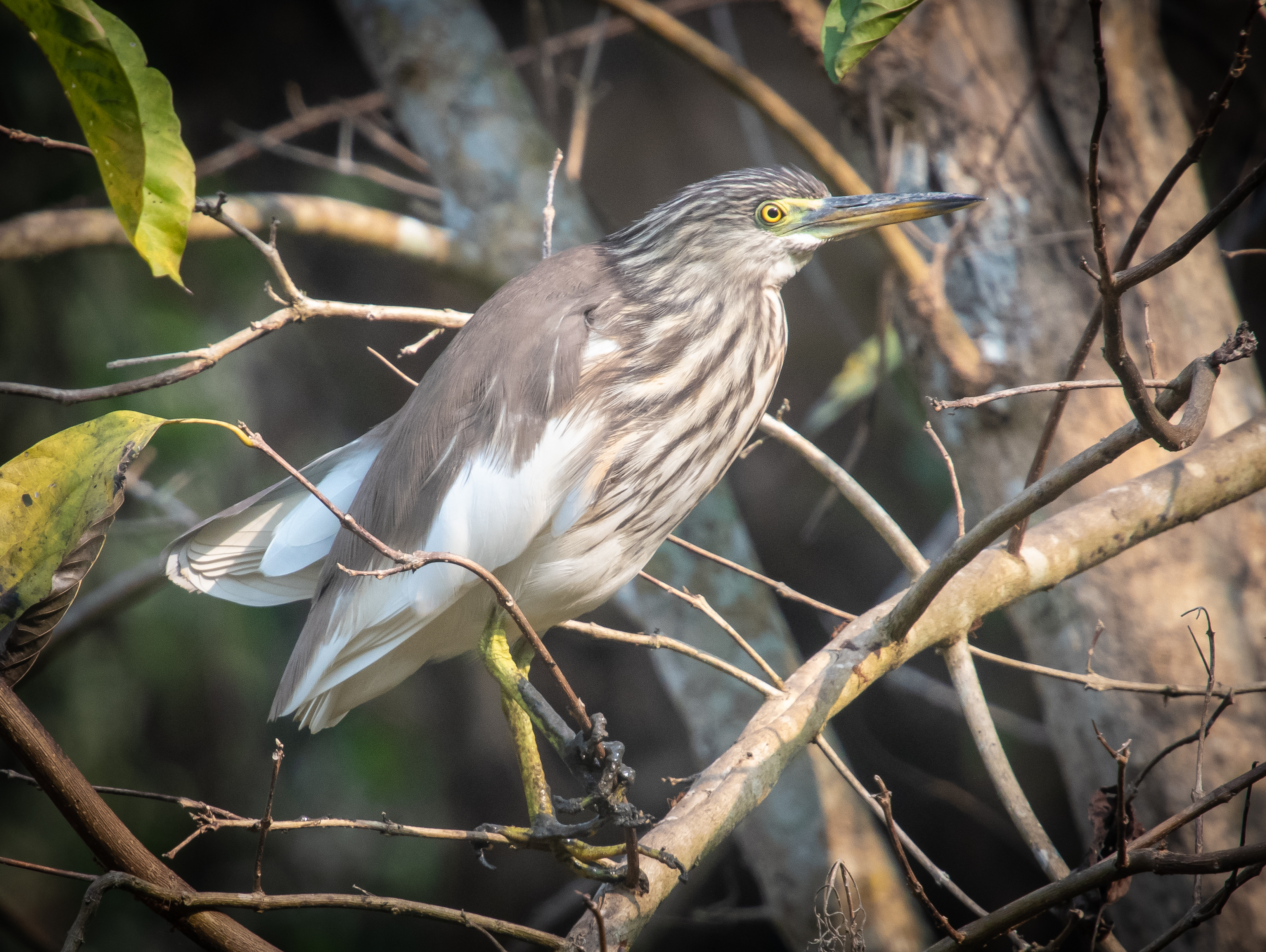
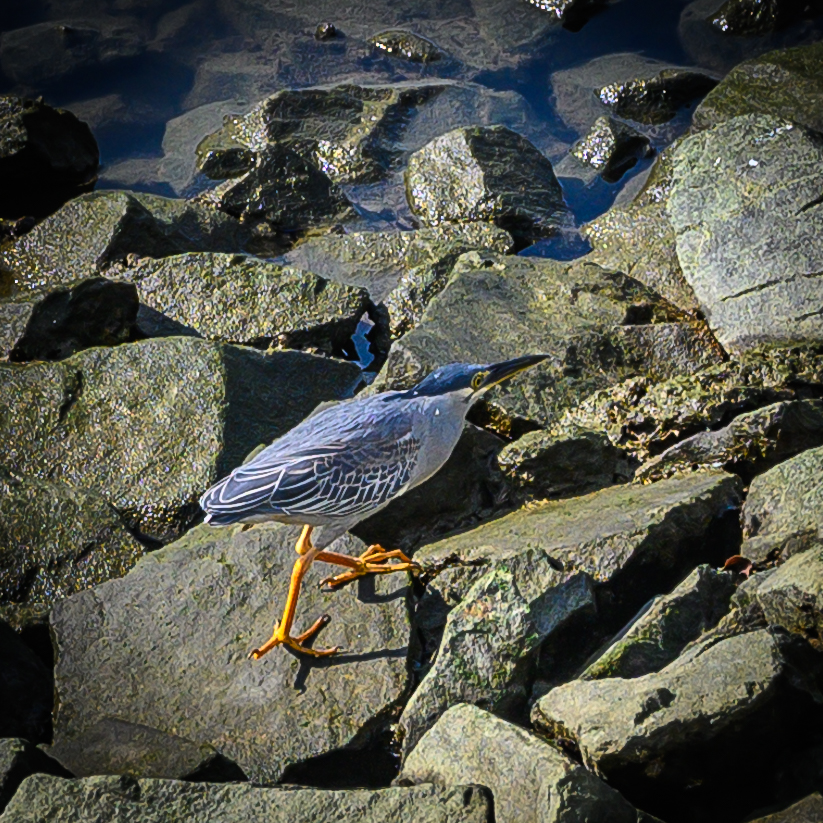
Both the Chinese Pond-Heron and the Little Heron are smaller than any herons we see.

Chinese Pond-Heron

Little Heron

Owls are always a treat to find. My photos of the Asian Barred Owlets and the Brown Hawk-Owl are not very good but my other raptor photos are even poorer so I have included these. I also like the eyes in both pictures.

Asian Barred Owlet

Brown Hawk-owl

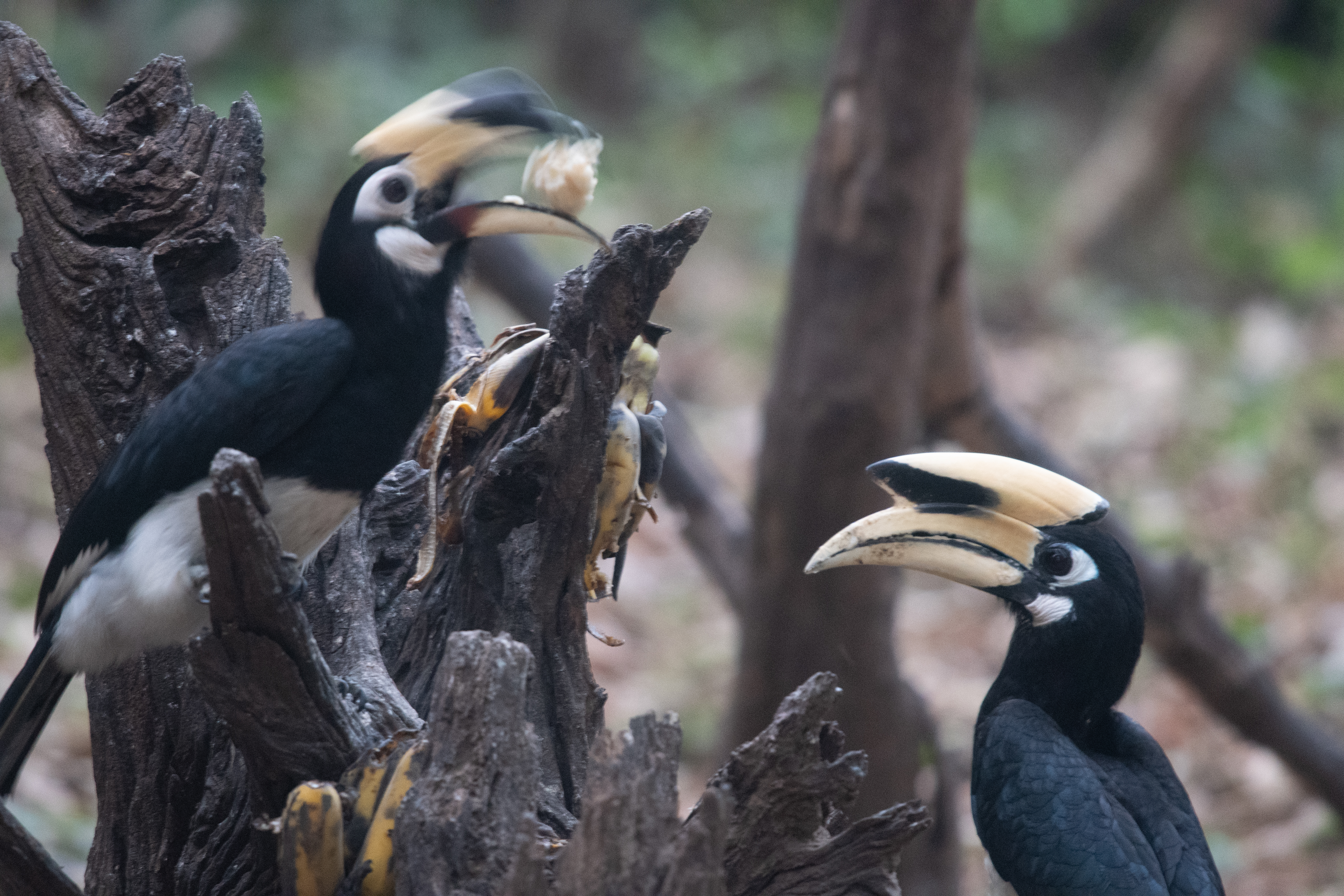
I was surprised to only see the Oriental Pied Hornbill out of all the Hornbills in this region. I know the guy on the left is moving his beak, but I kind of like that this time.

Oriental Pied Hornbill

Yes the Red Jungle-Fowl is the source of our Chickens. I saw them in a few places and they seem pretty tame as do the Silver Pheasant which probably has also found its way onto dinner plates at times.

Red Jungle-fowl

Silver Pheasant

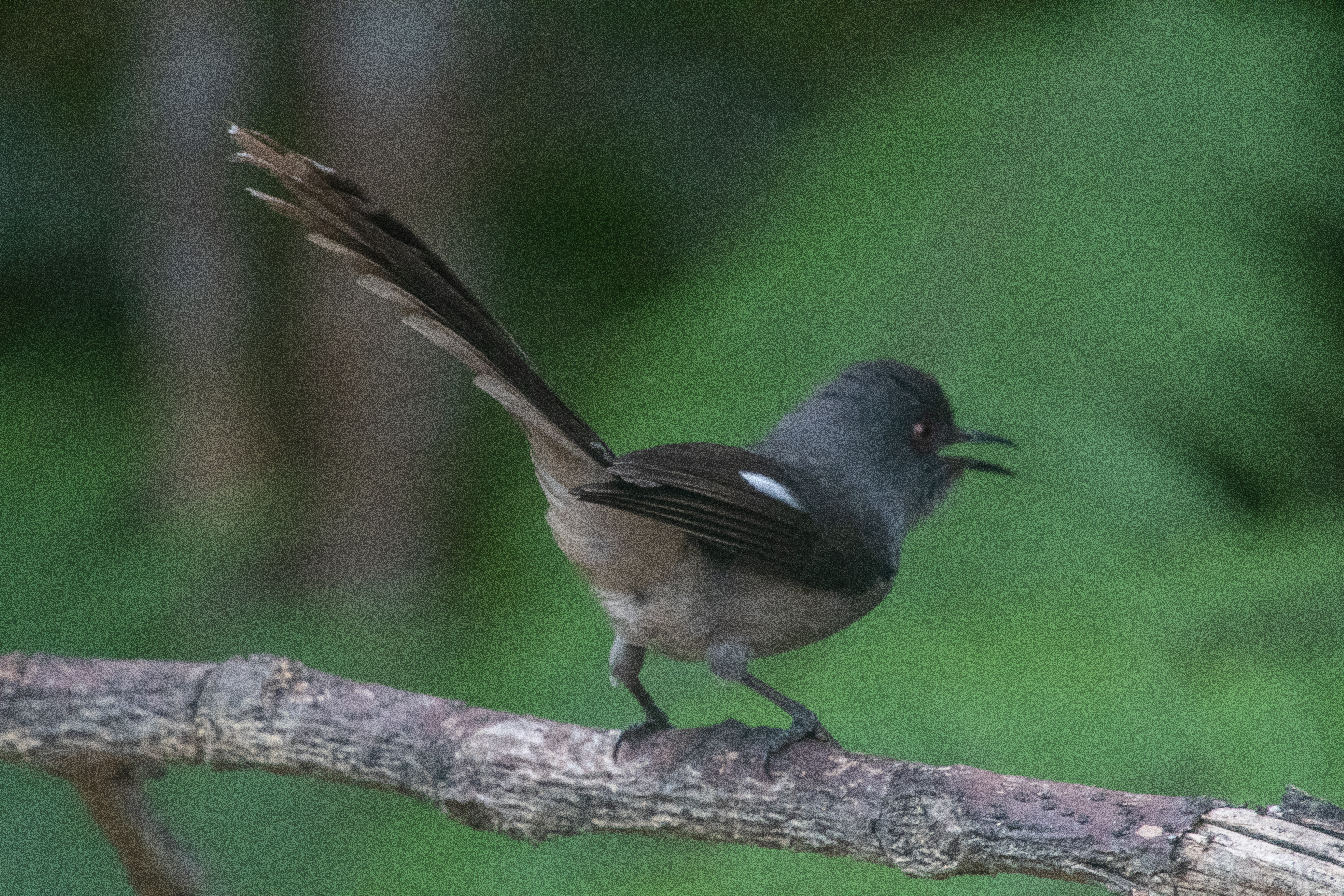
The rest of my birds that I include here do not have similar species in Canada. One joy and wonder when birding around the world is how varied the world of birds is. The Long-tailed Sibia travelled in bunches reminding me a bit of the way our wax-wings fly around from berry bush to bush. In this case they were attacking a particular flowering bush. Another lovely long tailed character the White-rumped Shama turned up in a number of places.

Long-tailed Sibia

White-rumped Shama

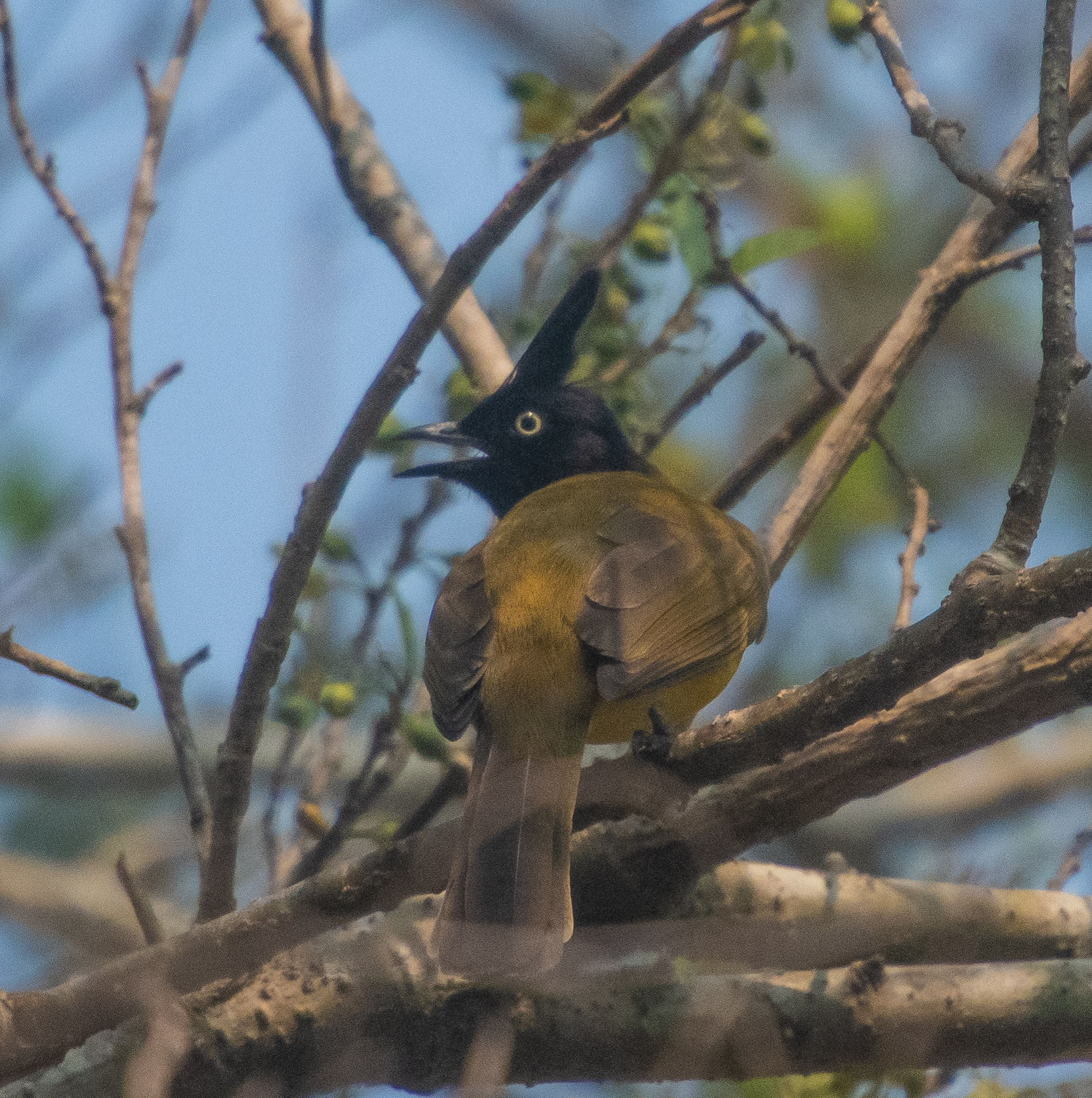
There are many bulbuls in Eurasia; the one I have included here is the Black-Crested Bubul . Barbets seem to be very hard to spot even though they often have distinctive calls. This Green Barbet photo is questionable, but it is good enough to show a few features.

Black Crested Bulbul

Green Barbet

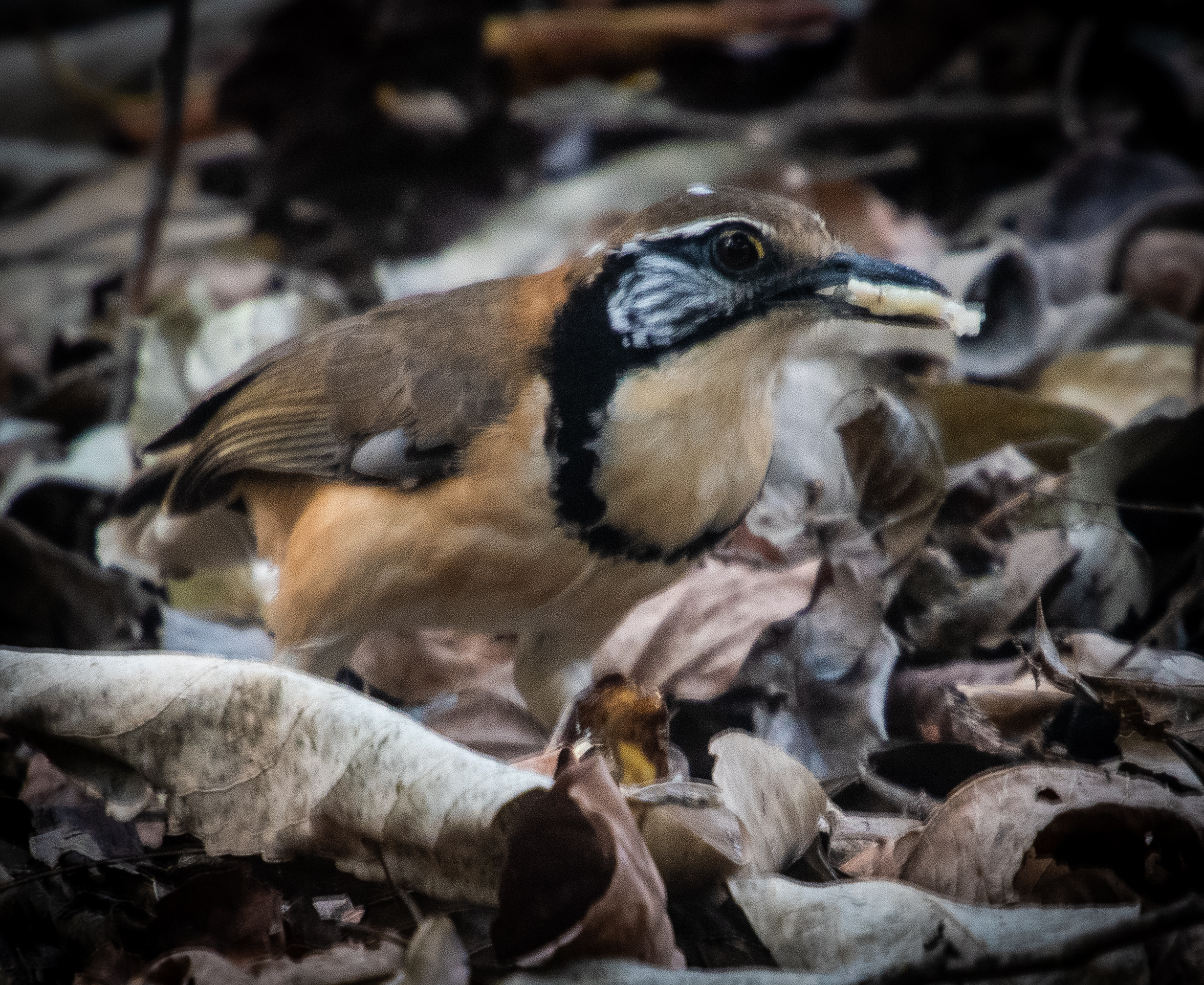
You have to think laughingthrushs would be fun birds. Both the Greater-necklaced Laughingthrush and the Chestnut-capped Laughingthrush certainly were.  The first was an energetic feeder visitor and the latter chased around in groups.

Greater-necklaced Laughingthrush

Chestnut-capped Laughingthrush

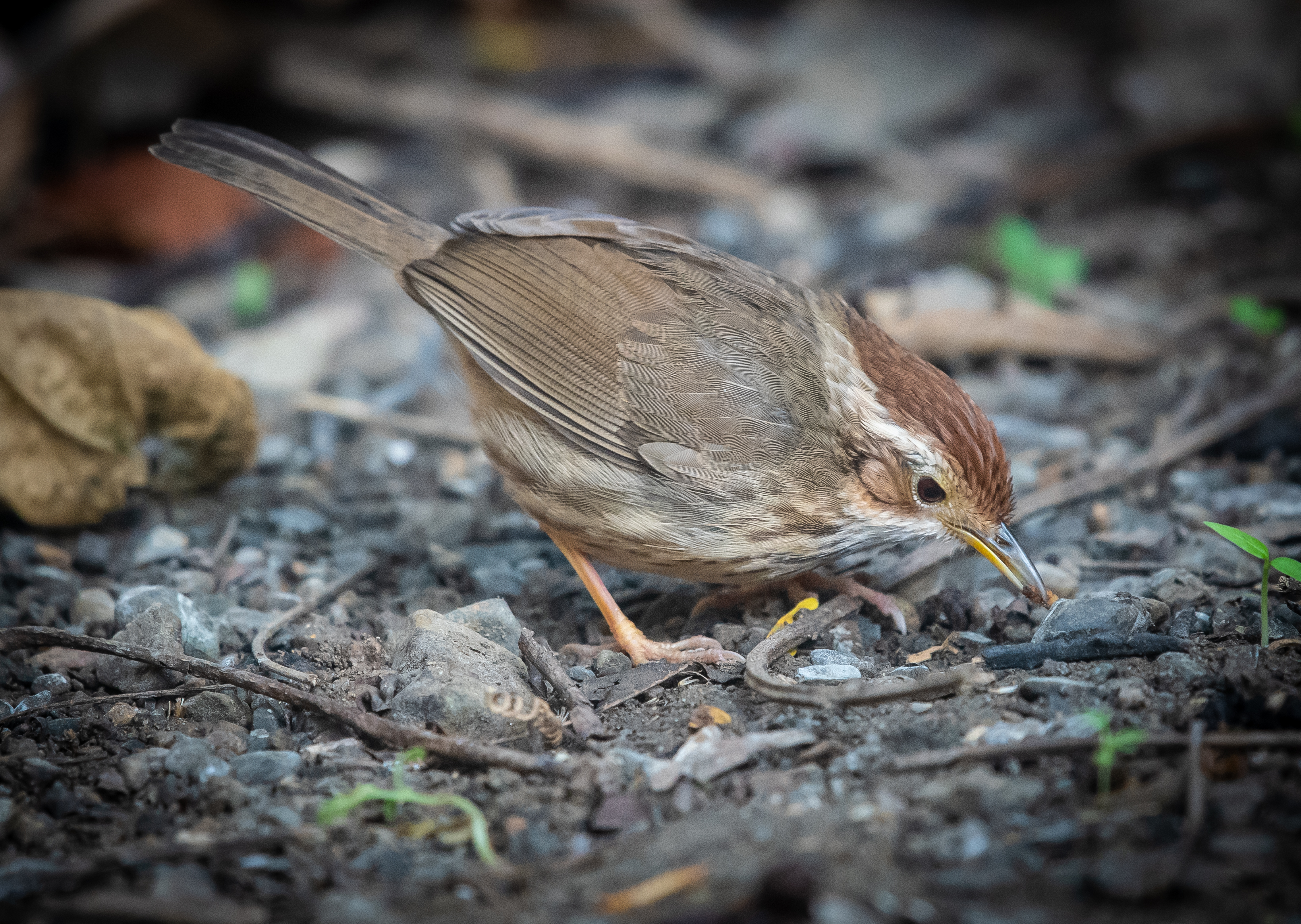
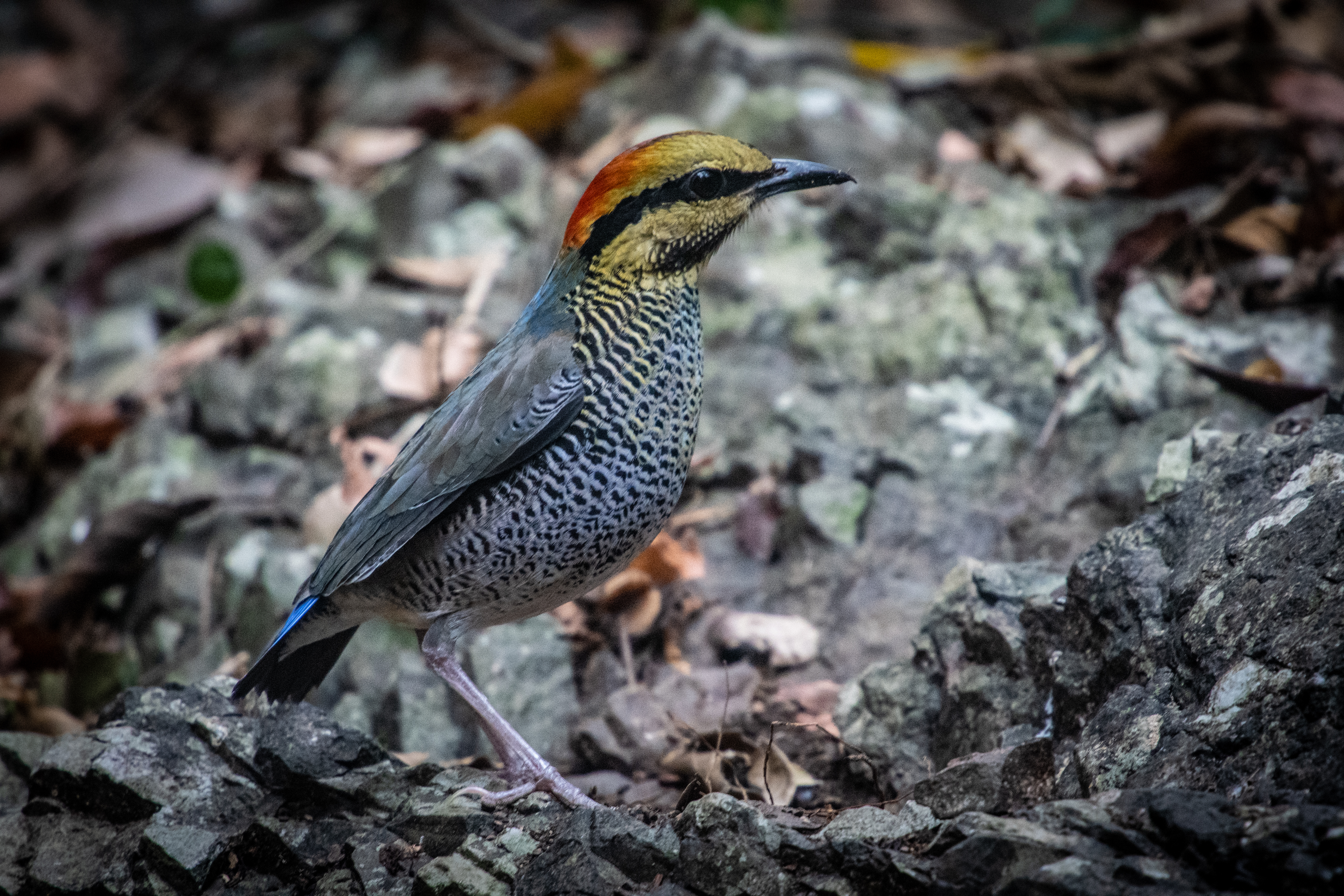
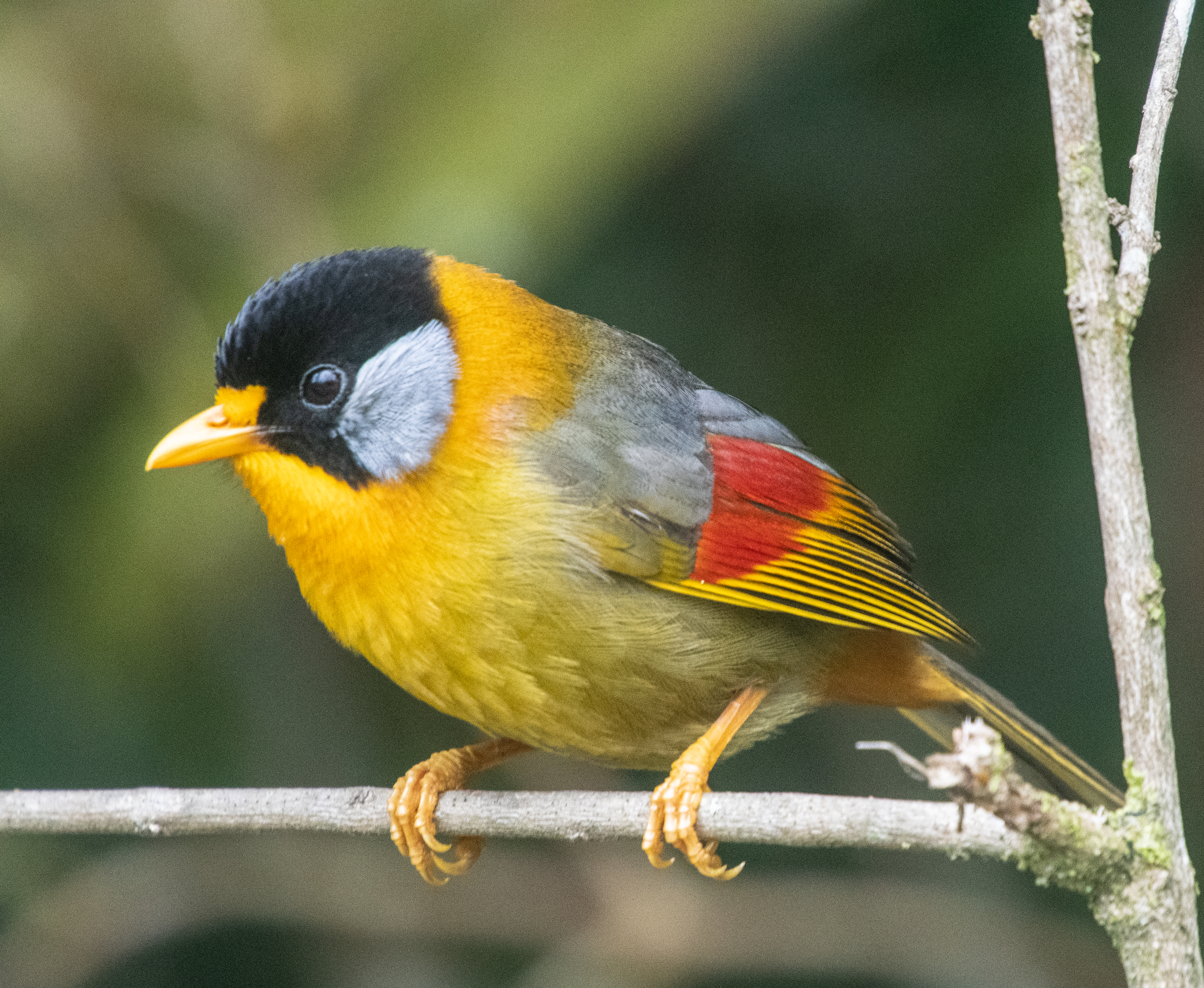
On the other hand, the Puff-throated Babler is a quiet underbrush bird. Similarly the Banded Pitta is a very shy bird that had to be enticed out of the bush with mealy worms. Certainly the most colourful bird of this trip, also a very extroverted guy, was the Silver-eared Mesia.

Puff-throated Babler

Banded Pitta

Silver-eared Mesia

I hope this very small sample of the birds of Thailand and Malaysia were of interest for you.  Even though I don’t get many rare species and I often miss getting the best shots of the birds I do see I enjoy the process.  I guess it satisfies the hunting genes that I must still have.  All for now…

Ken


In between Adventures

Posted in Birds and Animals, cycling, Thailand and Malaysia | 7 Comments

Onto Singapore

I am posting now from Calgary. First a few photos from the first part of Malaysia (Georgetown and Fraser’s Hill) that I was unable to add in my last post.

Last Day in Thailand

From Georgetown

Tropical Foliage at The Botanical Gardens

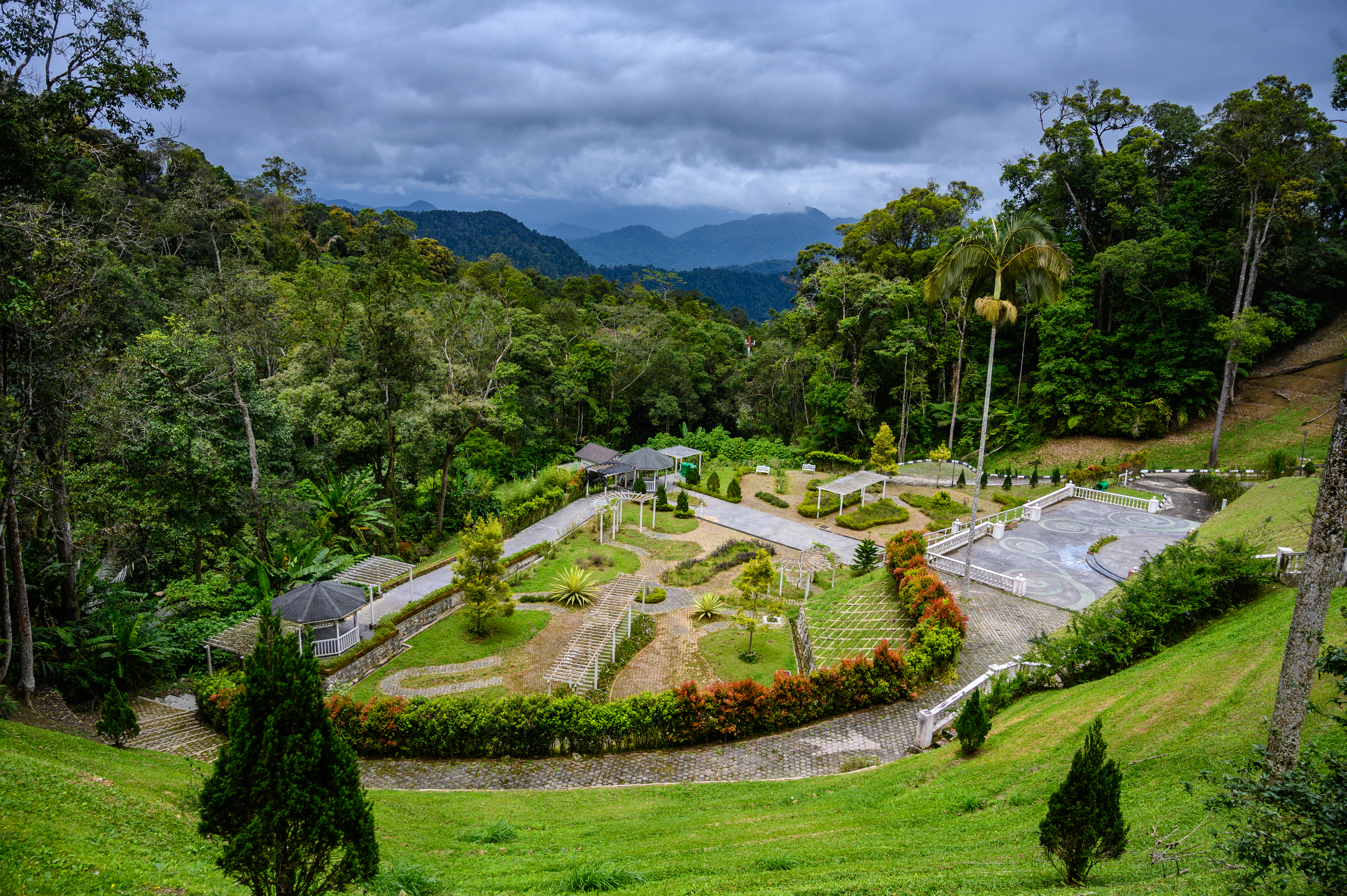
From Fraser’s Hill

There is a Fraser’s Hill Golf Course

You bird along quiet roads and trails

Feb28-Mar 11 Fraser’s Hill to Singapore

It took seven bike days and one tourist day in Melaka to get from Fraser’s Hill to Singapore. I had the time so I did not push my riding days at all. Generally I rode from 7:00 am when the first light hit the road to between 11:00 and 1:00, depending on how far I had to go to get to a place to stay. My shortest day was 50 km, the longest a bit over 100 km, generally it was around 80 km. The five days in Singapore to finish this trip were bike free, but I walked a lot every day.

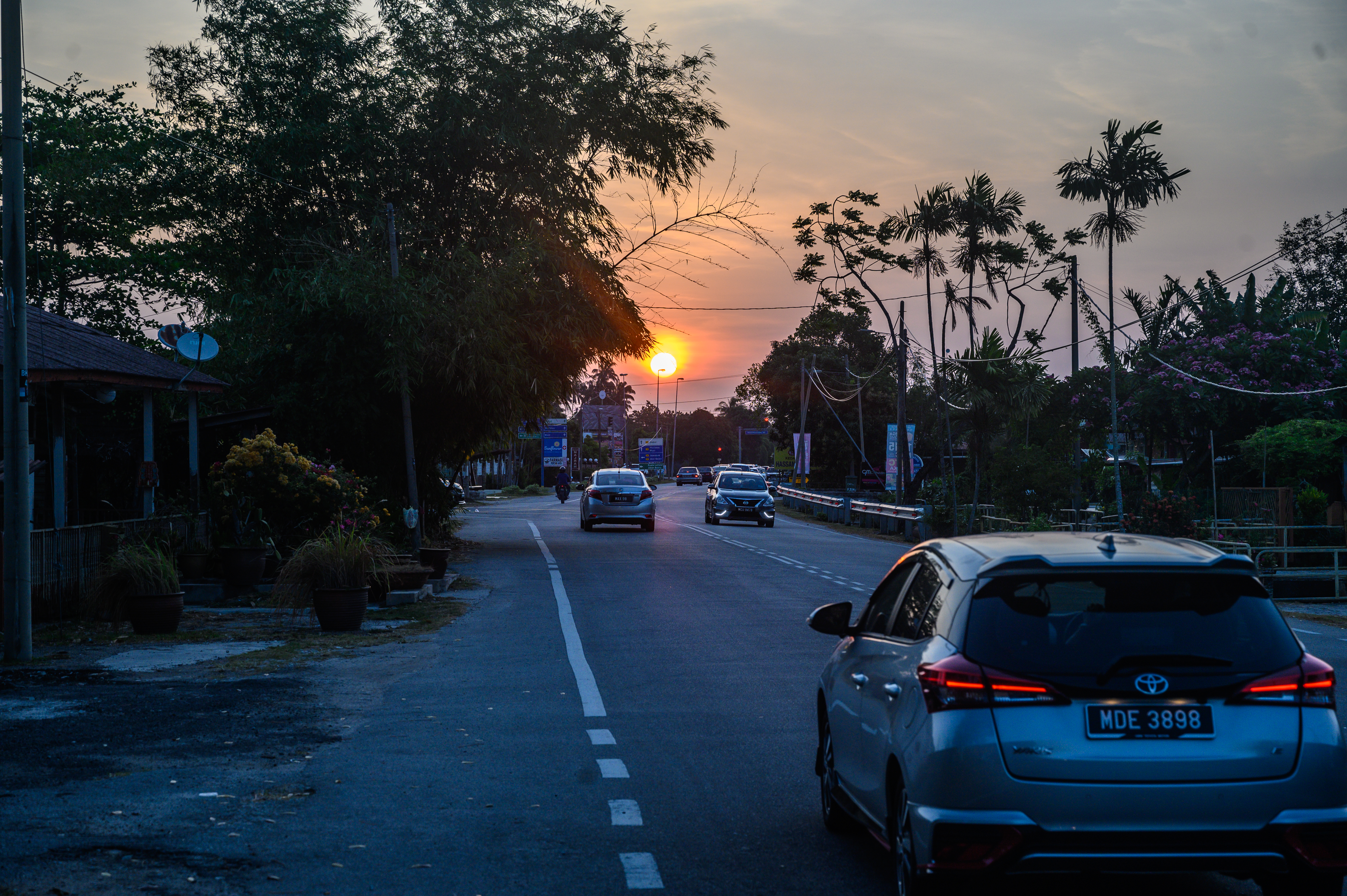
I have learned how to handle the heat/humidity while cycling. The best hour is the first hour when it is coolest and before the sun actually rises. The one downside is that invariably there is a rush hour going on and the traffic might be the worst of my riding day. In the next hour some days I fought the sun as it rose as I was riding south and often east.

Sometimes the traffic would lessen a bit, after that first hour, particularly if there was no major town close by and I could ease off and enjoy the morning. As the morning progressed I would stop frequently for drinks of some sort or just water I was carrying. There are many bus shelters that are nice to stop at. As it got hotter I just stopped more frequently. Heavy traffic also affected the amount I would stop, as if it is stressful and I push harder. I have learned that as my attention begins to wander I find a place to stop and rest. Heavy traffic occurred about half of my ride. The roads were not as good as in Thailand as road-side shoulders were hit and miss and there is a fair amount of rough patching of the road surface. The cars, trucks and motor bike drivers I shared the road with were great. I never heard anyone honk or show any displeasure with me. I had to be most cognisant of the motor bikes as they whiz by in and out of my space, which is a little ½ metre strip sometimes with a white road edge line. Generally motorbikes go faster than the cars and pass the cars on both sides, cutting into the space I would like.

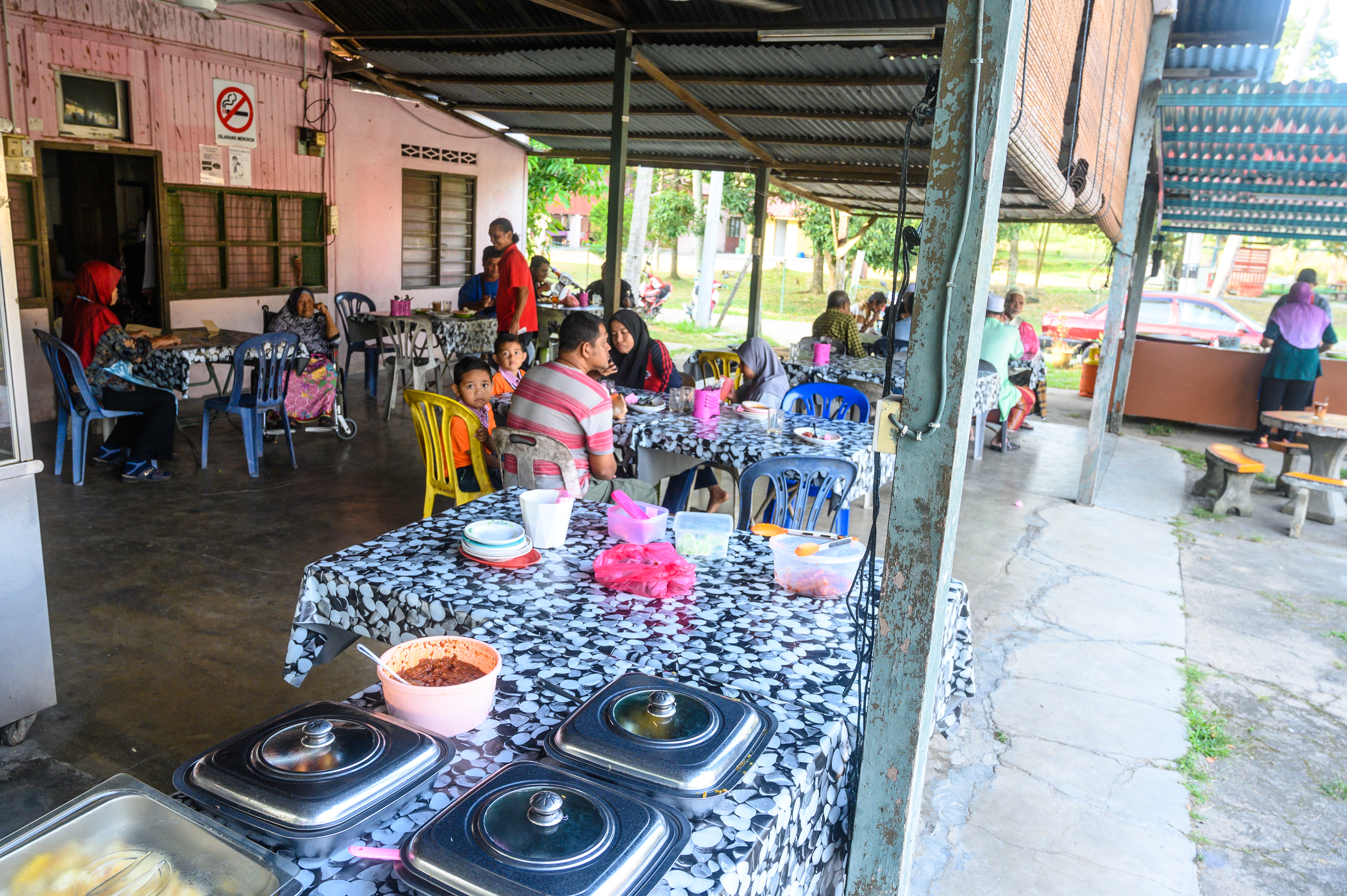
Each day I would ride for that first hour and then stop for a breakfast at either a convenience store or a roadside restaurant.   I think every one of these restaurants I stopped at was a Malay place, where I had a fried rice mix, (nasi Goreng), or coconut rice with some vegies or meat, that would be in a pot that I could look at and take the amount I wanted. I also had roti a lot and enjoyed it but I don’t think it is really that good for you. I always chose a place with quite a few people. They are all outdoors places covered with an awning and the cooking is outside as well.

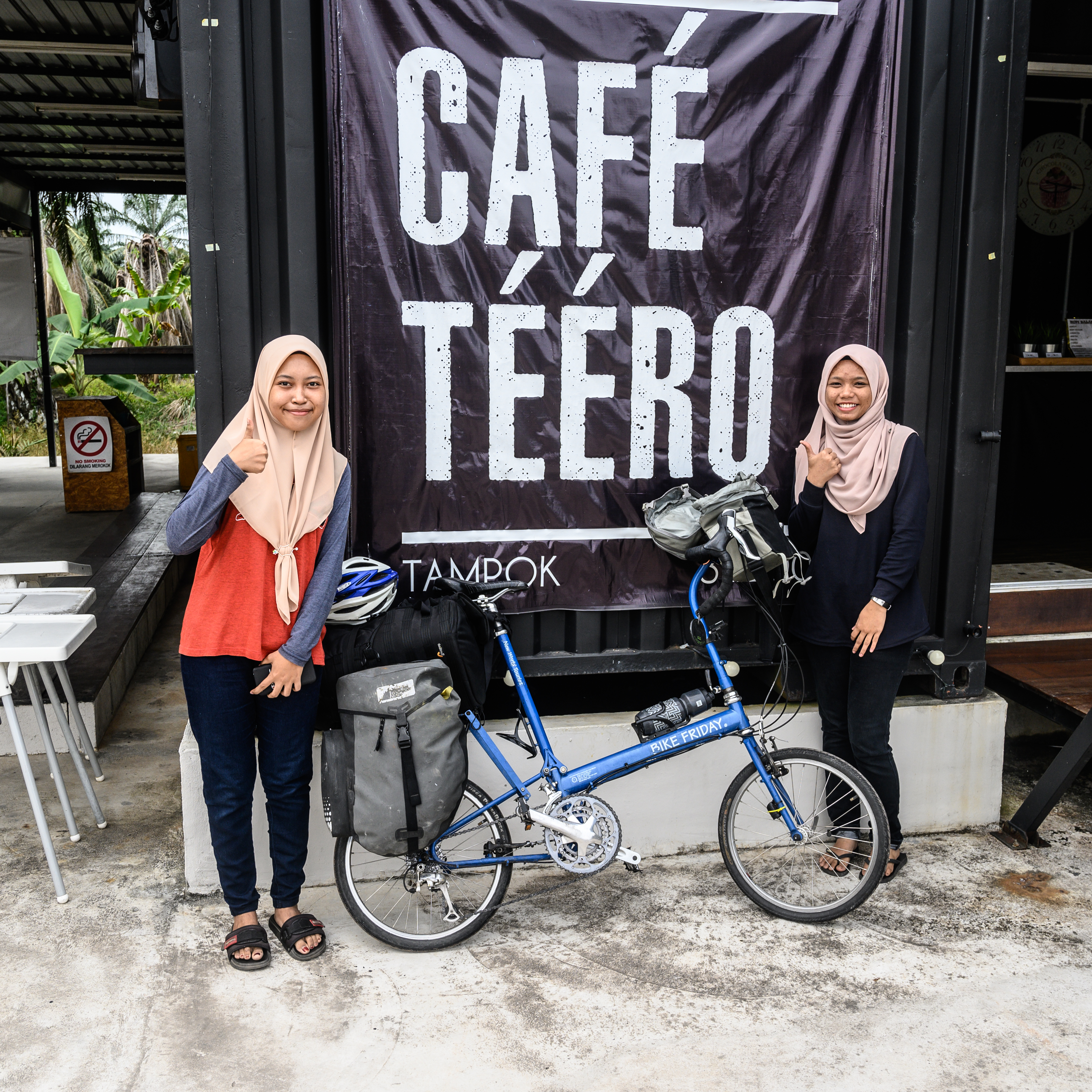
One nice coffee place I stopped for a mid-morning break was run by two young girls, just out of high school. They had a waffle iron on the counter so I asked for some, but that meant a longer stop than if I had just bought the nice looking biscuits they were also selling. And so we had a long talk about their school and what they were doing. They managed to get my blog address from me, so they might be able to read this and see their picture. Mind you they took many selfies with me and Friday.

The best road section I had was the first hour and a half out of Fraser’s Hill. In those 35 km I dropped 1000m on hundreds of switch-backs. My brakes were on almost the whole way. It was cool and so peaceful in the deep jungle, birds singing the whole way. On that stretch I met two cars. Most of the way to Singapore I had moderate hills. I think one day was almost flat but generally there would be frequent hills that could get me down into my lower gears. In effect the first three days got me around Kuala Lumpur. In those days I was always within 100 km of KL as the crow flies but I do think I missed most of the heavy traffic a city like that creates.

The most interesting place I stayed was a “home-stay” owned by a Chinese-Malay who is a high-end cook. He has travelled the world cooking and consulting about food. His place, a multi-year retirement project, is deep in the jungle. He picked me up in the closest town in his 4×4 and then dropped me back on the road in the morning. His place, all made of found materials, was a study. No AC, but lots of fans. He uses lots of mosaics and wood. A tower on top of everything is all mosaics. He is also into bonsai and bees. Hard to describe all that went on here. We ate gourmet, both dinner and breakfast. Neat experience.

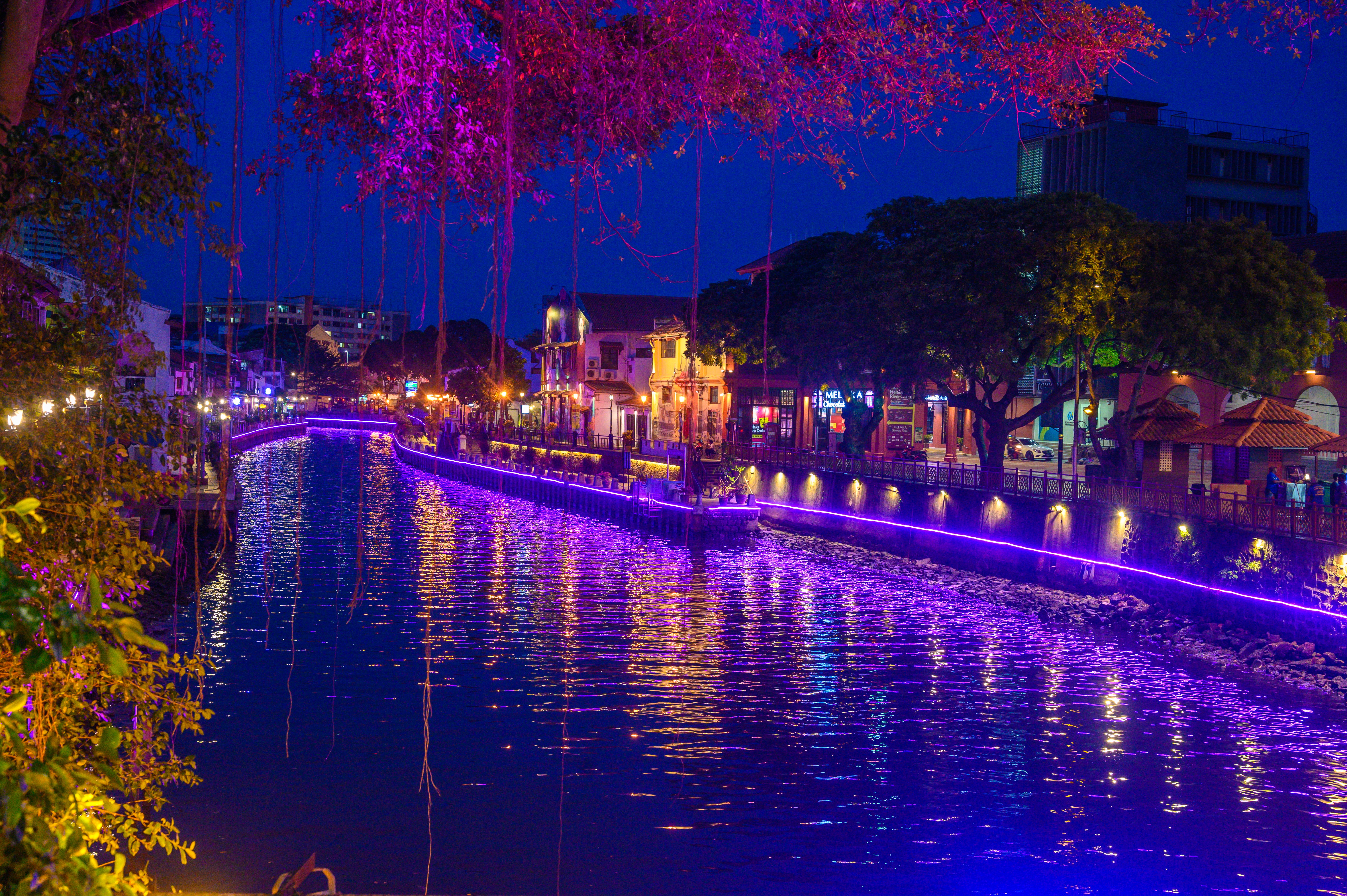
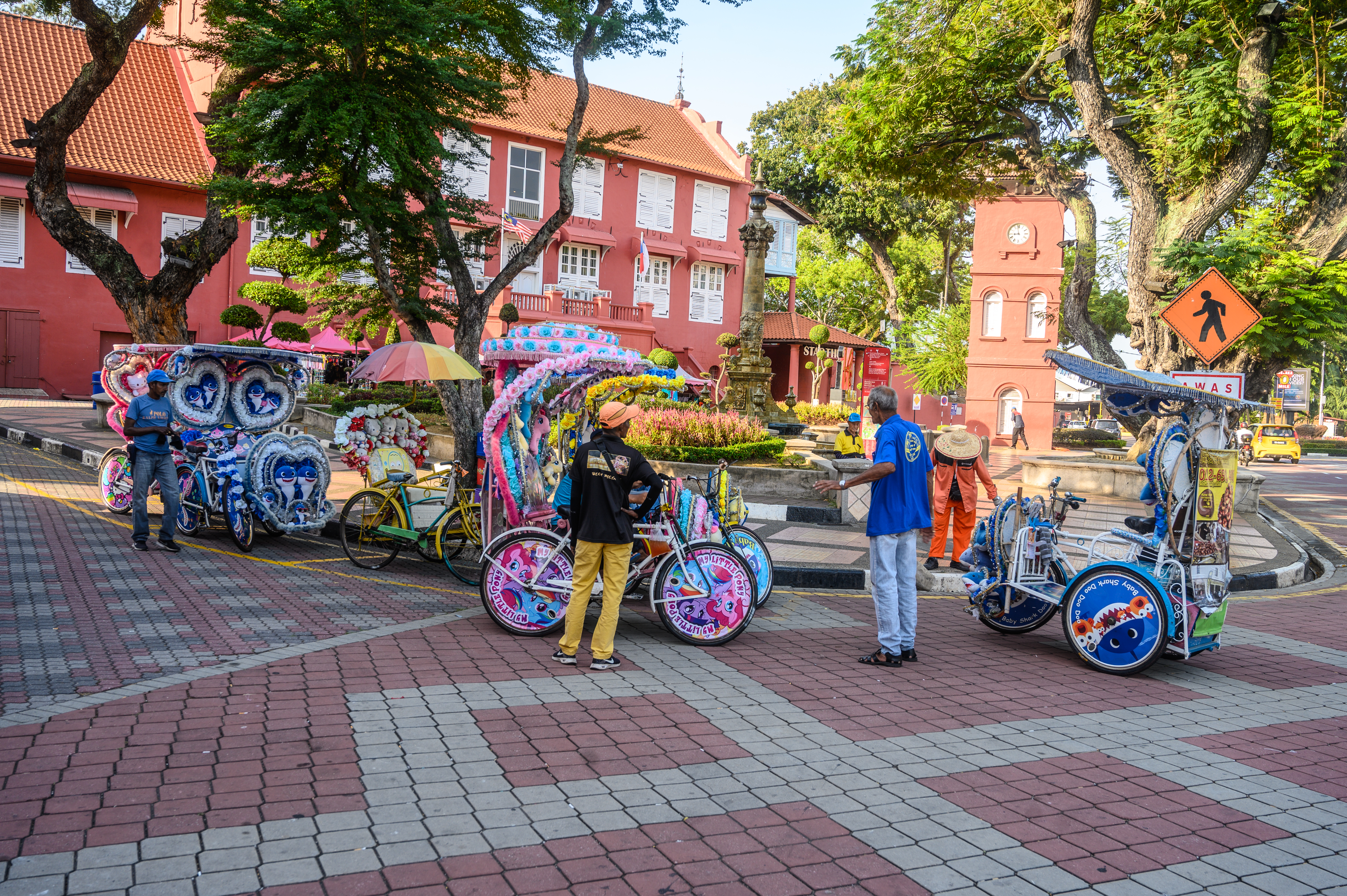
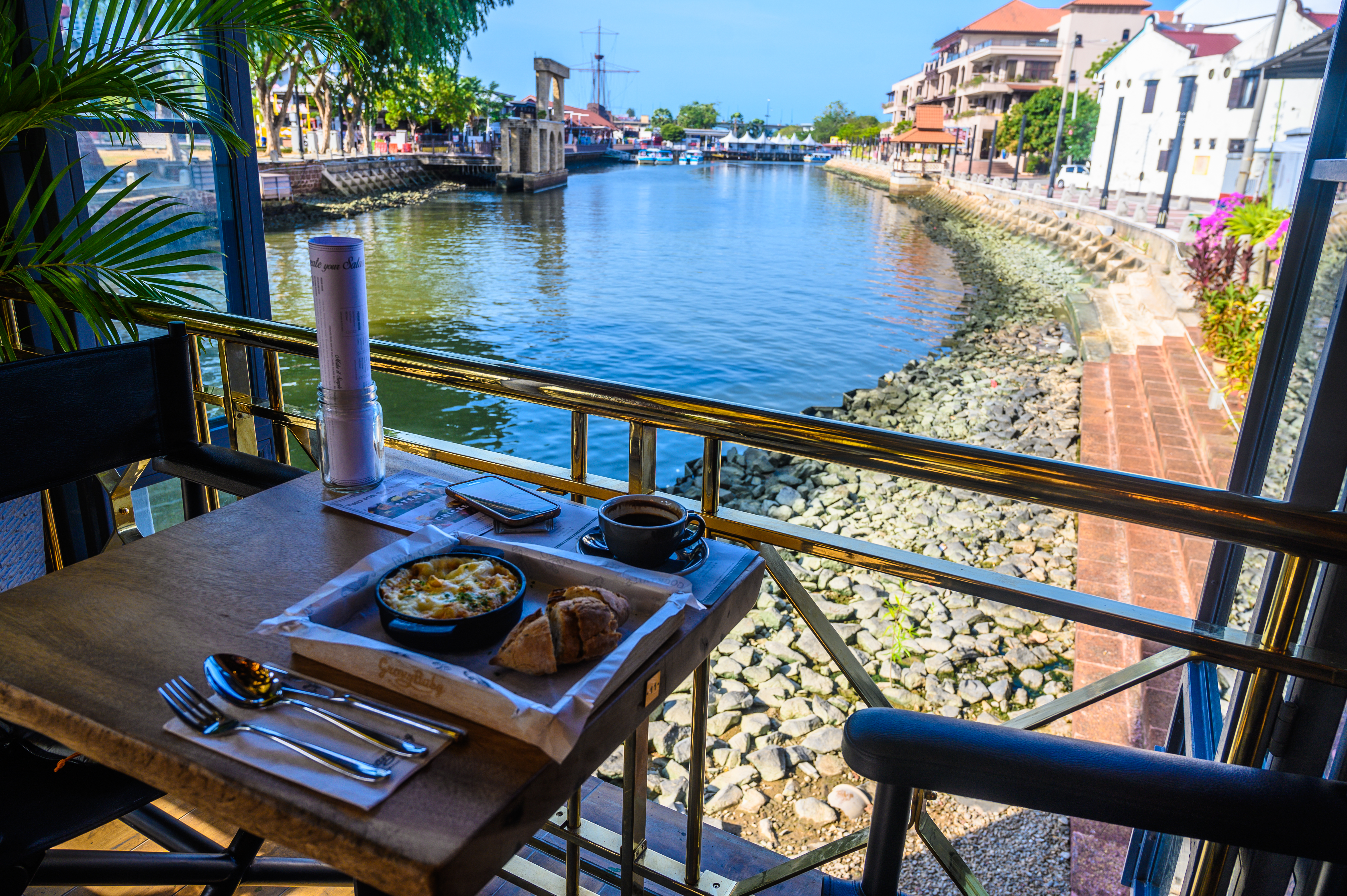
Melaka was a nice break. Back in the tourist world with lots of food choices, and some interesting history. In Malaysia I had beer twice, in Georgetown and in Melaka. I did see a few westerners in Melaka but I think the vast majority of tourists are Chinese from Singapore. I spent my day off walking around in the morning, but in the heat of the day I sat in coffee houses and read.

The next four days riding were going to get me to Johor Bahru, a large Malaysian city across the narrow Johor Strait that forms the border between Malaysia and the Island country of Singapore. Johor is by far the biggest city I encountered on this leg and as such I was on big busy roads as I came in around 11:00. I had trouble getting off of the big roads and into the section of town where I wanted to find a hotel. In this flailing around I managed to get myself into a long line, with no exits, of motor bikes on their way to Singapore. The next thing I knew my passport was stamped and I was on the bridge across to Singapore. Once through the customs there (not easy) I had another 25 km into the centre where it took some meandering (Malaysian Sim doesn’t work) to find the YMCA where I am finishing off my trip. So, a bit longer day than planned and an extra day in Singapore.

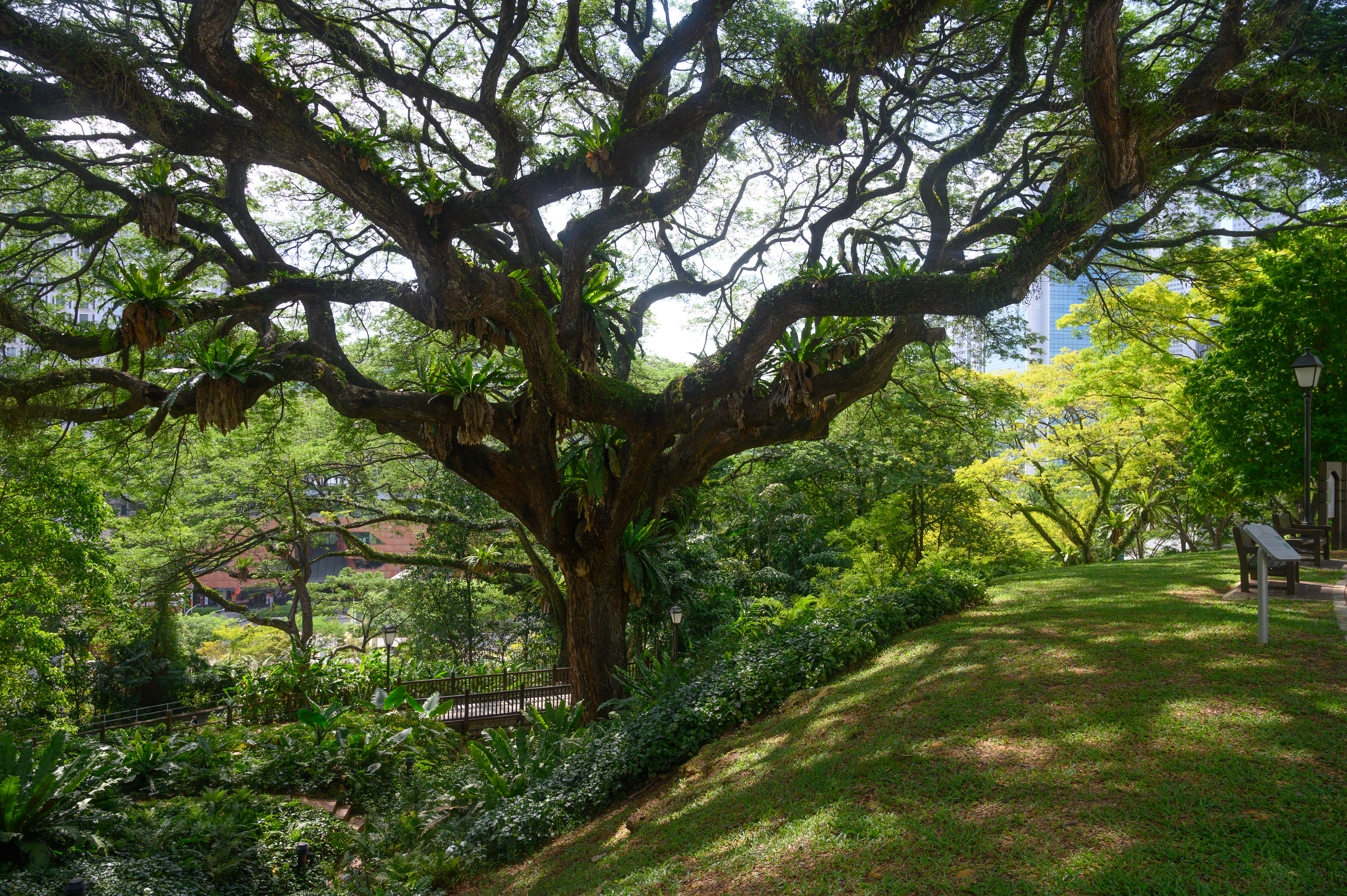
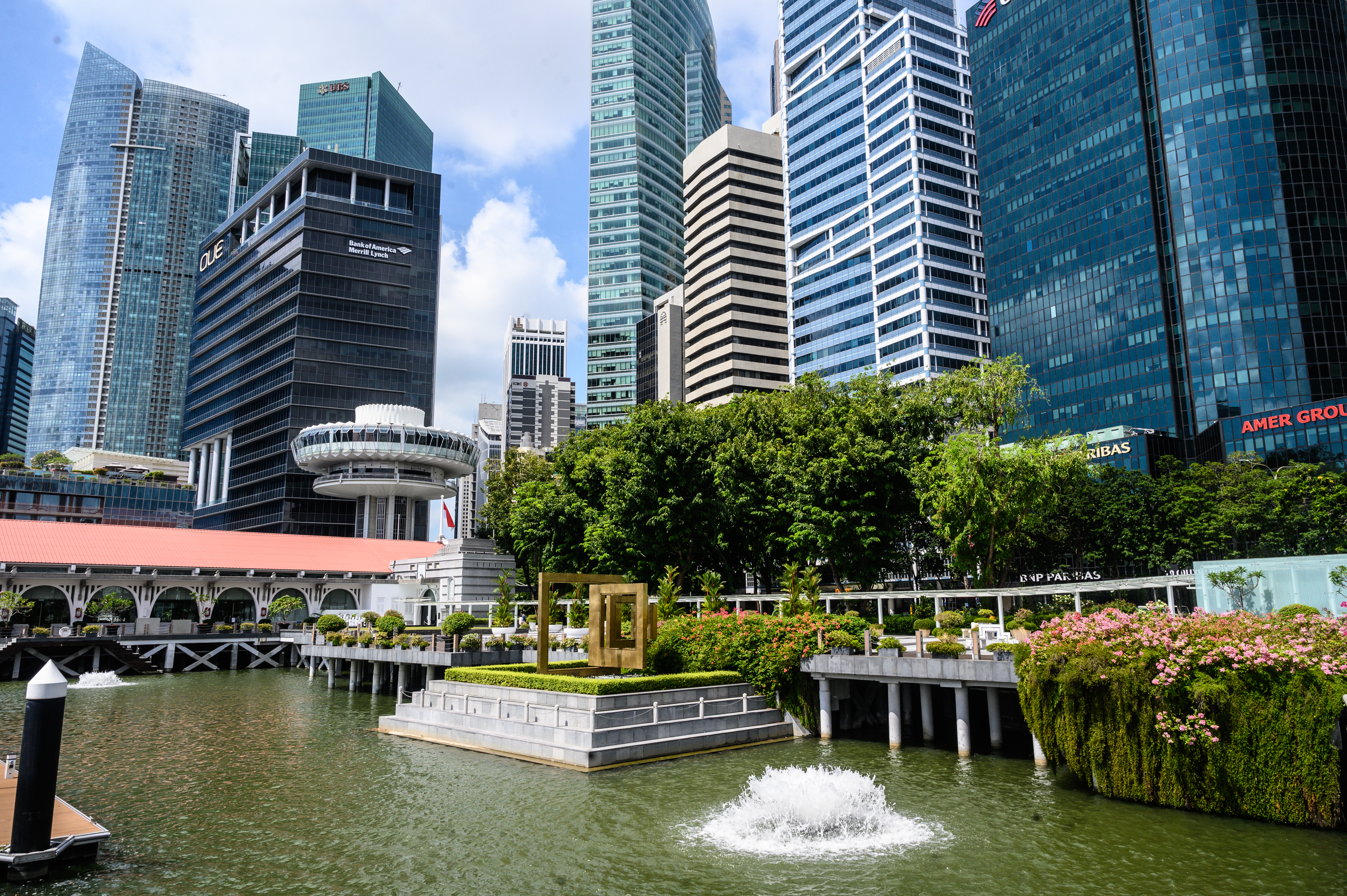
Singapore is such a change from Thailand and Malaysia. Modern, clean and expensive. I am enjoying the change (not the cost). It is also much greener with extensive parks than I had imagined. It was easy to find a bike box for Bike Friday and my only other business was to ensure my flights were still on.

I stayed at the YMCA which is centrally located and so I was able to walk almost everywhere I went. It felt so nice not to be out on the road at the crack of the day.   For my whole trip, until I got to Singapore I was out before the sun was up to start cycling or to look for birds. In Singapore I was still up at the same time, but on some days I just sat with coffee after breakfast and read for a while.

One day I was looking for a specific book and I bumped into an interesting guy in a used book store. He had heard me asking for the book and told me that he had seen it at the book store in Takashimaya, a large Japanese department store on Orchard Road. I wasn’t quite sure where it was and so he took me. We used the subway, which was the only public transport form I used here. On our trip across town and during a coffee we had together we shared experiences. He is a dancer and a jeweler. He was wearing curly plastic ornaments in his ears. At 56 he has been around, He has worked in Denmark and Greenland teaching Inuit, to give an example. He also talked about the development of Singapore as he has experienced the whole of its existence since Independence. I spent a few hours in the Singapore History museum to further flesh out my understanding.

I ate well, walked in parks and among sky-scrapers, added a few birds to my Thailand-Malaya collection, and just enjoyed the relaxing days before my flight home. The Corona Virus issue was handled there by hand-sanitizers in stores and restaurants that you were expected to use and by getting your temperature scanned when you entered many buildings.

I had finally succumbed to constant outside heat/inside AC by getting a chest cold a couple days before Singapore so I am in self-isolation trying (without much success) to get tested here in Calgary. Other than that. Good trip. I might do a post to share some of my birds when I get them organized. Til then…

Next (See My Birds)

Posted in Birds and Animals, cycling, Thailand and Malaysia, Uncategorized | 1 Comment

Malaysia

Sorry no pictures this post

Feb 19-27 Fraser’s Hill, Malaysia

Getting to  the bottom of Thailand.  Two 80 km bike days got me from Trang to Satun. Each day was about the same. I was good on the bike and had no heat issues. Mind you I finished each day at about 11:30. The first night was my most basic place yet. There was nothing tourist oriented in the town. I ate what might be called left-overs in the market. Cold rice and a dried chicken leg. I took a beer back to my hotel and just basically hung out there,

Satun was completely different. A bit larger town with lots of sleeping options. From Google Maps I picked the hotel, DD Resort, furthest through town, I had no other indications of the nature of the place. Like the previous night it was a bit off of the road, but it turned out to be a resort on the river a few hundred meters from the ocean. The restaurant hung out over the river and the rooms were ultra-modern and chic. As I said I pulled in before noon and the rooms were just being made up. The woman in charge looked at her book and indicated that they were full. I had entered through the restaurant and one of the women there had taken me to the office. The two had a bit of a chat and the room gal had a closer look and decided since I was only staying one night it would be ok. I had beer on the restaurant deck, washed clothes, had a good dinner and full breakfast at 6:00 am. DD Resort was a dream.

It is 10 km from DD to the ferry that would take me to Langkawi in Malaysia and right beside the ferry is another Mangrove Bird Reserve. I got there before 7:00 so I had 2 hours to have a look before heading over for what I thought was a 9:30 ferry. I saw a few birds, got no worthwhile pictures but the major disappointment was at the ticket wicket. I think I had missed one and was told the ferry left at 3:00. Kicking myself that I did not check before heading into the mangroves, all I could do was to go back for another look for birds. I did no better and spent the early afternoon in the terminal. The ferry was the enclosed kind where you can’t get out on the deck. I had had a similar ride in Turkey in the fall. Bike Friday did much better. He was passed by deck hands to the deck on the front of the boat, and had the wind in his face the whole way.

I had hoped to have part of the day to look around Langkawi and then decide what next. We also lost an hour going into Malaysia so it was late when we arrived. Langkawi was an even bigger surprise. The terminal on Langkawi was teeming with people coming and going. There are Starbucks and MacDonald’s, no end of butiks selling everything. I got money and a sim card with no trouble. But it was a bit of a turn-off for me. I was expecting an idyllic tropical island. I decided not to stay.

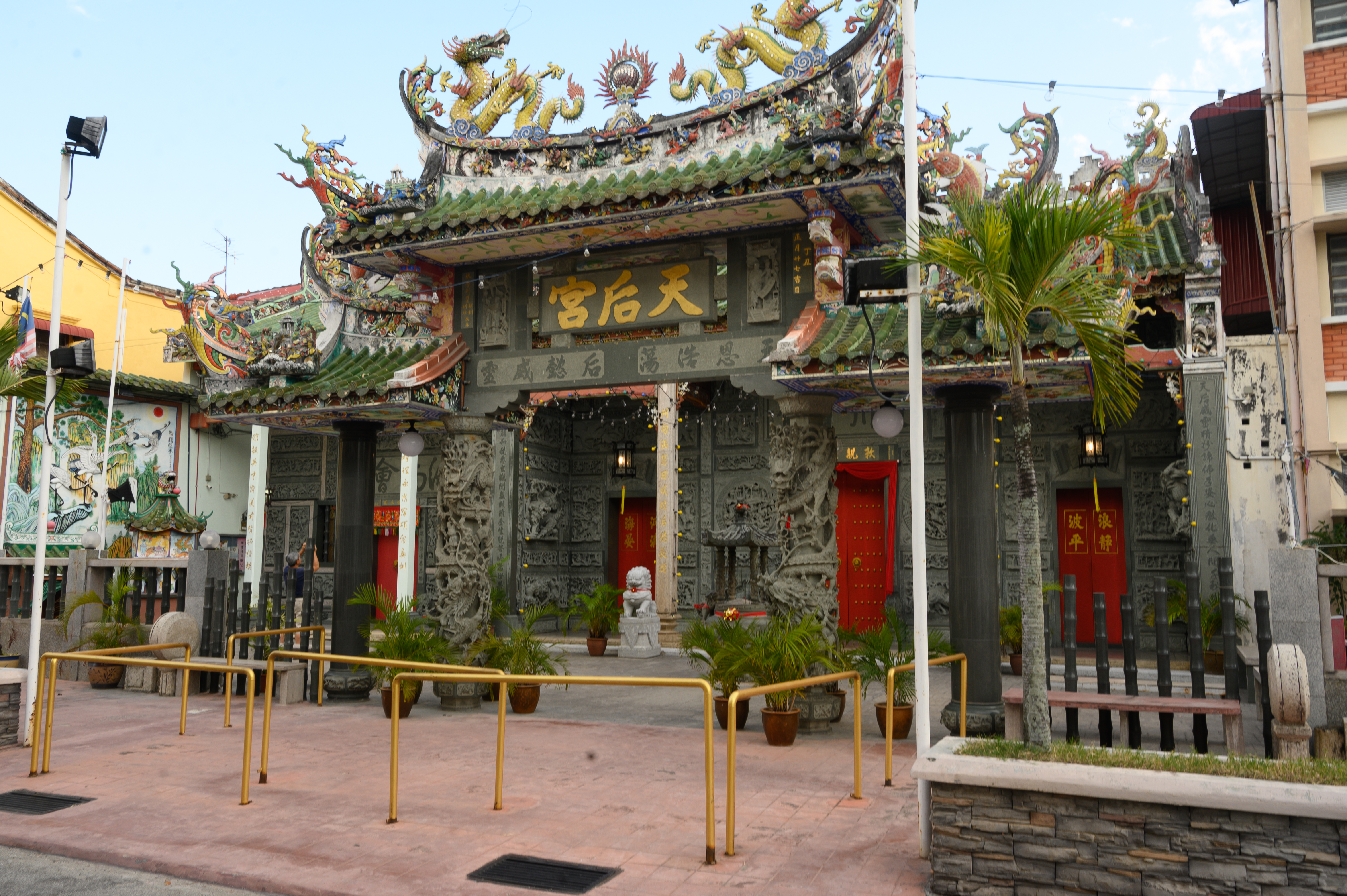
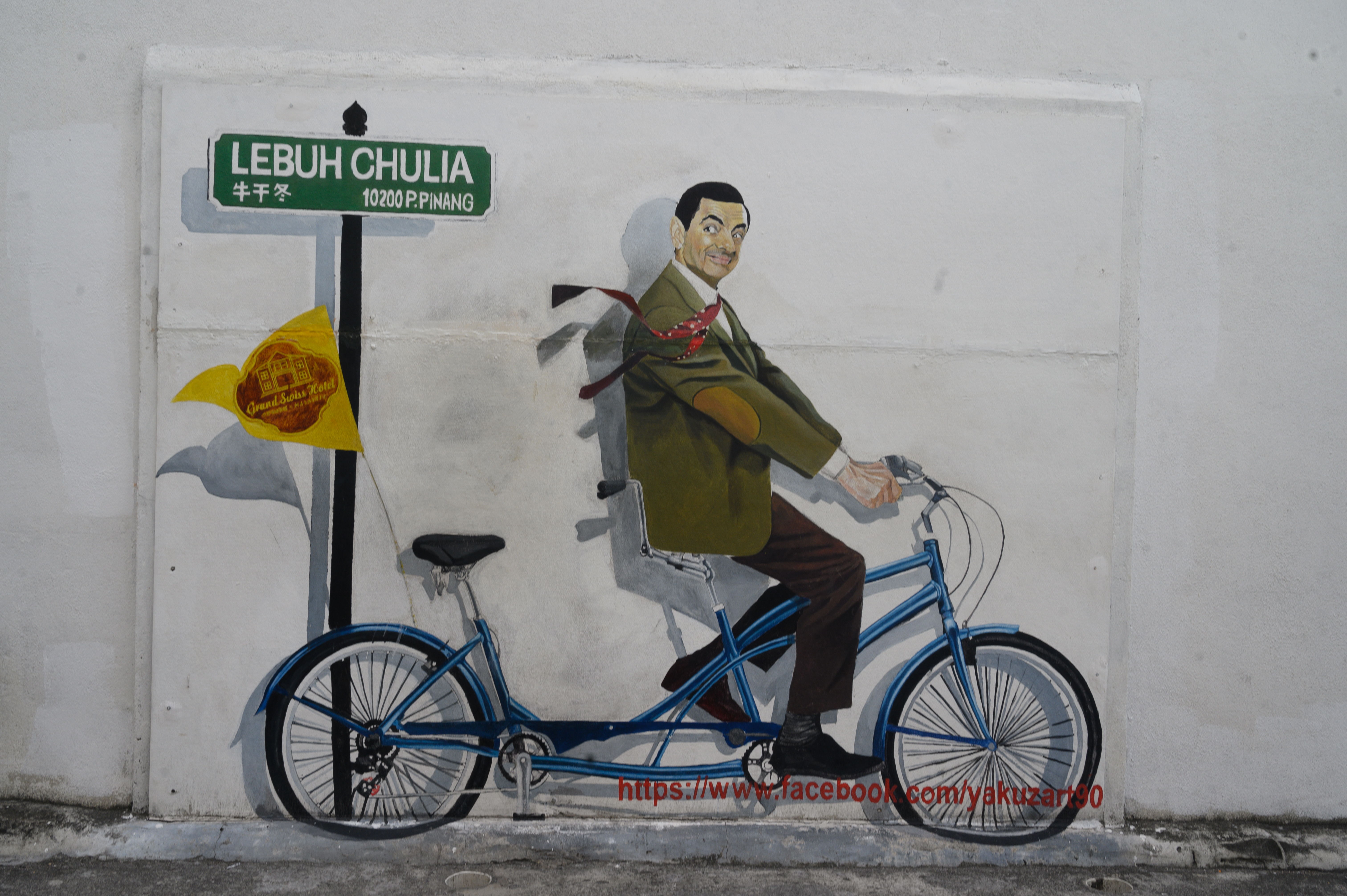
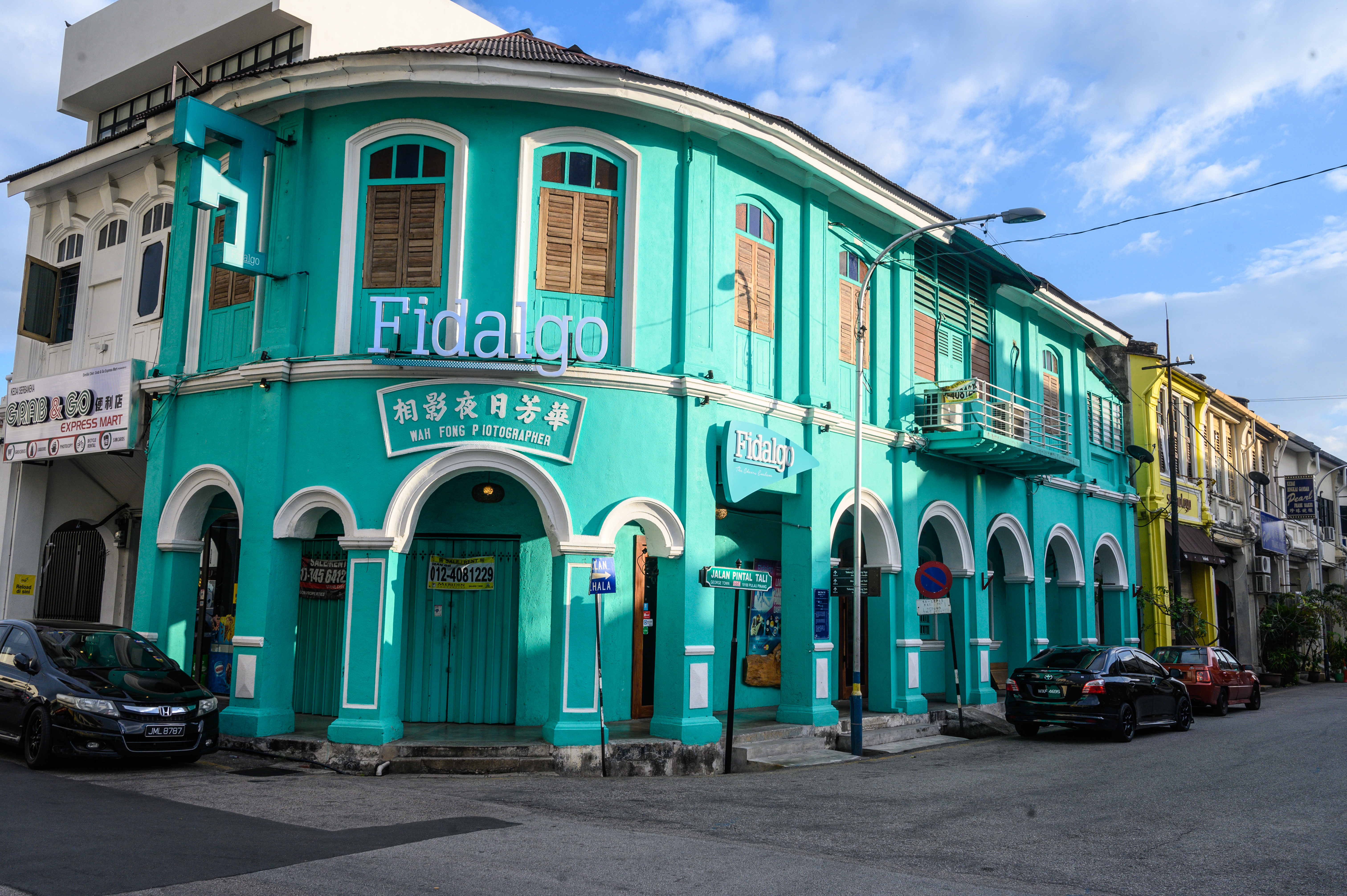
The next morning I was on another ferry heading for Panang Island and the city of Georgetown. I was expecting more development here as Panang has a rich colonial history and I was prepared to have a bit of a back-packer experience, primed for such by the thoroughness of Lonely Planet coverage. I booked for two nights. A good part of Georgetown are the Chinese and Indian Sectors. I stayed in that area and over the two days ate Chinese, Indian, Syrian, Malay, washed down by cheap draft beer. I know this sounds like a lot but it was mostly street food.

On my day in town I biked about 40 km, mostly getting to the Botanical Gardens to look for birds. I headed over a bit after 7:00 (It now gets light about 7:20). On this Sunday initially the streets were bare, until I got close to the section of parks the Gardens are located in. The traffic thickened, parking was at a premium and by the time I stopped and locked my bike at the Gardens I had passed 1000s already heading out to climb up the hill, to walk in the parks or to visit the gardens. It is interesting to me in this country with healthy populations of Native Malay, Indian and Chinese it was the Chinese who were out early this Sunday.

In spite of all the people there were still a few birds flitting about. I spent about 2 hours walking around and sitting in the odd spot to see what might come by. My best result was in a quiet spot not particularly attractive to look at but it had a nice concrete abutment to sit on. After a while an egret landed in the little creek, and then a grackle came in and started scratching around. But the highlight was when a streak of royal blue flew by and sat in a tree beside me. My first view was into the sun so I carefully made my way around him. It was a kingfisher of some sort. He flew off across the creek but I could still kind of see him, and then he came back. Each transition gave me better pictures. He was a White-breasted Kingfisher that I had already seen at Baan Maka, but my pictures here were a lot better.

I had a long bike day planned so I was at the 6:30 ferry, still dark, for the 15 min ride across to Butterworth the mainland side of Panang. I had a poor first stab at a Malaysian breakfast waiting for some light to hit the roads and then I was on the way. I was on freeways, I carried my bike across medians to get to an exit I wanted to try. I was sometimes on the wrong side of 4 lanes going my way. It was awful. Always congested, never with a good shoulder. I went through 100 traffic lights, a good sign that this was not a real freeway. I had a 100 km to ride and by 11:00 I was not much over half of that, and still the traffic was just as thick. In heavy traffic I ride harder, not sure why, but it meant that I was getting quite done in. Sometime later the road passed by a train station. In I went and got a commuter train to the town, Taiping, that I was headed for. It was only a 20 min train ride but it saved me.

Taiping is the first real Malaysian town that I have experienced. My place was nice, but the choices of restaurants and places to buy food was very limited. In the meanwhile my travel plans were rattling around in my head. I had a pretty good feeling that I could get onto better roads close to the ocean for the next days as far as Kuala Lumpur. Complicating that was the desire I had to get to Fraser’s Hill and the road along the coast did not help there. Fraser’s Hill was built by the British in colonial times to get away from the heat. It is 1200-1500m above sea level. To get there I had planned riding the highway I was on out of Butterworth until close and then taking a bus or something up into the hills. In Taiping I spent a lot of time on Google looking for ideas.

I decided to bypass the coast and KL and I was not getting back out onto that same highway. Two Trains and a 75 minute taxi had me in Fraser’s Hill the next day, a Tuesday. I booked in until Friday, when the crowds would start to come. I was going birding. A big plus of this plan was that from Fraser’s Hill it looks like I can bike straight south, eventually getting over to the coast again, but missing all of Kuala Lumpur, which I don’t need to see. I have yet to test this plan, but that is it for now.

My three days in FH were great. The temperature range is from 20-30, whereas out of the mountains it is 35-40. I walked many kms up and down roads and trails having some success finding birds. It is very quiet here during the week. I hired a bird guide for four hours and he helped me see lots more birds. Photos are tough as in all jungle environments but I have quite a few that I like.

Tomorrow I head out after breakfast. I have over 1000m of altitude to lose, but unfortunately it all happens too fast, so before long it will be biking in the heat as usual. My only hope is at least the traffic might be less. Singapore is 5-600 kms away and I have time to bike this, but if I strike out on road choice then I may do more public transport. Wish me luck.

Next

Posted in Birds and Animals, cycling, Thailand and Malaysia | Leave a comment

Biking South Thailand

Feb 11 – 18, Trang

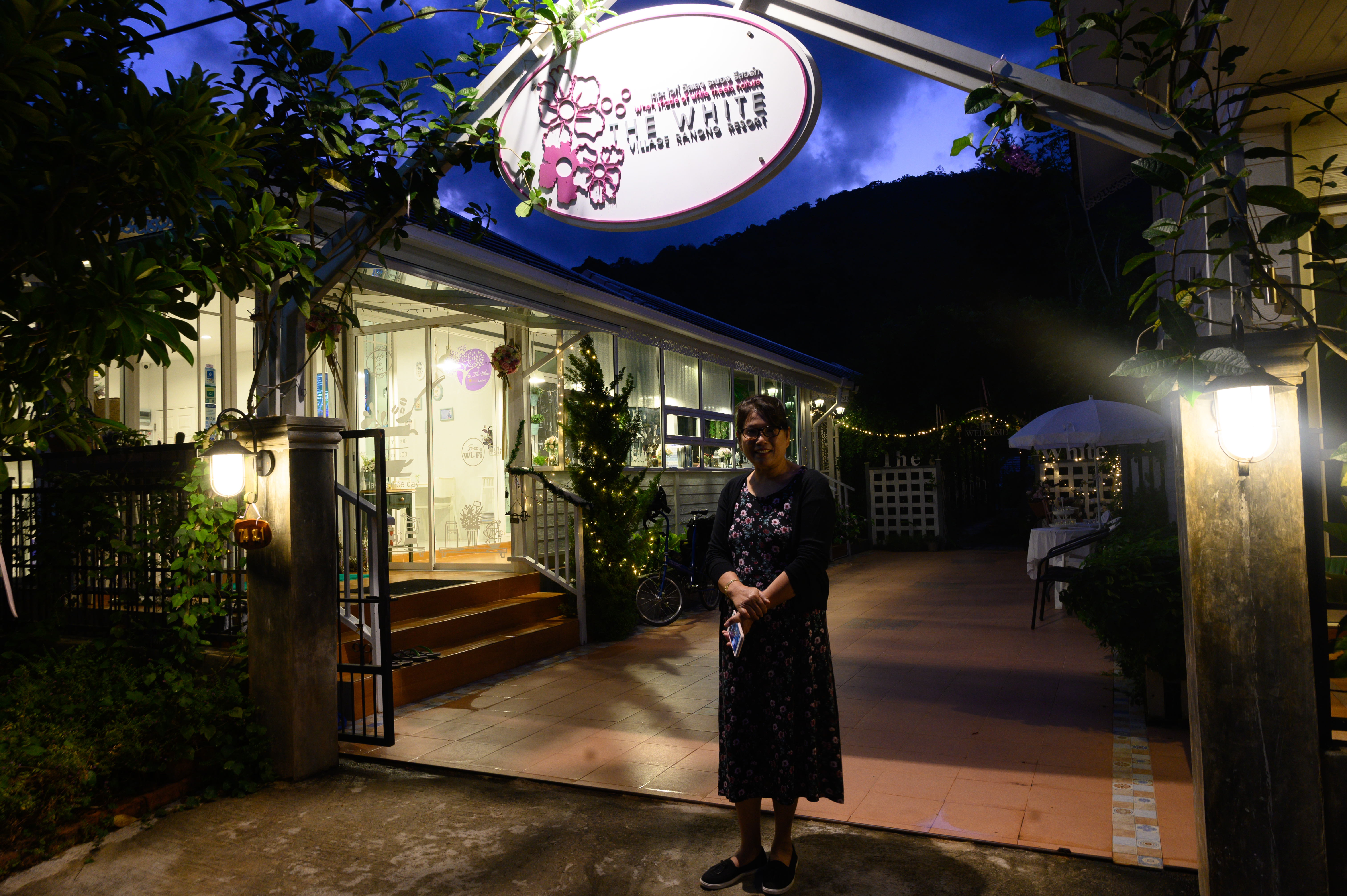
My White Village Resort hostess in Ranong saw me off as I rode into the morning. She was probably a bit concerned as I had checked into her place at 9:30 the previous morning, obviously quite done for the day. I had hung out in the grounds a bit, but mostly I was comfortable only in my AC room. After too many days of over-heating, my body was fighting back. Mid-afternoon one of the lovely ladies came by with tea and toast, worried that I wasn’t eating anything. I did allow them to make a lovely dinner for me, and even had a beer so I can’t be that bad. So, with most of a day off and lots of fluid I was underway again. I was determined not to ride for long in the hot of the day, and I was committed to finding a place to take a full day off.

I stopped frequently to buy fluids that day and found a place after 80 km before noon. If my Ranong spot was all personal attention this place was not, but it was fine. The next day I started to fatigue too fast again in my estimation. I was away early and so had some cool riding and I drank a lot, but when I struggled into Sri Phang Nga NP after only 60 km I was done again, much more so than 80 km the previous day. The park is 5 km off of the highway and I was hoping to stay in a park cabin for two nights to get some rest and to do some birding. A cabin was available for one night only. There is an outdoor restaurant there that is open from 8:30 to 3:30 each day. I couldn’t eat anything but I did have some more drinks before I crashed on one of the four beds in my cabin.

About 1:00 I headed out to walk the 1.5 km to one of the sets of falls and to hopefully find some birds. Luckily it was a lovely deep forest walk, completely in the shade. Other than the falls I didn’t find anything. I am beginning to understand that deep jungle birding is just too difficult for me. This stop was the first time it became really apparent. I had a dinner at 3:00 and was in bed well before night-fall. In the morning I walked the road again, encountering a group of birders who were not having any better luck than me.

Everything about me hurt and so I rode the 5 km back to the highway and waited there for an hour catching a bus to the next town, Phang gna. This is a large town and not one that looked like I could productively spend some time in. I got into a hotel and spent much of the day and night on the toilet. Perhaps that would begin to clear things up. The next morning I caught the bus to Krabi, where I booked in for two nights.

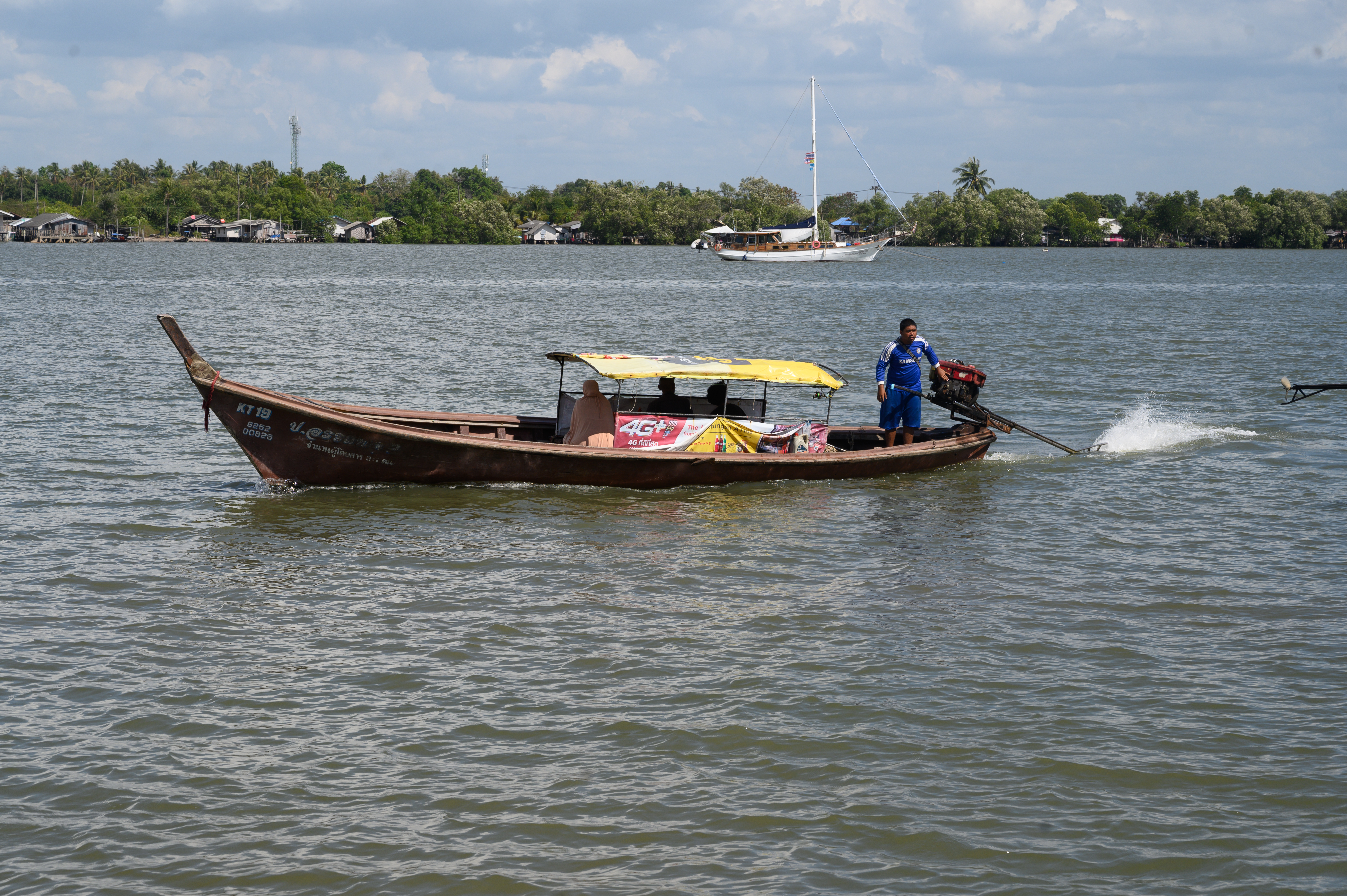
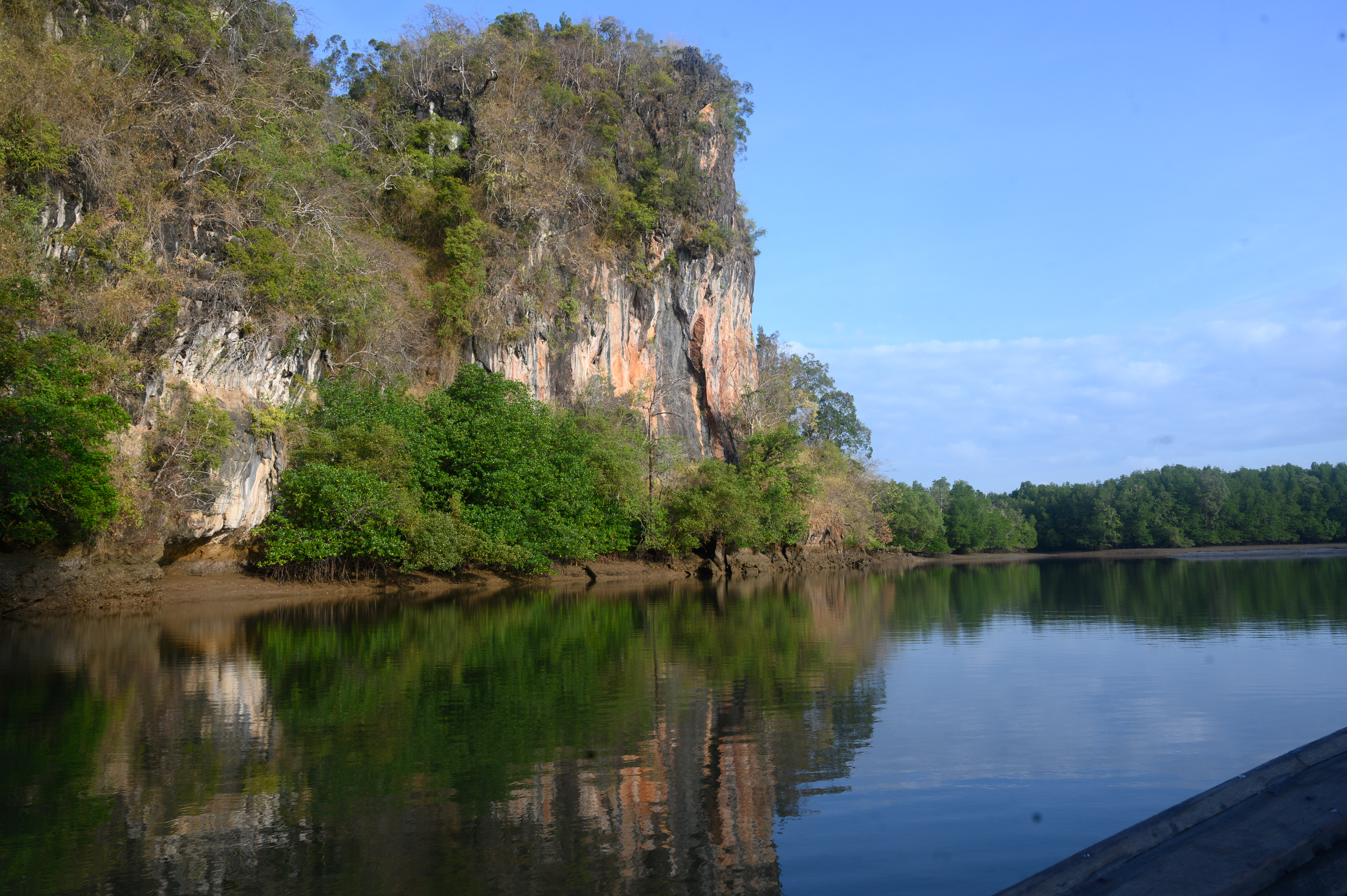
I began to feel better, or at least good enough that I could walk and ride my bike around town without feeling exhausted. I went to the night market and on my day in town I hired a “Rooster-tailed boat” to take me into the Krabi River Mangroves to look for birds.

My driver tried but didn’t have a clue. I saw a few potentially good birds but he never saw any and by the time he would turn in or slow down the bird I saw was gone. It was a great ride but a hopeless birding experience in a place apparently rich with species.

The next day, feeling better I headed on my bike towards a park colloquially called KNC and Morakot Resort known as a birding hotspot. I booked for two nights. The route took me 44 km along the road south to Khlong Thom and then another 17 km into the hills. I again arrived at about 11:00 pretty bushed again. This just may be the way it is. Now I can at least walk a bit without feeling woozy.

I headed off on foot in the early afternoon; 600m to the park entrance. As I approached there were tourist shops, food kiosks and all sorts of people in swimming trunks and flip-flops. This was nothing like the write-up from the excellent Thaibirding.com site that I have been using as my birding guide. Now the prime attraction is not the Gurney Pitta, which might have become extinct in the time since the web content was created. I was looking for an indistinct trail, along which I would find a likely looking gulley to sit quietly by hoping the Pitta would jump out to give me a look see. I did find such a trail and did sit for close to an hour before making my way back, empty handed, to my hotel. I did not enter the park which has now converted the creek and the pools made by the creek into something called the “Emerald Pool”. Instead of attracting old birders by the ones, thousands come and enjoy wading in the pools in the deep shade of the jungle. I did finally venture in and it is lovely on a hot day.

I was back on the gravel road in the morning. My hostess at the Morakot told me there was no point going into the park and that if I just walked quietly along I would find lots of special birds but probably not the Gurney. I had spent three hours along the road finding a only few easy birds when I came upon a birder from Kentucky.

He was looking into the trees with his binos (binoculars for birders) when I came along not having seen anything for a long time. He was all excited indicating that he had seen half a dozen species in that one spot and he proceeded to point them out to me, and he knew what they all were. He is about 40, has been a birder his whole life, and has birded in Thailand before. He pointed out that the Gurney is likely no more. We had a nice visit and I came away completely deflated. I now know that unless the birds are bigger than and as obvious as crows I’m not going to see them. I have really always known this but every now and then I lose track of it. But I guess it is up to me to just enjoy birding without actually seeing any birds. At least I can hear them, without knowing what they are.  But why am I carrying all this camera stuff?

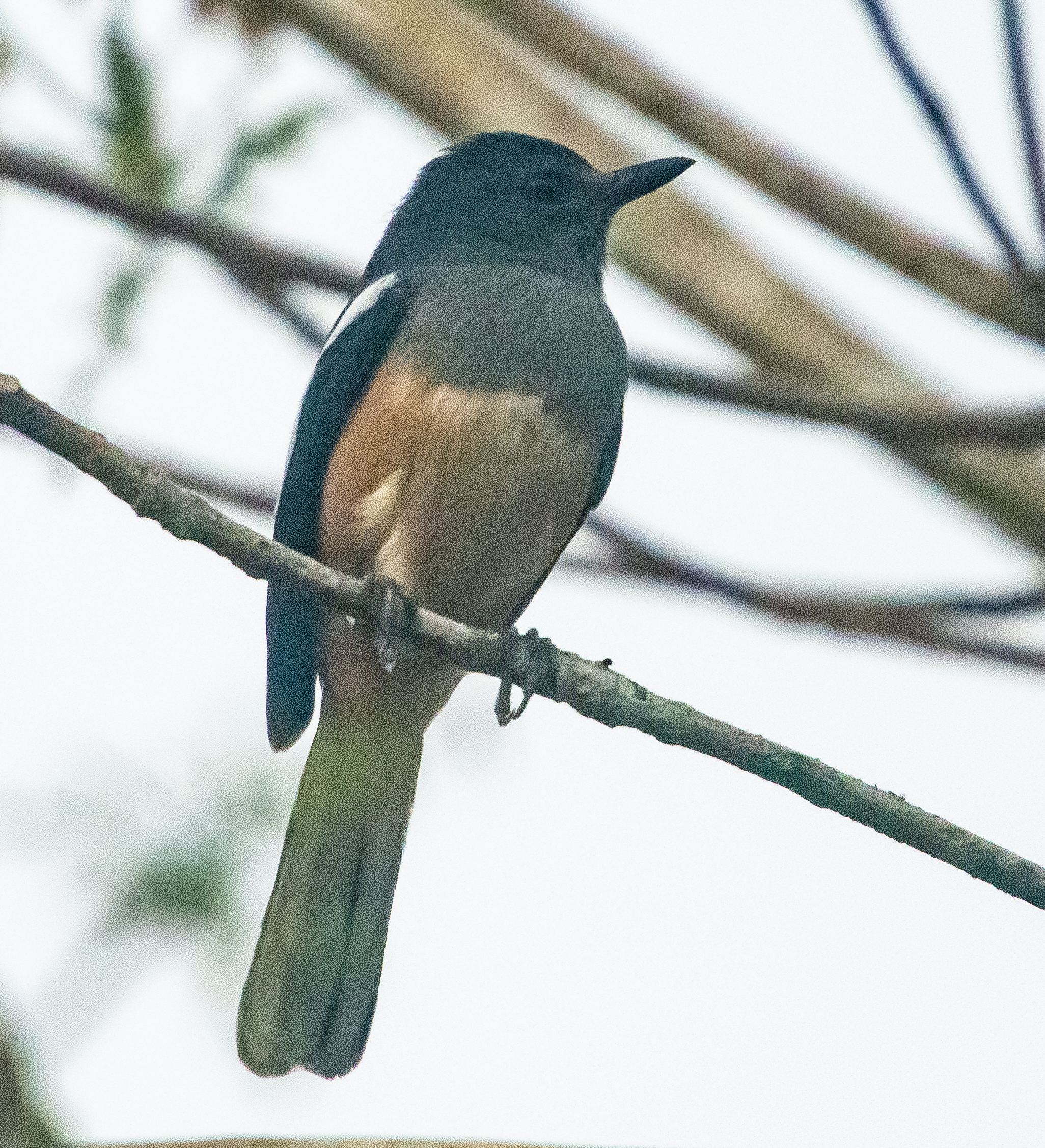
Oriental Magpie-robin

Cool Tranquility

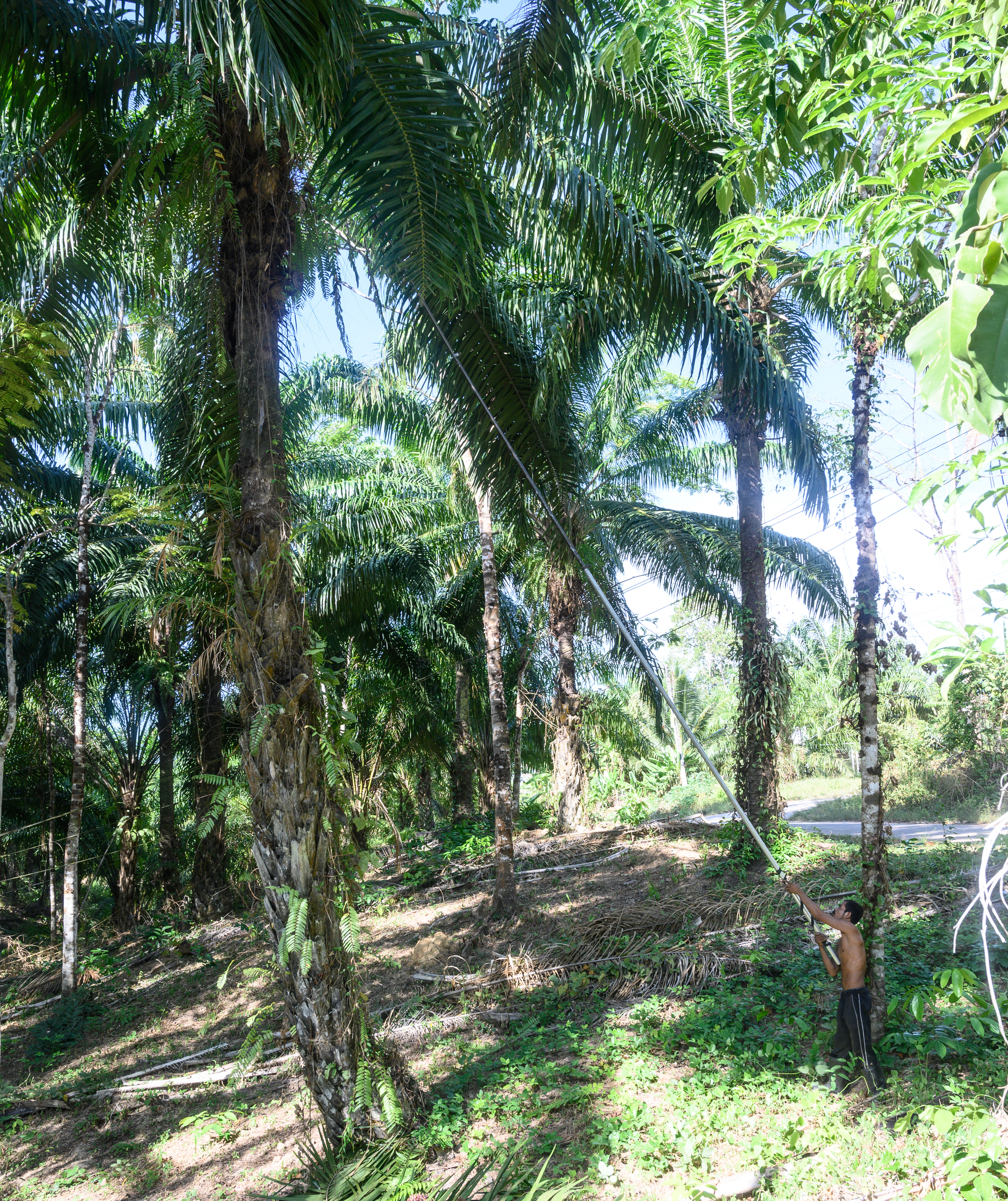
I did observe men at the dangerous and strenuous work of harvesting palm nuts, one of the horrendous crops that is decimating the Asian forest habitat.  It is so sad that this sort of thing seems so necessary today.

I was hoping to be able to cut down to the main highway from the Morakot Resort without going all the way back to Khlong Thom where I had left it two days ago. It was raining when I headed out following my gps route that I had teased out of Google by lying. I said I was walking, not a big lie I thought. At the second dead- end as I sat looking stupidly into my phone a smart young woman in shorts and police t-shirt came out to offer help. She indicated there had been roads at one time laced throughout the area but now most were closed. She helped me pick out a potential short cut and off I went, almost all the way back to where I had started the day. As I approached Khlong Thom she passed me in a car and stopped to ensure I was ok. She was now dressed in an Immigration Uniform. No wonder she could speak such good English.

I had frittered most of the good riding part of the day and so I caught another bus, which put me in Trang, about 150 km and potentially two cycle days from the ferry that will take me to Langkawi Island in Malaysia. I know I have had some sort of bug for the last number of days. Whether it was heat or food or water or lack of that had brought it on it has made my energy level low. Mostly I feel pretty good but when I am out pedaling I run out of juice pretty fast. Hopefully I am past the worst.

Next

Posted in Birds and Animals, cycling, Thailand and Malaysia | 2 Comments

Biking and Birding – Bangkok to Singapore

Jan 29/30 Flight to Bangkok

Farah took Owen and me to the airport. He heading to Grand Prairie, I’m off to Thailand/Malaysia/Singapore. We had breakfast together once through security. Nice.

My stop in Vancouver took longer than scheduled and so my connection flight from Hong Kong to Bangkok had to be changed. Still I was into Bangkok before midnight on the 30th only an hour and a bit late. Most people were wearing masks, particularly in Hong Kong. Neither long flight was near full, I guess in deference to the Corona virus

When travelling with my bike I will usually take a taxi to my hotel.   25 hours en-route, the heat and humidity and the complexity of dealing with a city like Bangkok make this decision simple. 600 Baht, a few years ago it would have been $20 Cdn, now about $25. How is the Cdn dollar devalued against the Baht? At any rate it is still a bargain. The same taxi ride into Tokyo is probably $150 now. I walked over to a 7/11 from my hotel just to get out a bit. I had long walks in all three airports, but I do love the tropical air late at night. I also noted HuaLamphong the train station, right across from my hotel, which was the reason I chose it.

Jan 31, Bangkok

Breakfast is served early and so while I was awake at 5:00 I was able to get a nice buffet breakfast and lots of coffee at 6:30. First on order for the day was to assemble my bike. I do this right away because if there is transit damage I need to get after that right away. Bike Friday has always gone together well for me, and he did again. I have had damage to my other bikes on four different trips and so I am leery.

The next on the agenda is to buy a train ticket, now that I know I can leave in the morning, unfortunately no Bangkok visit this time. The train will leave at 8:05 and will get to Phetchaburi at 10:30. I hope to cycle from the station in Phetchaburi over to the coast to do some birding and then on south along the coast to a few more birding sites. I booked a hotel along the coast about 40 km ride from Phetchaburi, which should give me some time to get a few special birds.

It took longer than normal to find a Cell Provider with good data provisions. I normally would pick up a Sim card at the airport, but it was too late last night. I almost never make phone calls, but navigation and internet service primarily for making hotel bookings have become essential. This task had me on a Tuk -Tuk to get there and on the Metro to get back. Always fun to figure these things out again. I have been to Bangkok five or six times over the last 30 years, but it is always a bit different.

These were the essential tasks and as they were now done I could relax. I got my bike out and rode for about 15 km. down to the Chao Phraya River, by following one of the Khlongs, the water channels that once were the heart of getting around in Bangkok, but are still essential to the mood of the city.

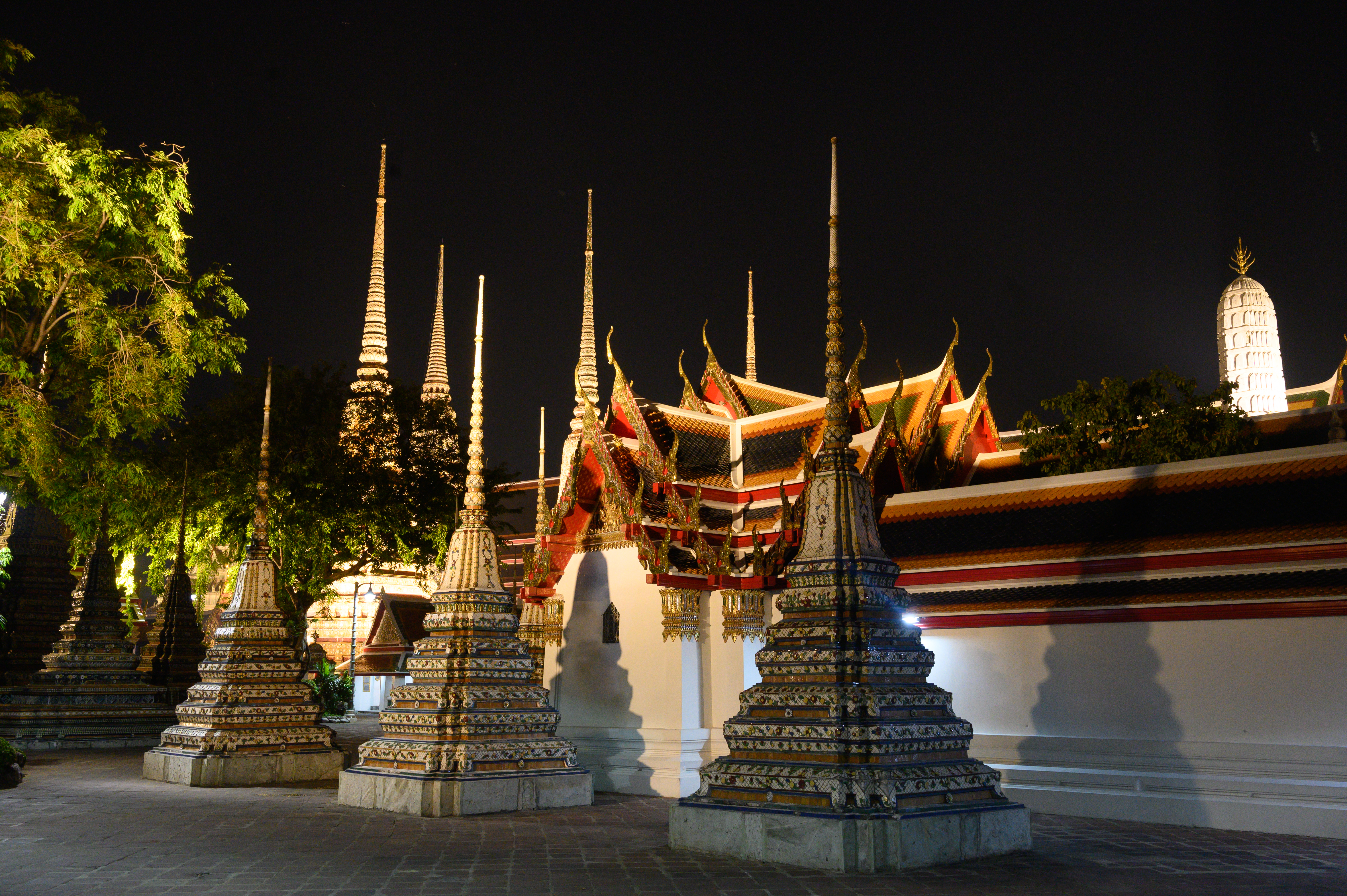
A green curry and then another Metro ride in the evening got me to the Flower Market and Wat Pho for some night photography. Hundreds work putting together flower arrangements to be used primarily in temples and for people to make offerings. Even though it was formally closed, I found an open side entrance into Wat Pho, my favourite temple in Bangkok. The intricate gold gilded temples, sprayed with light, the grounds wonderfully quiet compared to the day time throngs. Unfortunately, I will not be able to get a Thai Massage this time. Wat Pho is I believe where Thai Massage originated.

Feb 1, to Chao Samran Beach

My bike had to be folded a bit to go in its soft bag so that I could take it on what was supposed to be a fast train, no baggage car. The train chugged along getting out of Bangkok and then sped up a bit as we cleared the urban area. But then we sat for about 15 minutes waiting for another train to pass. I was starting to worry. And then another 30 minute wait. My plans for the day were unraveling, but I had my hotel reservation so I had to carry on.

My last bike ride from Bangkok, which took me in a circle into north Thailand, down along the Mekong in Laos and Cambodia and back to Bangkok, also started with a train ride out of Bangkok. On that trip I spent a few nature days in Khao Yai NP, before heading north. This trip has some parallels. I had planned on squeezing some birding in on my train day, but at 12:00, when I finally got off the train and put my bike together it was already near 35C,which is a real problem for me, particularly on the first day.

But off I went heading for the sea. There was a spot there that purportedly has Spoon-billed Sandpipers but almost nowhere else. The 20 km were into a bit of a breeze but it was the heat that was killing me. When I stopped at my site, sweat started flowing into my eyes and I could not stand to be out in the sun. I looked around a bit, saw some egrets and other shore birds, but if the sandpiper was there I was not going to be able to find it. I headed on, I still had 20 kms to ride, but I didn’t stop at any of the other birding places. I had to get out of the sun, I only stopped for drink. I got into my hotel absolutely drained. I will not be riding much in the afternoon on this trip.

Salt Farming

Feb 2-5, Baan Maka

In my researches for this trip I searched for “Birding Lodges in Thailand”. The only one that came up was up against the Myanmar border close to Bangkok. I booked myself in for three nights. I headed off from my beach hotel before 7:00. It was wonderfully cool, the roads were quiet, birds were everywhere. My cycling on the first few days are not getting me much closer to Singapore, the end point of this trip, as I am going back and forth across the peninsula. But the good part of that is that the roads are quiet local roads. In a few days I will turn and head south and then I will often be on high traffic roads.

I was stopping often to take photos of birds that were all new to me. Mynahs, bulbuls egrets, storks and no end of little flitting birds I had no chance of identifying. It was great fun, but I was also using up the cool of the day. By 8:30 is was hot and by 9:30 uncomfortable.   I had just got some nice bee-eater photos and had stopped for drinks when I saw my second Kingfisher of the day. This one turned out to be a bit special. From then on I was grinding it out. Into the hills… climbing. I lost cell coverage and with it my navigation so got lost twice. I had a snack and used restaurant wifi to get back on track. I rode 85 km, and pulled into the tranquillity of Baan Maka at 1:30. My second day of heavy dehydration, but now I would have a couple of days to rehydrate.

There were birders here from Britain, USA, Spain and even Edmonton. I visited a lot but didn’t meet everyone   I shared a guide one day for a trip into the NP. I walked around the extensive grounds. I spent time in five different hides where elusive little specialties have been habituated to come out for mealy worms. I spent two hours on a lake in a kayak. I ate extremely well and worked hard on my rehydration, apparently beer works well. The owners, a British man and his Thai wife are both avid birders. They had been here a number of times and then when the previous owner wanted out they took over.   It was hard to leave.

I had seen more species here than I expected to see in all of my Thai trip. That in large part because of the help in identification from the resources available and the knowledge of the people.

Feb 5, to Sam Roi Yod Beach

Birding Lodges have breakfast very early to allow you to get out among the birds when the getting is good, and so on the day I was leaving I was having breakfast at 6:00. This was later than the other two mornings, but that still put me on the gravel road heading south as the light began to appear in the sky. I zig-zagged South and East for 60 kms until I hit highway 4, the main road down the Thai peninsula. It was just starting to get hot but I gutted it out for another 40 km, on #4 and then down to the coast. It was 1:30 when after a cool off in the hotel pool I hid away in my AC room until dinner. No stops to bird on this day. It will either be good distance or birding. Tough to get in both. Stopping to visit Wats and Caves, both abundant here, are also out. I have about 500 km, over a week of riding on these abbreviated days to get to my next potential birding stop.
Feb 6 to Prachuab

A late breakfast (6:30) meant a late start. I caught and passed a couple from Belgium that I had seen my first day near Phetchaburi. They were obviously putting in short days. The man thought that Friday must be electric. The tiny wheels conceal a big heart. I tried stopping for a few bird shots but they were unsuccessful. I had decided to try to do a shorter day and so stopped before noon. Part of the decision is based upon how far my hotel apps indicate hotels might be found. At Prachuab I stayed in a small hotel looking onto the sea.

Feb 7 to Pine Beach Resort

I had breakfast bought the night before at 7/11 so that I could be riding at first light. I had a nice 20 km ride along quiet roads until I had to merge with #4. It is a divided 4 lane highway with wide shoulders so the riding is easy and safe but noisy. Another fairly nice aspect for much of the time is that there are trees that in the morning give snippets of shade which makes an enormous difference. When the shade is absent for a few hundred meters it can be killing, particularly late in the day.
I can ride for about 30 km to begin the day before my first drink stop, and then the stops get more and more frequent until by the end of the day they are about every 10 km. I have coke, orange juice, fanta to give me some energy as I don’t eat during the day. I drink water while on my bike, but as I get tired I stop even to drink from my water bottle.

On this day, I was hoping to find a hotel along #4 by 12 or 1. No such luck. All my stops have been at resorts along the beach which here involved a 20 km off of #4 to get to. It made for a 115 km day and a 1:30 finish, both too long for me. The resort had about 20 people in similar uniforms trying to be busy but often slumped over on tables and some even in hammocks spread out among the trees leading down to the beach. I think there was one other guest here, but I never saw him.

Feb 8, to Chumphon

By having a longish day yesterday I had targeted Chumphon, a major city and the point at which I would cross to the west side of the peninsula. I had an hour and more of quiet roads before getting to a major road, but not the main highway #4, which i didnt use all day. It was only two lanes, but with a good shoulder. The minor roads are more hilly and my overall progress is a bit slower as a result. I only did 91 km but still dragged into town with little left in the tank.

I had no hotel in mind for this night and was heading to a hotel that my app had identified for me when I saw a …resort sign pointing down a side-street. Even in towns like this a “resort” might pop up. They might be set in nice grounds, have a swimming pool and will be quite luxurious by my standards. This one was 600 Baht, about $25.

Feb 9

I stopped on the way out of Chumphon at the first road-side food stop that had activity. It was still dark at this point and my “eat rice” dish took about 20 minutes for them to prepare and me to eat. By then there was enough light for people to see me. I was a bit concerned about how much climbing would be involved into getting over the peninsula, but the initial 50 km which got me over main part of the peninsula was on well engineered roads with gentle grades. Once on the west side the road follows a long inlet called Kra Buri which separates Thailand from Myanmar. Here the road began to follow the natural flow of the land more, which meant lots of up and down. My hotel app showed only one possible place to stay and I luckily found it. It was a room in a strip of businesses only a block long. It was another 1:00 stop, but the 95 km still drained me. I had a “rice” dinner and the same meal for breakfast the next morning in a road-side restaurant. I love the variety and taste of these meals. They cost between $1 and $2, and each cook puts their own spin on it.

My days are beginning to feel much alike. This was the fifth day of riding since Bann Maka and all I do is ride 5-7 hours, hide out in an AC room. I mostly drink: coke, juice, coffee (hot and cold) water and beer at night. I can hardly wait for another birding stop, still a few days off.

Feb 10 to Ranong

After my morning “rice” dish I struggled into the hills again. In part the struggles come from my hope that it would get a bit flatter again as the road got close to the Andaman Sea. But I can see now that will not be the case. The toughest hill yet hit me early in the morning. I coasted through Ranong and stopped for a nice coffee in an AC coffee house and soon after I hit a designated bike path, but I was so weary that nothing seemed to help with my mental funk.

And then a …Resort appeared right beside me. I wheeled in, agreed to an exorbitant price and at 40 km and 9:30 I was off of my bike. I would chill … around the grounds, in my AC room and perhaps do an overdue post. I am hoping a day off of my legs would give them their pop back and free my mind from the day to day grind.

But really, all is good. At 78 to be cycling through Thailand…

Next


Posted in Birds and Animals, cycling, Thailand and Malaysia | 2 Comments