
We are now home from our seven week four country Africa trip
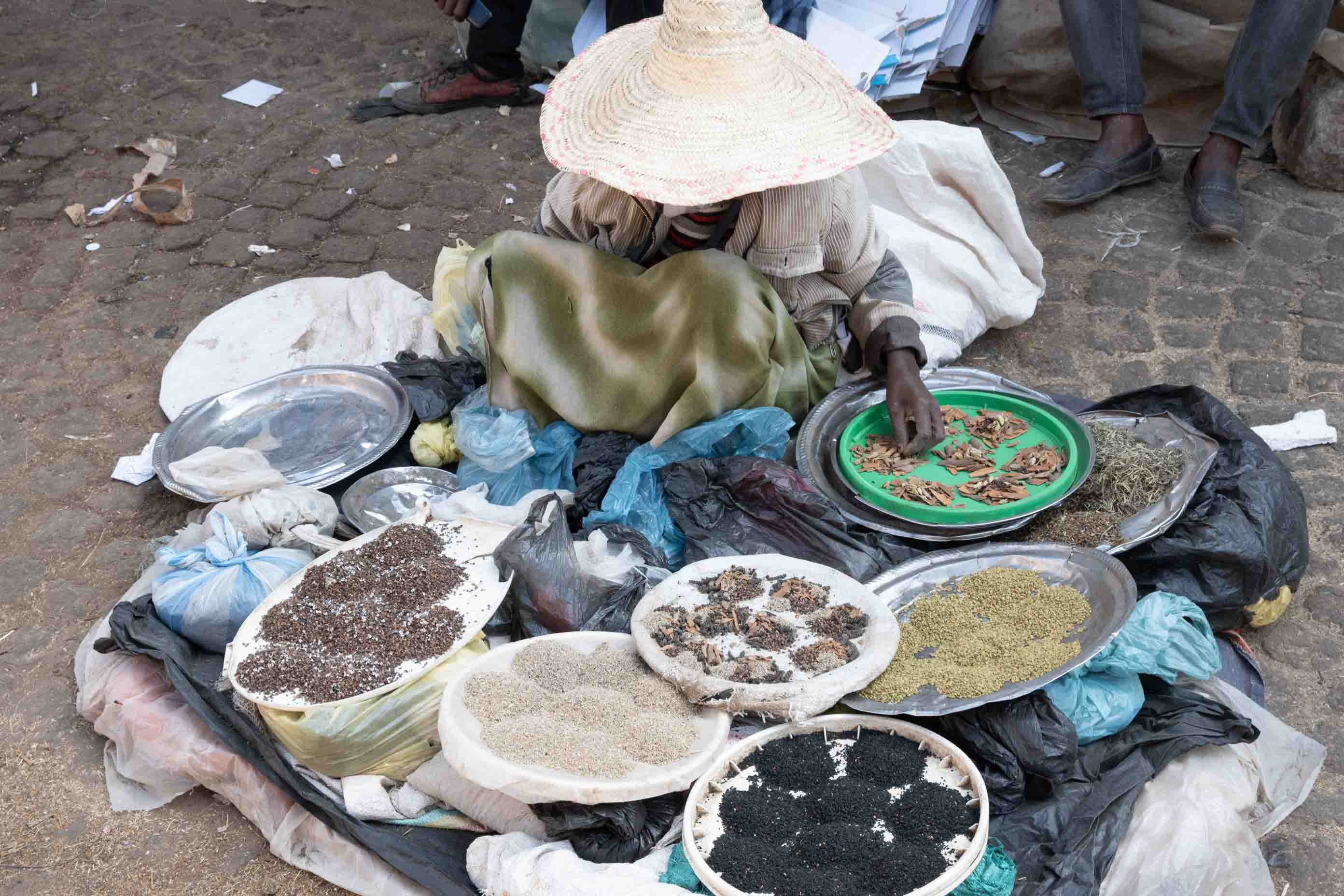
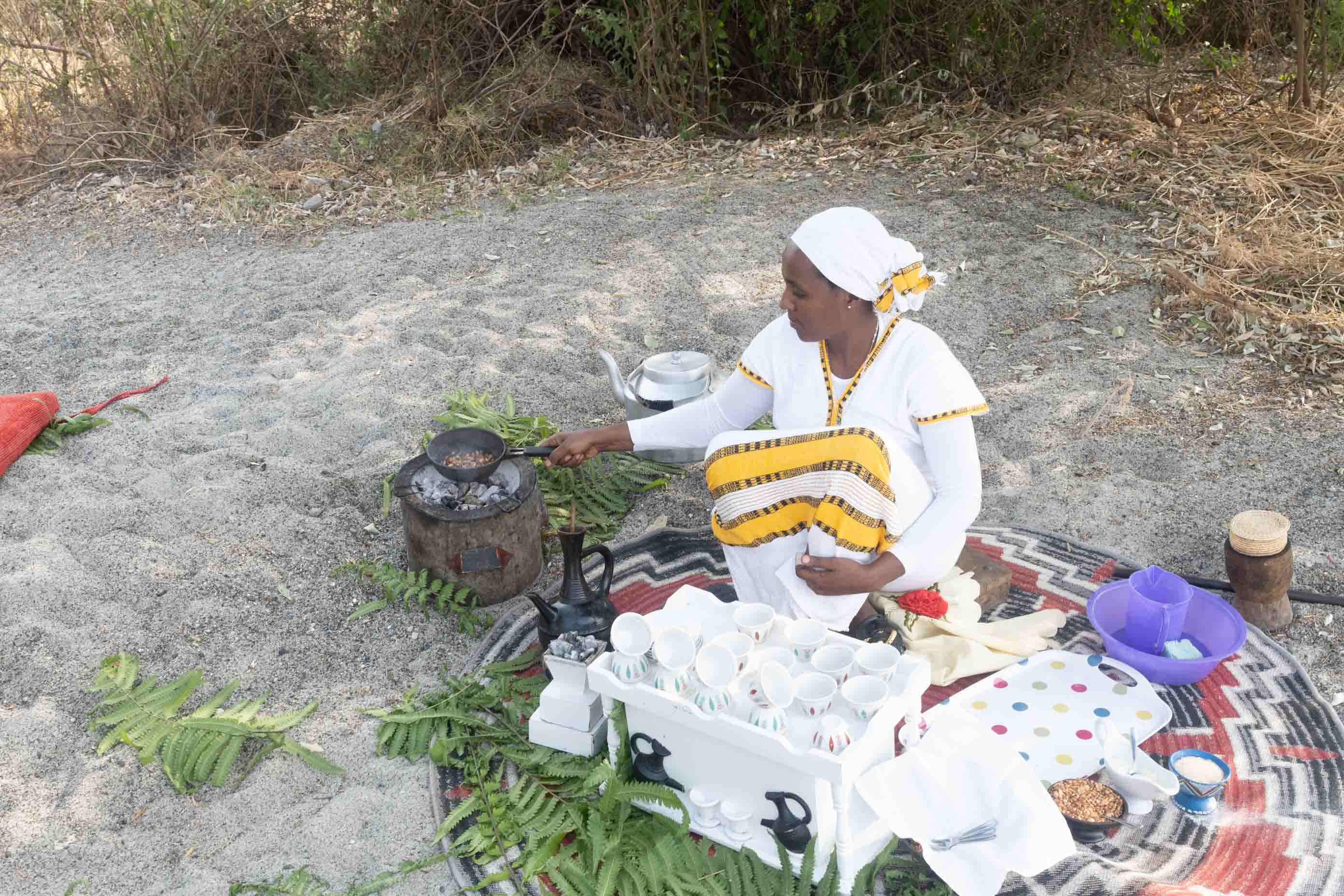
Our Ethiopian venture began February 10th with our flight from Dar Es Salaam. We were picked up by Tefera Alemu who had put together Rich’s trip before Covid and who would look after us for the next two weeks. The next day Anteneh, our guide for the first and last day of Ethiopia, gave us an introduction to the modern city of Addis Ababa and to it’s extensive market. A great window onto the people, products and customs of the country. This was followed by an Ethiopian Injera meal and coffee at the Tafera home. I had tried Ethiopian Injera many years ago, but had not practiced eating without tools for some time. I should have. More on this later. The coffee practice in Ethiopia is also different, but in this case more easily handled by a coffee addict.

As in my brief note on the other three countries on this trip, at this time I will only touch on a few highlights of my reaction to our Ethiopian leg.
Tafera and Yelew, our driver were at our hotel before 8:00 the next day and we began our drive to see a small part of the Ethiopian south. The prime tourist attractions are in the north and are focused on the Coptic Church, the world’s second oldest Christian Church and the cities of the old Ethiopian Empire. The south for us will be on birds and the culture of a few of the many traditional cultures that still survive and in some cases flourish.
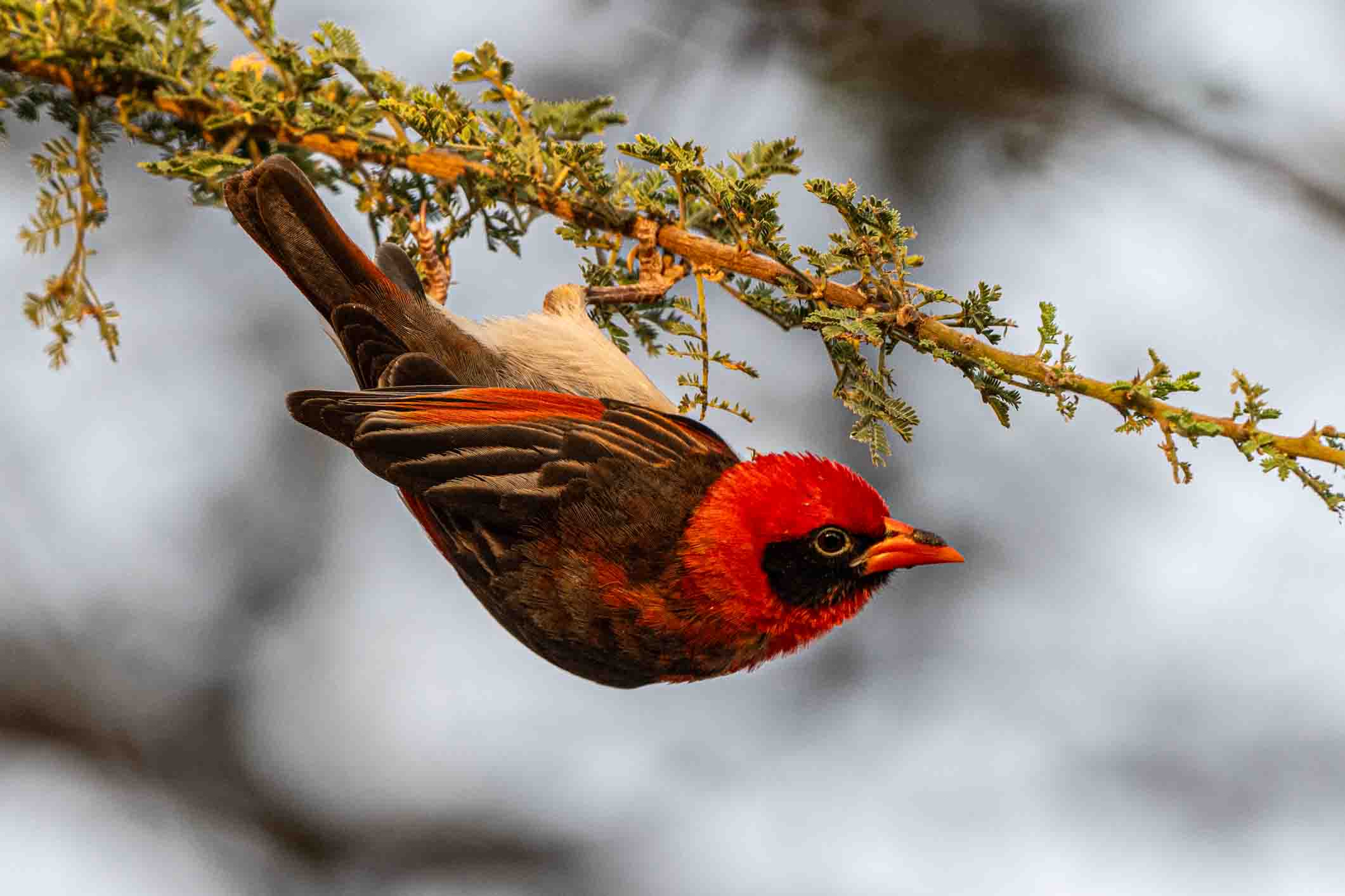
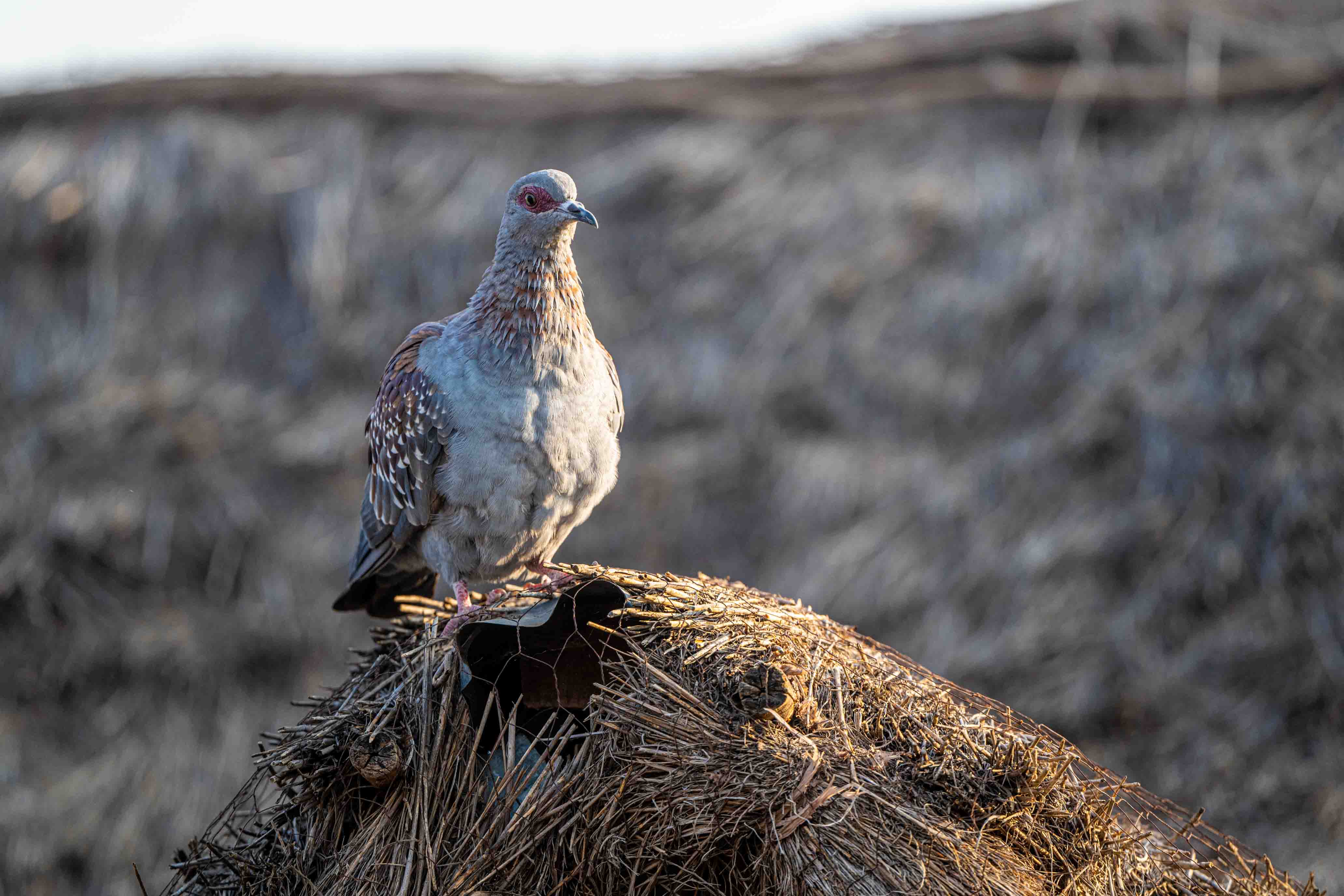
We stopped once for two nights at the wonderful Bishangari Eco Lodge on the remote side of Lake Lagano a few days into our trip. We stayed tow nights due to it’s setting, the people of the lodge and it’s bird life that did not stop. It was to be our crowning birding experience on the Ethiopian leg. Other than that we moved every day. Most days we spent longer in the Land cruiser than my decrepit knees liked.
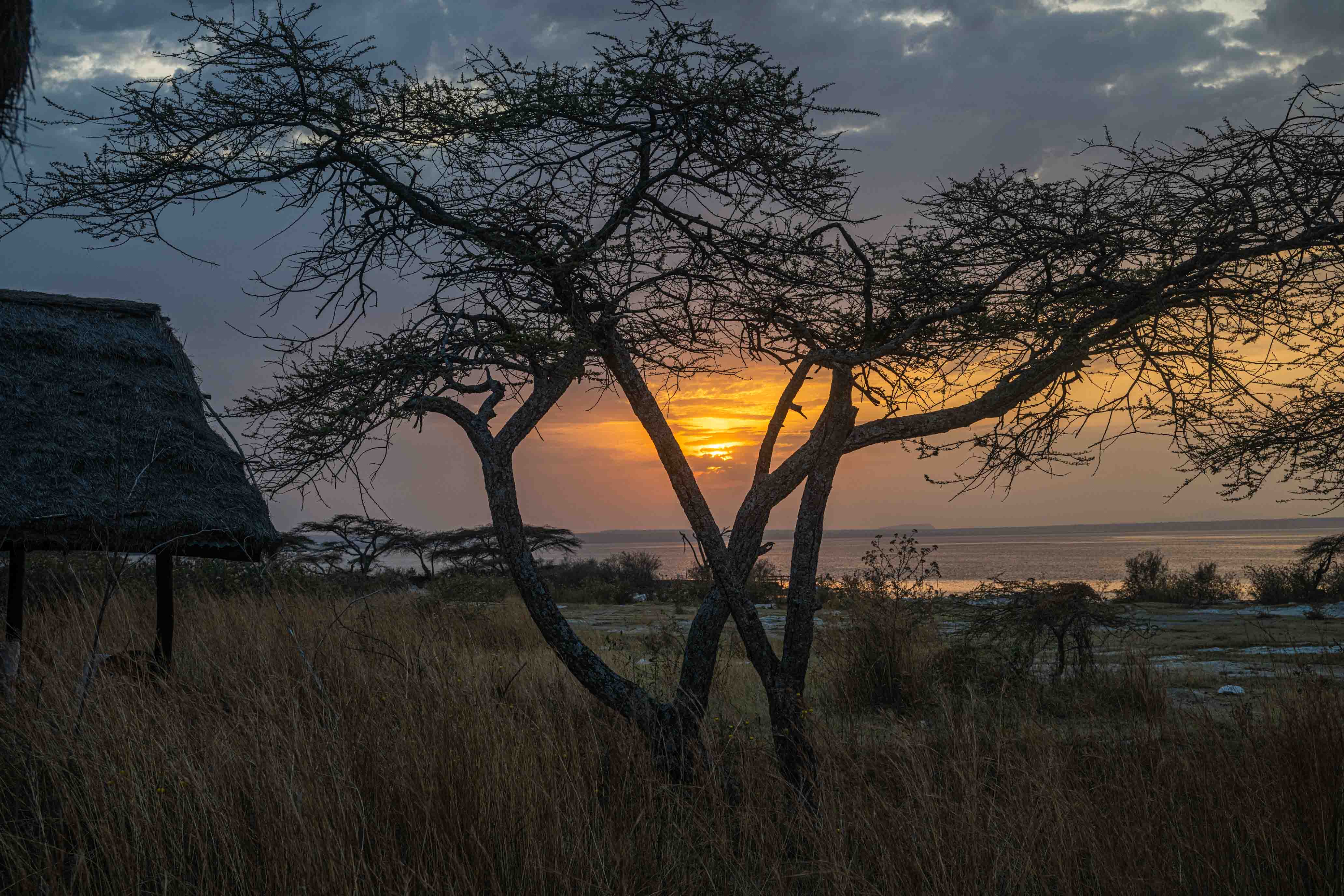
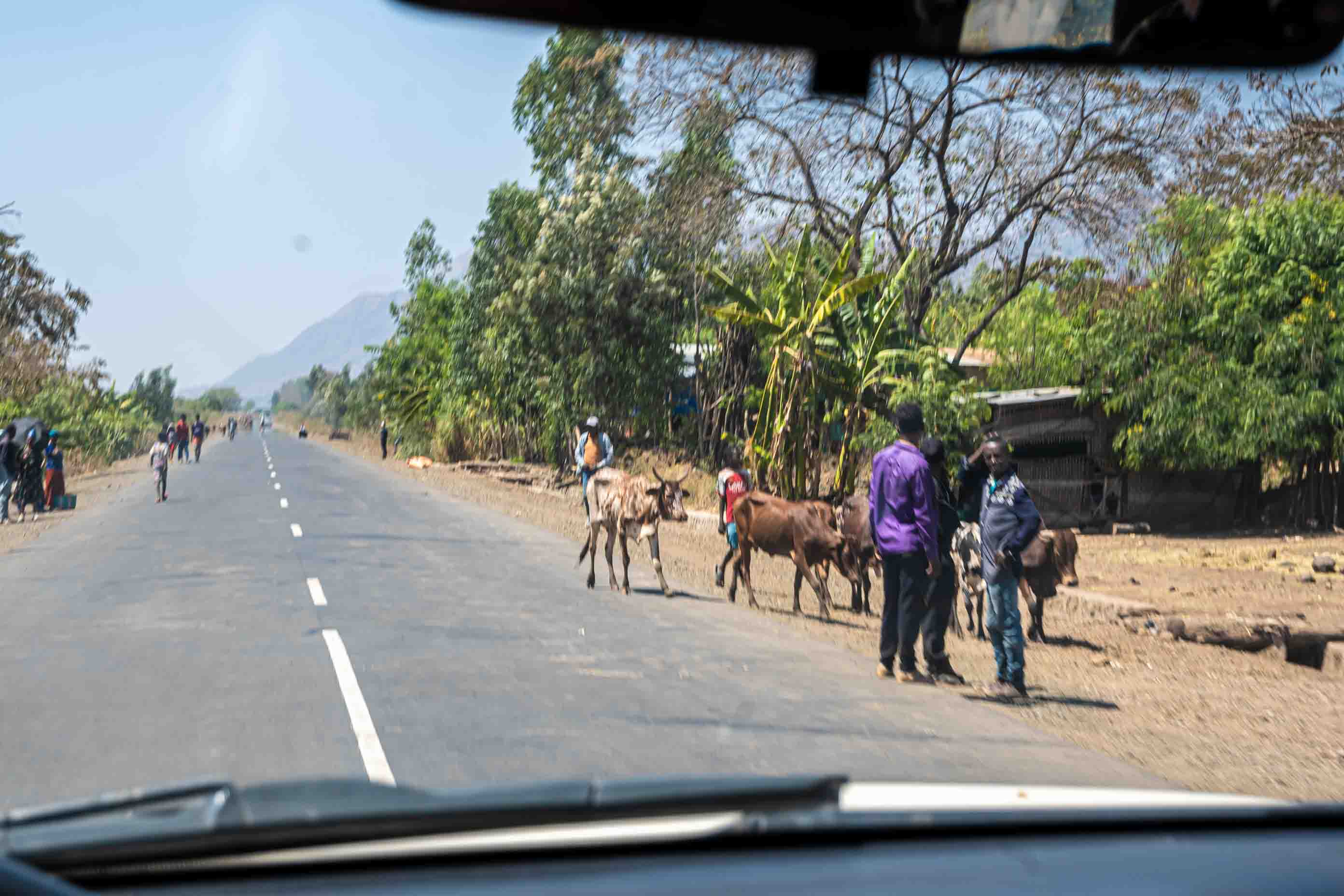
We drove many kilometers on rough, sometimes 10 kph rough, roads across parched desert like area and sometimes tropical rain forest. But primarily it was parched savannah like countryside, usually quite mountainous. People were everywhere. I think even more than our first three countries people were on the roads; carrying produce, fire wood, water in yellow plastic jugs… When they couldn’t carry things they used donkeys and donkey carts or bikes and motor bikes to help. And they used the roads to move their animals; cattle of numerous types and goats predominantly. Yelew was wonderful at slaloming through the road potholes and animal flocks. You don’t plan on getting anywhere fast in the Ethiopian south.

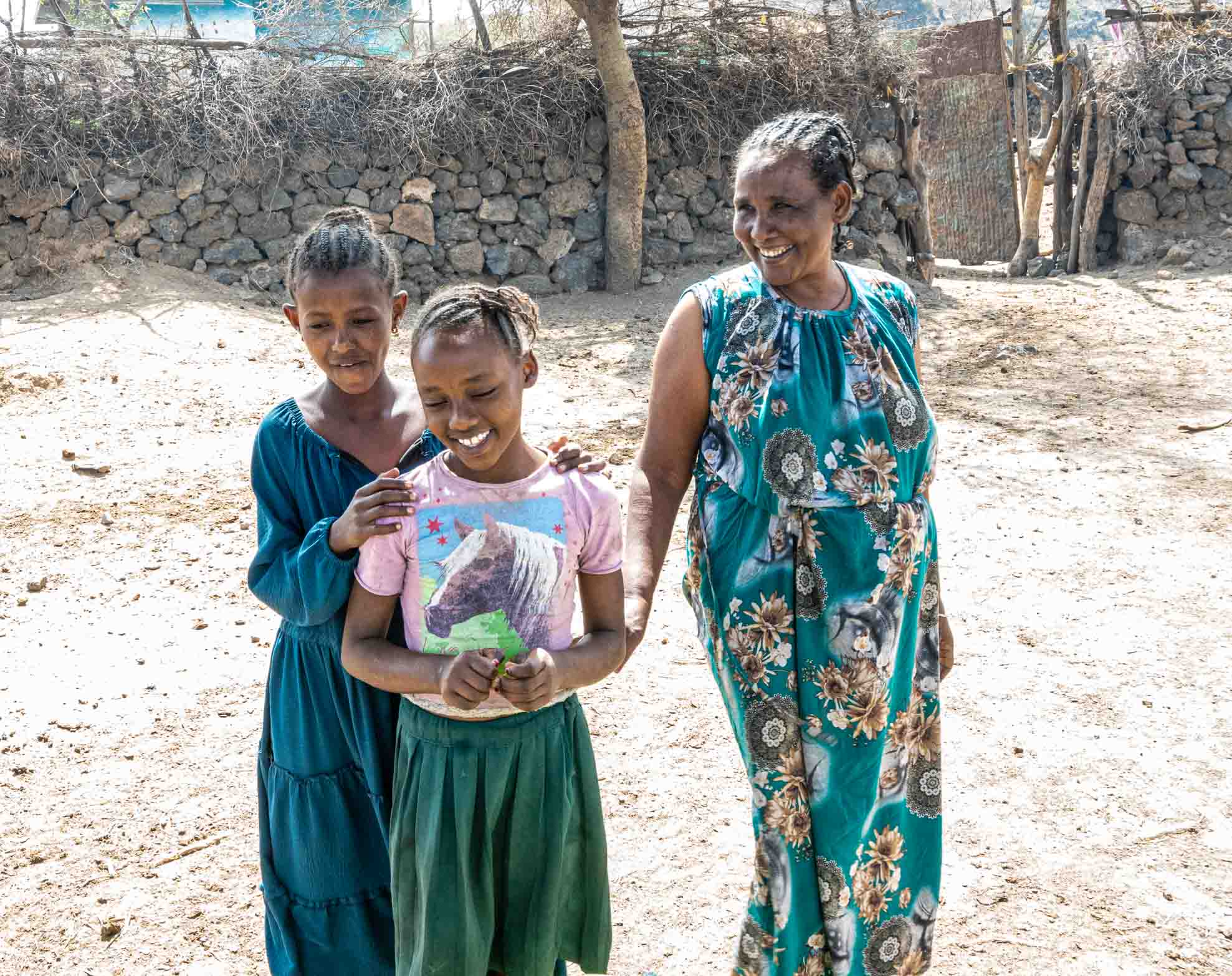
A highlight for me were our random stops, which could be done almost anytime, anyplace. One was a visit to a roadside farm. The house and Tefe haystacks were protected from marauding goats by rock and deadwood stockades. The family of about 8 were great. I have pictures of all the combinations of these beautiful shy people. The mother brought out plastic chairs to sit on and glasses of a cold drink.

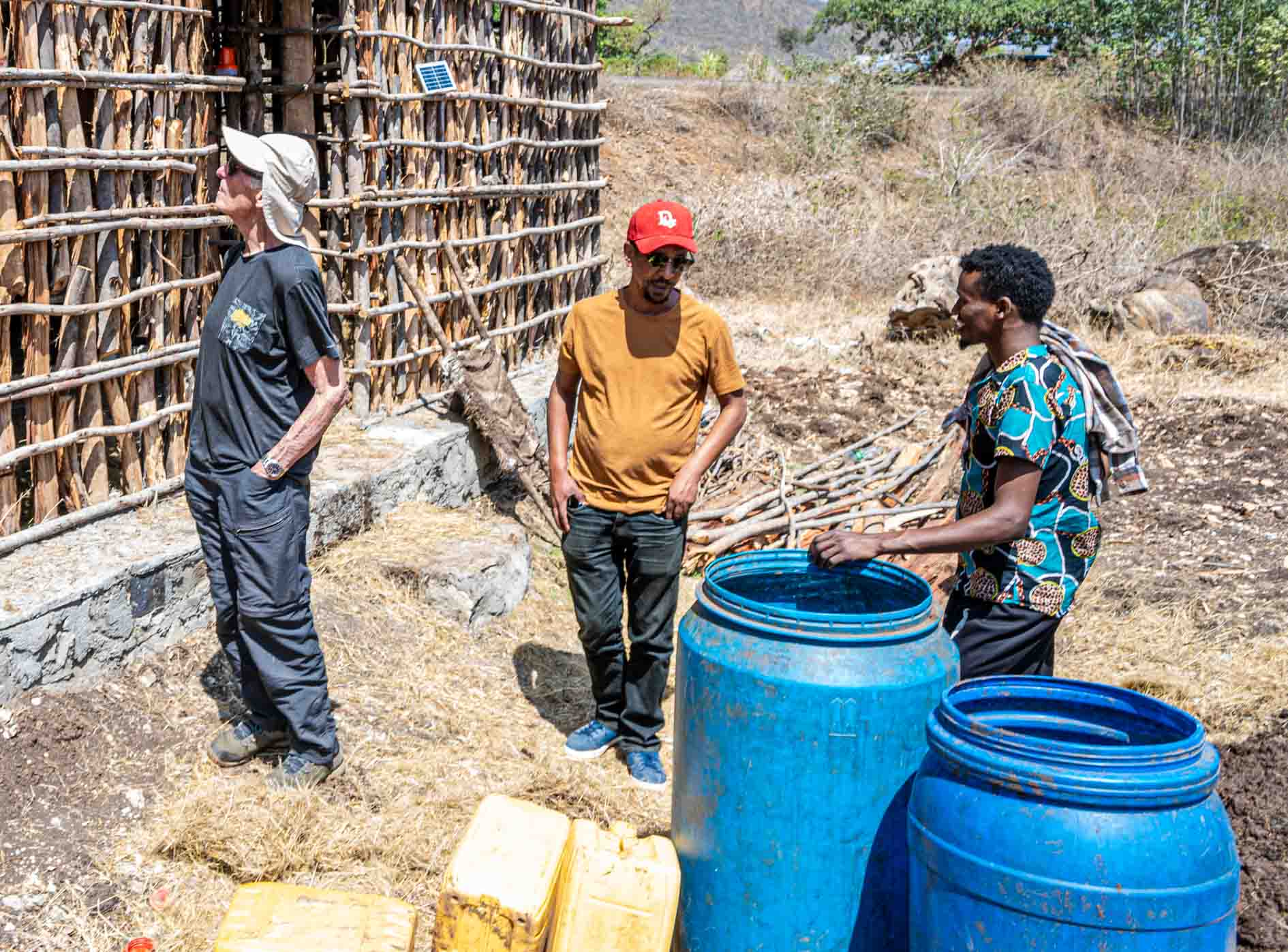
We also visited a man building a rectangular mud, stick and straw house. The traditional norm is the round rondavel type huts that are still abundant. The modern version starts with a wooden frame made of whatever wood can be found. It is topped by a corrugated metal roof. At some point they pour a concrete floor which is about 40 cm deep and locks in all of those sticks at the base of the house. Dirt of any kind is stirred into a paste and straw is added. This paste is ladled onto the inside walls initially and then outside later. The finished product could then be painted any colour in the colour palet. The man we visited proudly told us of the process and his work. It would take him a month to finish, and his friend was building a similar place next door. No building codes to follow here.

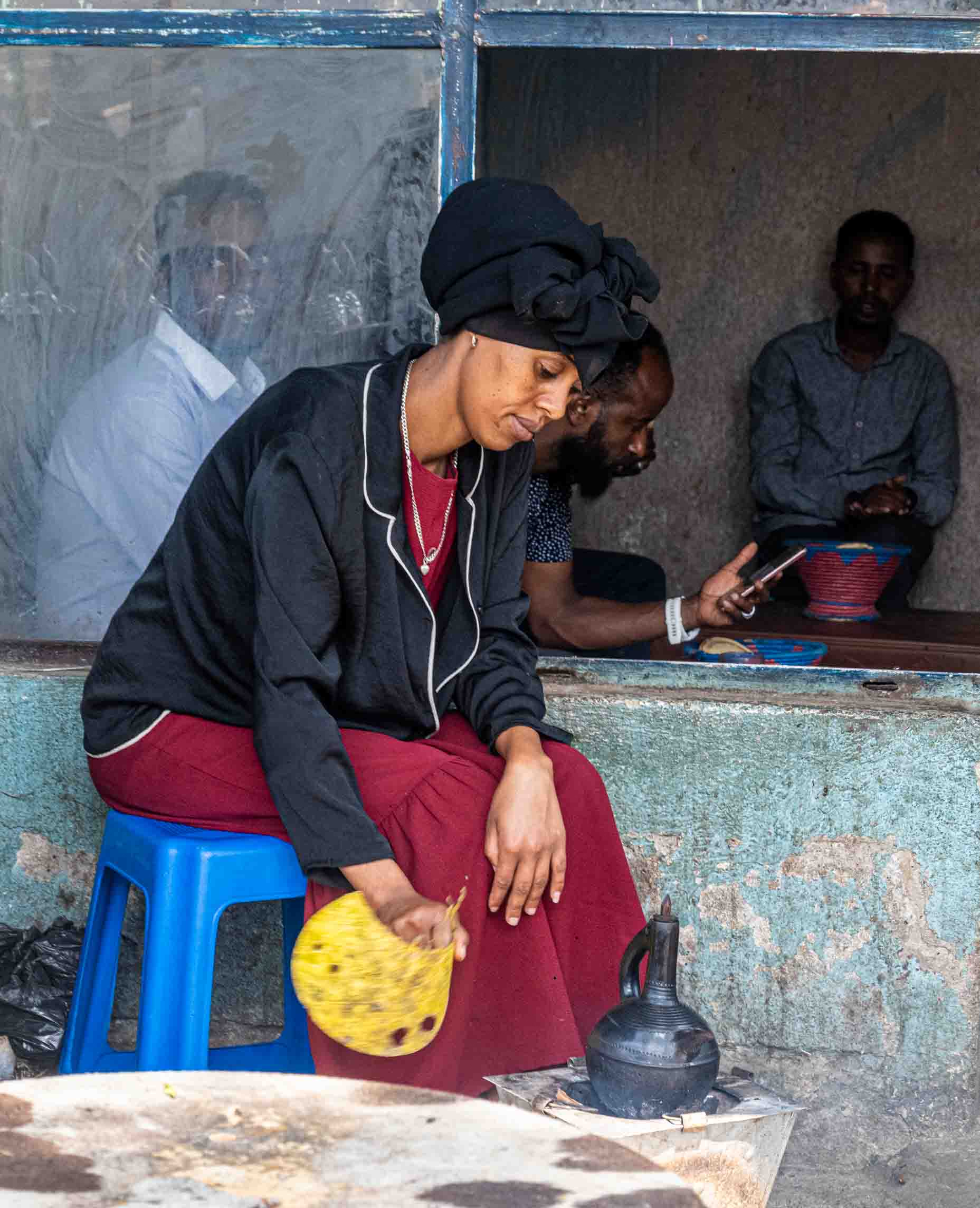
Our days also had a number of coffee stops which became, in order of importance for me, a chance to stretch my legs, an opportunity to experience a little of this Ethiopian social tradition and to have some of the strong tiny cups of coffee. Each stop was different, but we always sat on tiny plastic chairs in the shade and waited for the coffee lady to brew the coffee and then pour us each a cup to the very brim full. I would have to pick up the cup with its tiny saucer for the first few sips. We often would have a second and even a third cup in this manner. Each stop was carefully chosen by Tafera and Yelew and was always an important place in the area for men to socialize. In busy areas there would be many coffee places to choose from.
Lunches were also fun. The same kind of places but now, on the tiny table at our centre, an Injera platter was provided. Injera is a thin pancake like bread made of Tefe flour and in this form covers a round platter about 50 cm in diameter. Onto the Injera sauces, meats, vegetables are poured. We would pull off a little of the injera and use it to pick up a mouthful of the offerings. Often more would be brought out. I did improve somewhat during our time and always loved it.


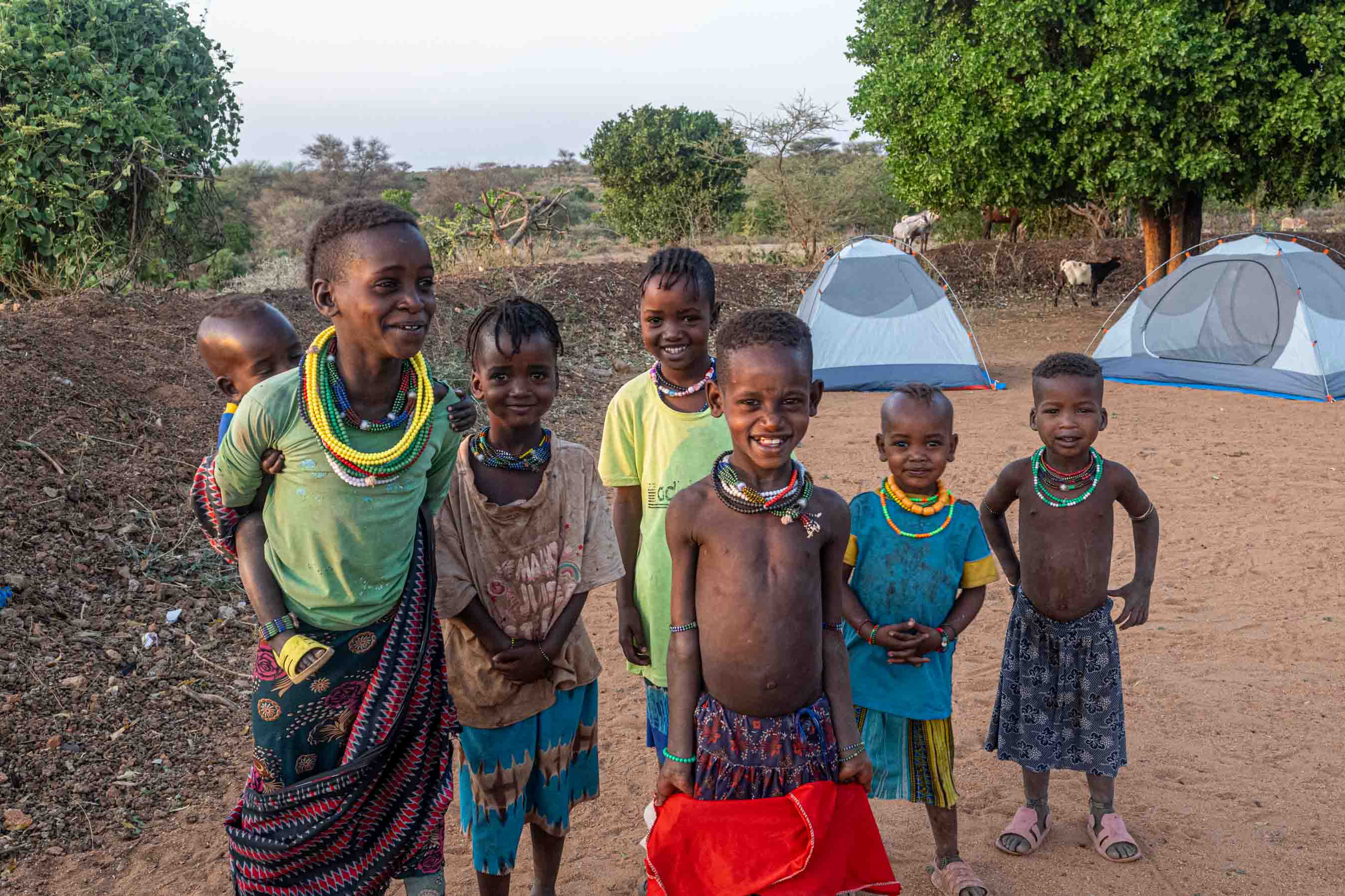
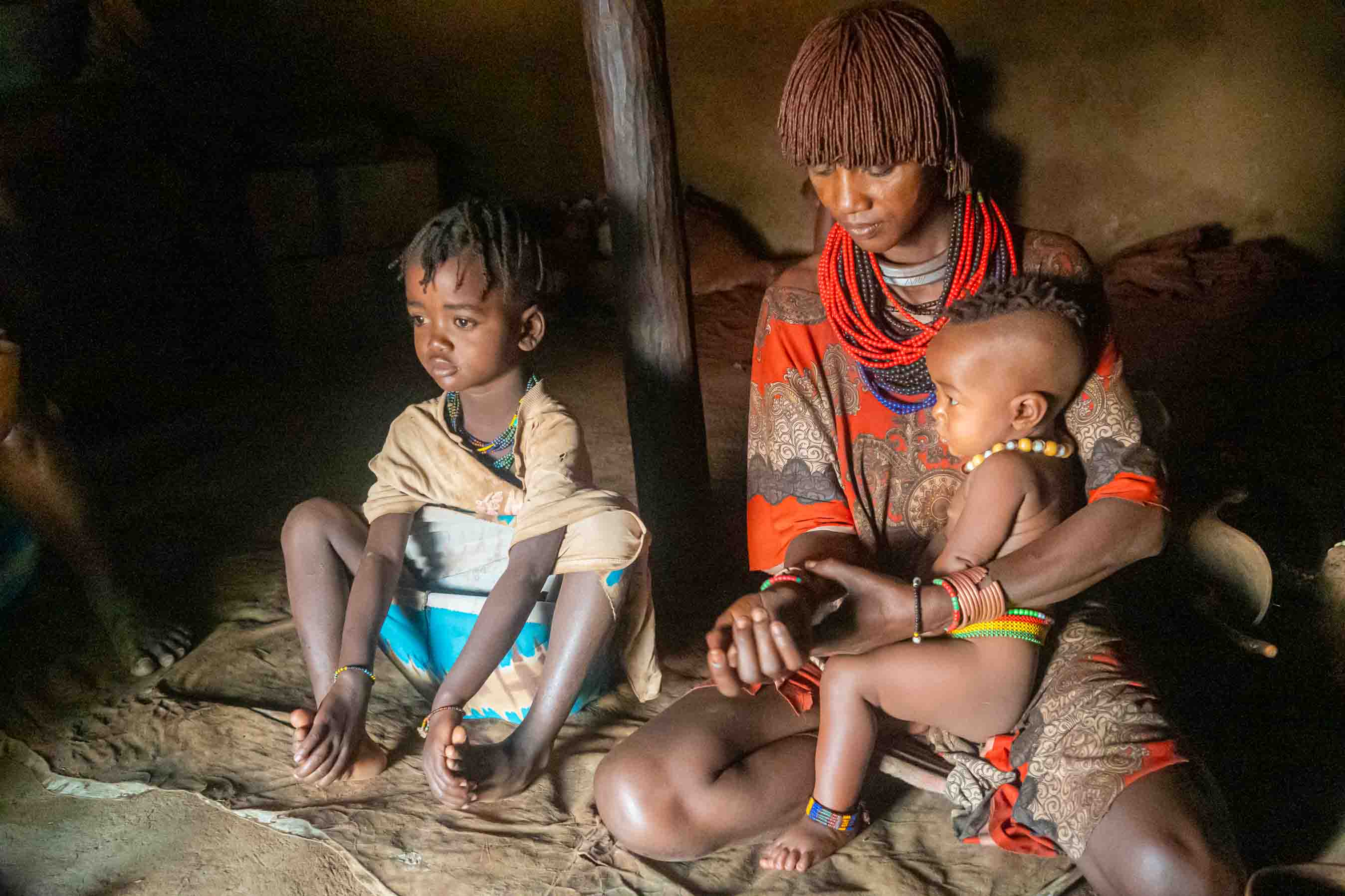
Some people still live in the traditional ways. We visited a number of them. Our visit to the Hamar people was in two parts. We started with a night in tents in the enclosure of one family. Part of this night was a goat, bought from them by Tafera, cooked on an open fire which was served to many of the people in the area. Naturally our presence, and perhaps the goat, brought in all of the kids (people type) who were very curious of these old men. The goat was eaten late in the dark of the evening and everyone took part. In the morning I had tribal coffee which is made from coffee leaves served by the matron of the kraal in her hut. The next night we stayed in a tourist style lodge owned by the Hamar people, managed by an American woman. I was impressed with this tribe as they live with a foot in each of the traditional and modern.
That is all for now. As I process my hundreds of pictures I intend to share a bit more.
Ken…

 kenmyhre